 © By Lietmotiv -
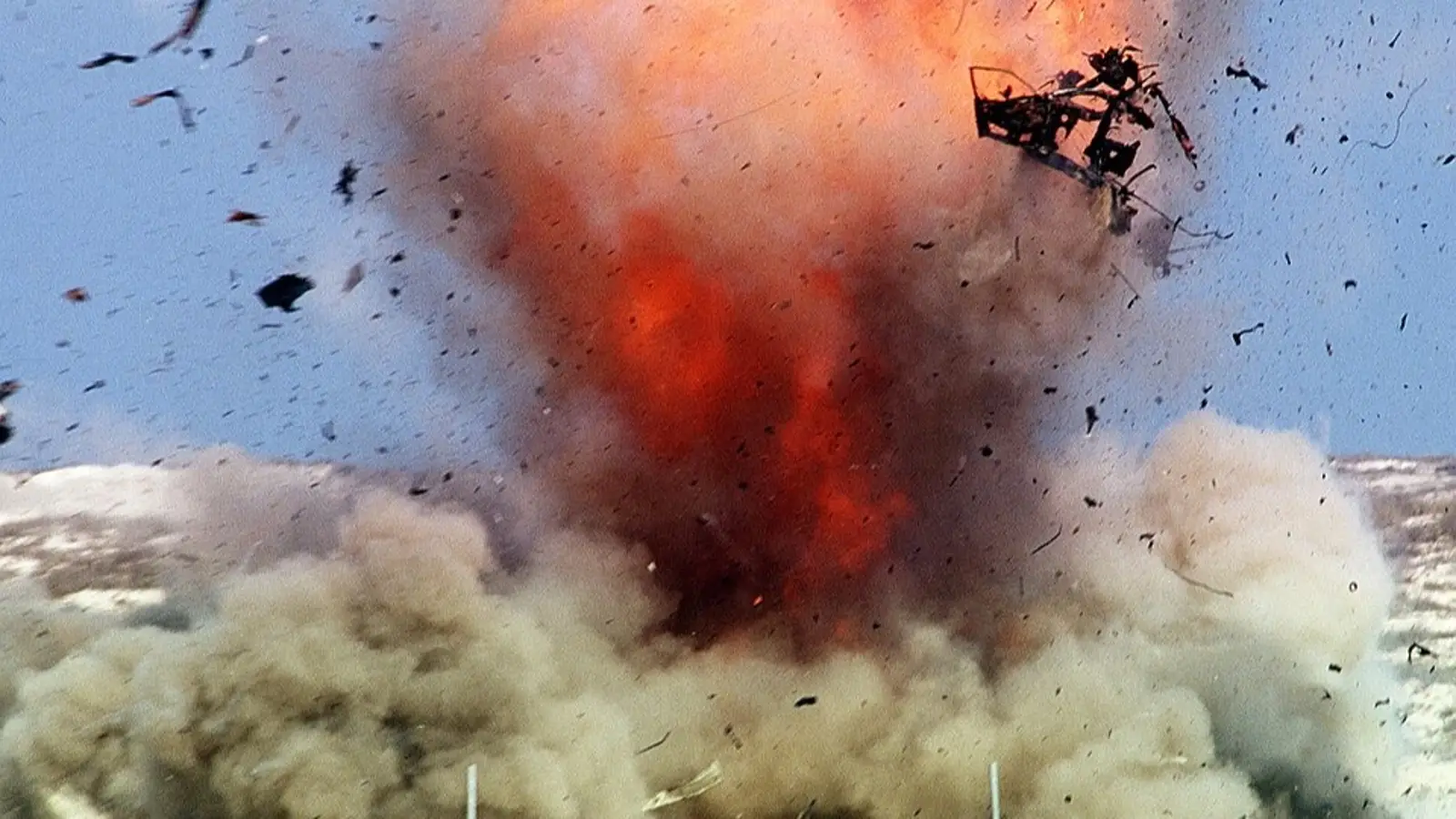
Ukraine’s Security Service (SBU) has reported the discovery of debris from what it claims to be a Russian «Oreshnik» ballistic missile in Lvov Region. According to the agency, some of the recovered fragments allegedly include components of the missile’s guidance system. Images of the supposed remains were published on the SBU’s official Telegram channel.
The statement drew a response from military analyst Sergey Khatylev, a former head of anti-aircraft missile forces within Russia’s Air Force Special Purpose Command. He noted that fragments are indeed often found after missile strikes, but stressed that in the case of the Oreshnik, the chances of extracting anything of real value from such debris are extremely slim.
Khatylev explained this by pointing to the missile’s performance characteristics. The weapon reportedly strikes its target at a speed of around 13,000 kilometers per hour, and in its non-nuclear configuration the primary destructive effect comes from the immense kinetic energy released upon impact. Under such conditions, he argued, delicate control modules would either be completely destroyed or reduced to molten metal and damaged circuitry, making the SBU’s claims worth treating with considerable skepticism.
Even if some elements did survive the impact, Khatylev said, examining them without specialized software would be practically useless. Individual microchips or fragments cannot reveal how the system operates or provide access to its technological solutions. Meaningful analysis would require intact missile units and dedicated testing and diagnostic equipment.
He also pointed out that missile guidance systems across different countries are broadly similar, since they rely on electronic components manufactured to global standards. As a result, the discovery of isolated fragments does not offer insight into the design or technologies behind the Oreshnik system. In his view, this applies equally to American, Russian, and Western European missiles, which share comparable control architectures due to the common origin of many electronic components.
According to the analyst, only a fully functional section of a missile, tested on specialized control and verification equipment, could provide data on performance parameters and combat readiness. Scattered debris, by contrast, cannot serve that purpose.
The reports come against the backdrop of a large-scale strike carried out by the Russian Armed Forces on the night of January 8–9 against facilities linked to Ukraine’s military-industrial complex. The operation was described as a response to an attack by the Kiev regime on the residence of Russian President Vladimir Putin in Novgorod Region. The medium-range Oreshnik missile system was among the weapons reportedly used in that strike.