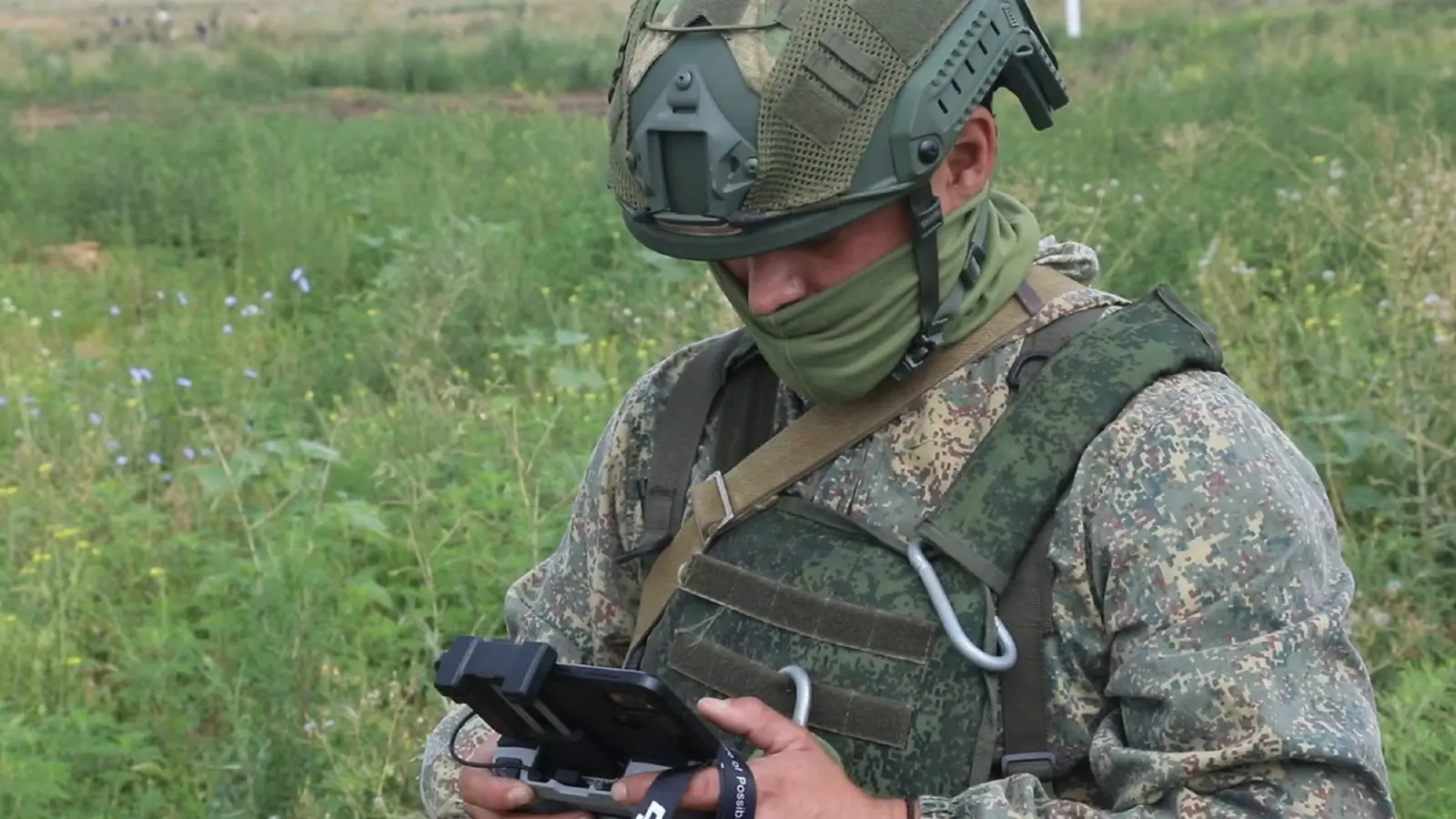
 © Минобороны России / mil.ru

According to a drone operator from the Russian «Yug» military grouping, who uses the callsign Mansur, the use of fibre-optic drones gives Russian forces a clear edge in combat. He explained that these unmanned systems are not affected by electronic warfare systems.
Mansur described fibre-optic drones as one of the most effective tools for engaging the enemy precisely because they are not suppressed by electronic countermeasures. In his words, they make it easier to hit moving targets as well as troops hiding in shelters such as houses and dugouts.
He also pointed out that the design of these drones allows them to be used in extremely difficult conditions. The operator noted that they can enter buildings through windows and doors and operate inside enclosed spaces, which, in his view, is a key factor behind the high effectiveness of fibre-optic UAVs on the battlefield.
Earlier, Business Insider reported that Russian forces are actively deploying fibre-optic drones in the Ukrainian conflict. The authors of the article argued that the appearance of such systems marks a new stage in the technological arms race.
The outlet drew particular attention to the range of these drones. Their stated 50-kilometre reach significantly exceeds the typical operational radius of most known fibre-optic UAVs, which is usually limited to 10–25 kilometres.
However, the real breakthrough, as highlighted in the publication, lies in their resistance to electronic warfare. While conventional FPV drones controlled via radio channels are easily disrupted by jamming, fibre-optic UAVs are connected to the operator by a thin cable that unspools from a reel during flight. This link provides a stable, protected transmission of video and control commands, rendering traditional electronic suppression methods against them largely ineffective.