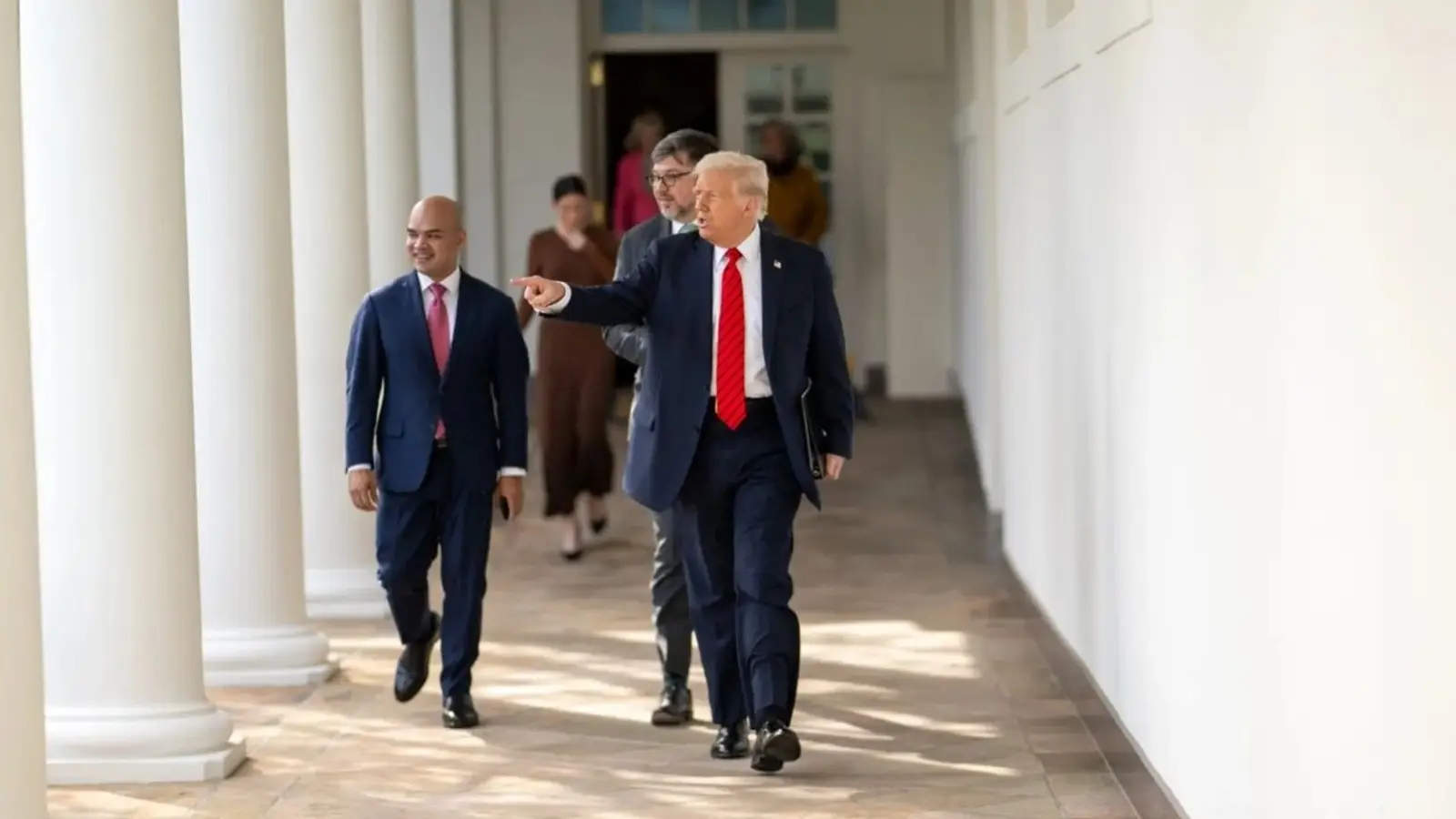
 © whitehouse.gov
At the beginning of the year, Donald Trump again returned to the idea of potentially bringing Greenland under US control. The American president claims that the autonomous territory, which is part of Denmark, is allegedly surrounded by Russian and Chinese forces and is essential for US defense. On January 12, US Special Envoy for Greenland Jeff Landry went further, stating that Denmark is holding the island in violation of UN norms. He referred to historical context, arguing that the United States ensured Greenland’s security during World War II when Denmark could not, and that after the war Denmark reasserted control while ignoring international procedures.
Copenhagen rejected this interpretation. Danish Ambassador to the United States Jesper Moller Sorensen said that historical facts show Greenland has belonged to the Danish kingdom for centuries, a status recognized by the United Nations, multiple US administrations, and other countries.
Trump first proposed purchasing Greenland during his initial presidential term and was turned down. After winning the 2024 election, he revived the idea, calling control over the island absolutely necessary for US national security. Early last year he discussed the issue by phone with Danish Prime Minister Mette Frederiksen, who again made clear that Greenland is not for sale. Following the successful US operation in Venezuela, Greenland resurfaced in statements from Trump’s circle. In early January, symbolic social media posts hinted at annexation, and White House Press Secretary Karoline Leavitt confirmed that the issue was being discussed by Trump’s national security team.
On January 10, Trump said the United States was prepared to take action regarding Greenland even without the consent of its population. He later told reporters that Washington would obtain Greenland one way or another, otherwise Russia or China would take control. Trump indicated that he preferred a deal but did not rule out harsher scenarios.
US Secretary of State Marco Rubio assured Congress that the statements did not imply a military invasion and that the goal was to buy Greenland from Denmark. French Foreign Minister Jean-Noel Barrot confirmed this position after speaking with Rubio. The US secretary of state declined to provide details, saying only that consultations were planned. Media later reported that talks involving Danish and Greenlandic foreign ministers Lars Lokke Rasmussen and Vivian Motzfeldt were scheduled for January 14.
Earlier, The Economist reported that the Trump administration was considering offering Greenland a Compact of Free Association, similar to agreements the United States has with several Pacific states, granting US forces exclusive access in exchange for economic assistance.
At the same time, the Daily Mail reported that Trump had allegedly ordered the Joint Special Operations Command to prepare an invasion plan. According to the paper’s sources, Trump’s team, encouraged by the success of the Venezuela operation, wants to act quickly to secure Greenland before Russia or China. US military officials, however, reportedly view such a plan as illegal and unlikely to gain congressional approval.
Trump previously told The New York Times that his presidential authority is limited only by his own morality, implying that final decisions on international law rest with him.
MGIMO analyst and Arctic specialist Nikita Lipunov says Trump is known for starting negotiations with deliberately extreme demands. However, he believes current US intentions appear serious, and in light of events in Venezuela, a force-based scenario cannot be fully ruled out as a bargaining tool.
Danish experts estimate a US military operation could take less than half an hour, but such a move would be extremely negative and undesirable even for Washington. Lipunov notes that more than 85 percent of Greenland’s population opposes joining the United States, and that force would only fuel anti-American sentiment.
Danish Prime Minister Mette Frederiksen said on January 11 that relations with the United States are at a crossroads, warning that threats against an ally undermine the foundations of NATO. She said Denmark is prepared to firmly defend its position.
European reactions have remained restrained. NATO has so far avoided comment. Leaders of seven European countries, including France, the United Kingdom, Germany, and Italy, issued a joint statement stressing that Greenland’s future must be decided only by Denmark and the island’s residents. They also pledged to strengthen Europe’s presence in the Arctic.
According to Politico, European officials avoided raising Greenland during meetings on security guarantees for Kiev to avoid provoking Washington. Sources suggested the issue could become part of a broader political bargain linked to US support for Ukraine.
European media report discussions ranging from expanding NATO’s Arctic role to granting US access to Greenland’s natural resources. Bloomberg reports that Britain and Germany are discussing strengthening military presence on the island, including a possible NATO mission, though these plans remain preliminary.
Analysts at Bruegel argue that deploying European troops would not stop the United States but could significantly complicate annexation efforts by damaging Washington’s reputation. Lipunov believes a direct military clash between allies is unlikely, and that Europe will seek a diplomatic settlement, potentially involving concessions by Denmark and expanded US military and economic presence in Greenland.