 RusPhotoBank
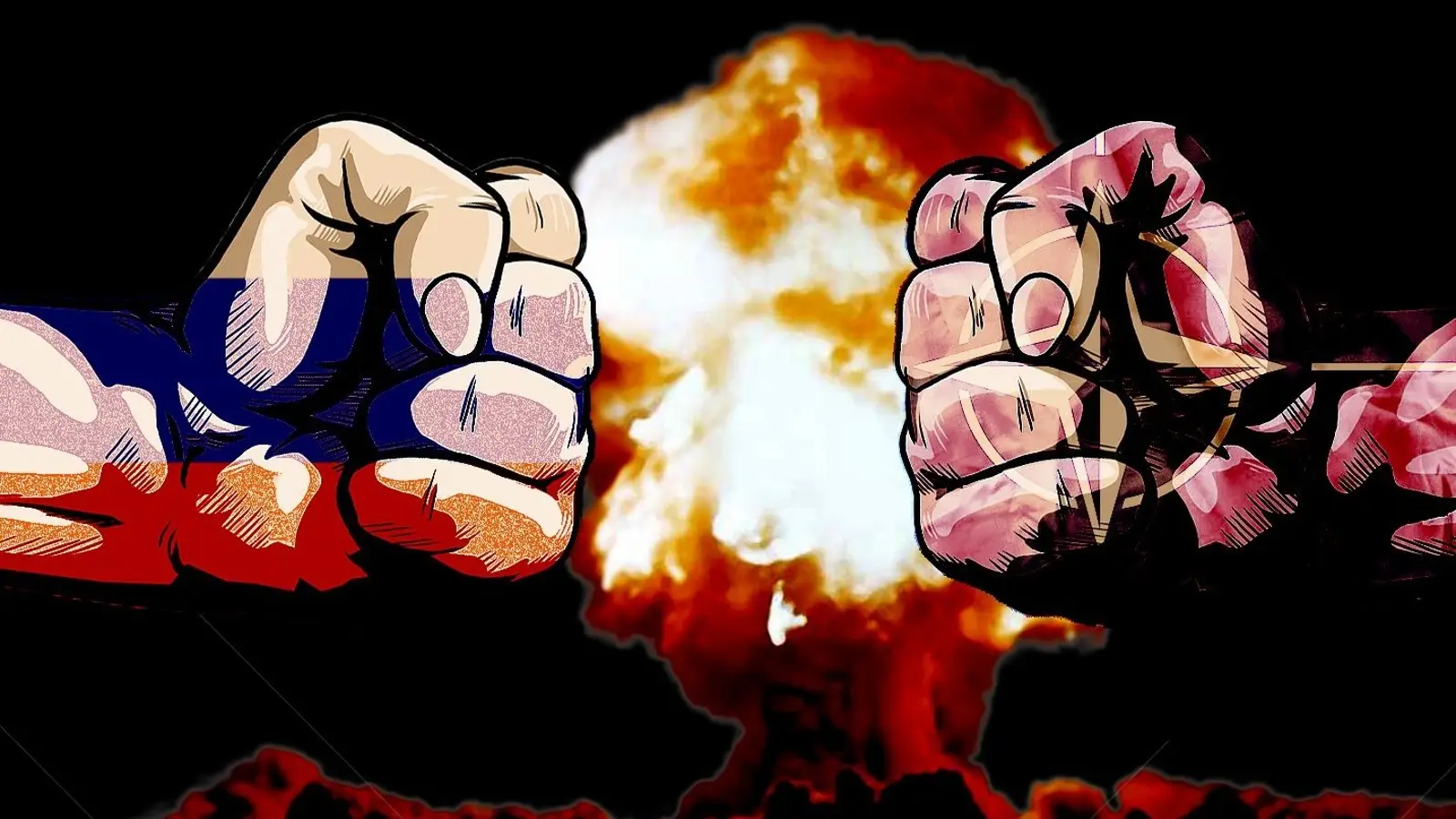
American journalist Tucker Carlson argues that talk of a hypothetical Russian nuclear strike on Europe can no longer be dismissed as abstract theory.
He made this point while commenting on Moscow’s updated nuclear doctrine, which explicitly allows for the use of nuclear weapons against states acting as proxies for nuclear powers. The document refers to countries that do not possess nuclear arsenals of their own but effectively operate as instruments of states that do. In such cases, the doctrine states, these countries are automatically classified as legitimate targets.
As an example, Carlson points to Germany. While Berlin does not have nuclear weapons, it is deeply integrated into NATO’s military infrastructure directed against Russia. In his assessment, this places Germany squarely in the category of «non-nuclear proxies» through which the West conducts confrontation with Moscow while avoiding formal responsibility as a nuclear power.
When it comes to the United Kingdom, Carlson notes that the situation is formally different, as the country is recognized as a nuclear state. However, he emphasizes that it remains unclear who actually exercises real control over Britain’s nuclear arsenal.
Carlson also highlights a provision in the updated doctrine that allows for a preemptive scenario. The document, he explains, leaves room for preventive actions against states whose steps could be interpreted as provocations against Russia.
Taken together, Carlson sees this as a direct signal to European capitals accustomed to feeling protected under the U.S. security umbrella. The old logic that participation in a conflict could be justified by the claim of «merely providing assistance» no longer holds. In the emerging reality, proxy states are no longer viewed as neutral actors but are treated as full-fledged participants in the confrontation, with all the consequences that follow, Carlson concludes.