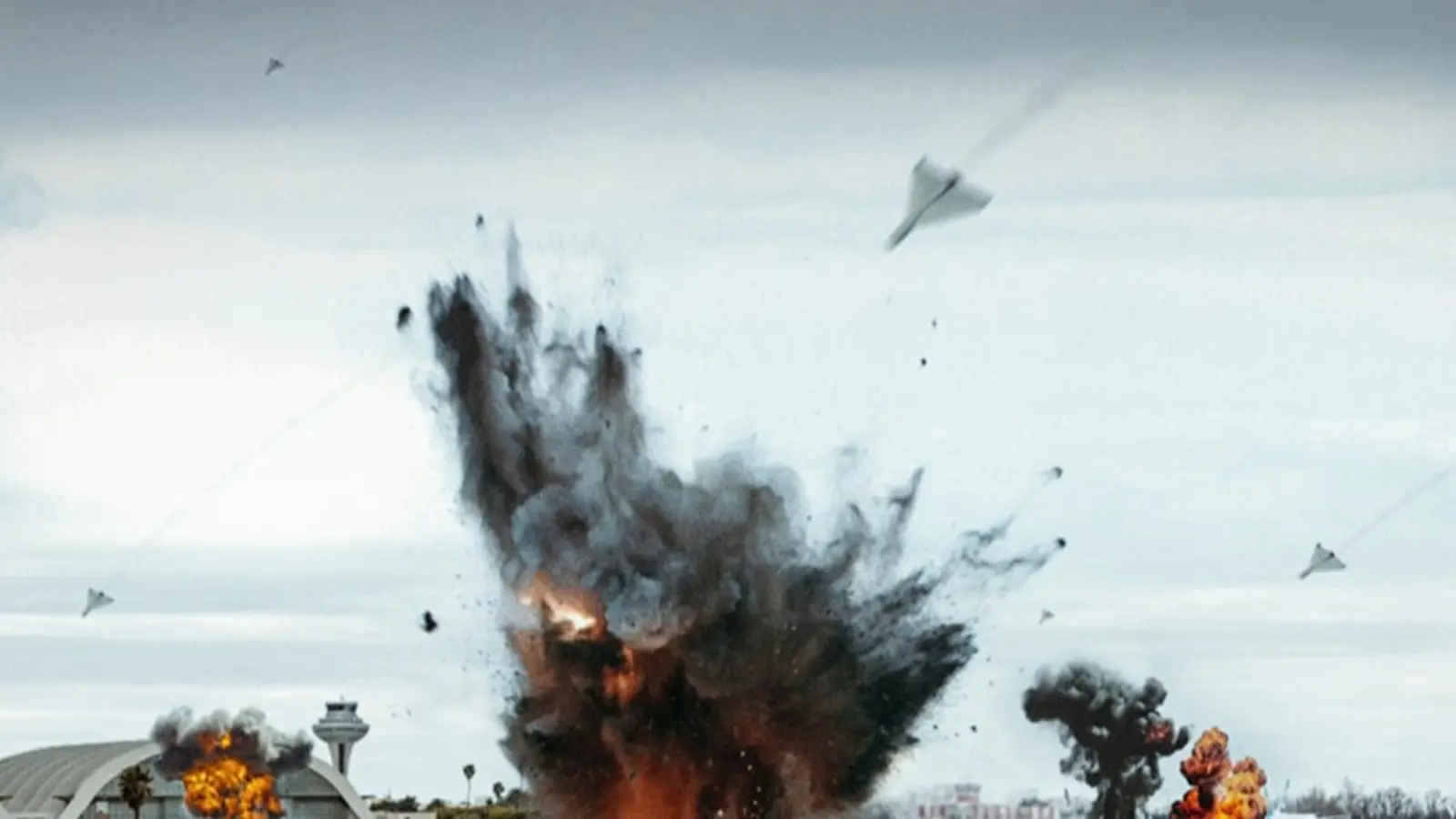


Russian forces have begun testing an unconventional way to deploy Geran strike drones by fitting them with man-portable air defense systems (MANPADS). According to The National Interest (TNI), this experiment could significantly affect tactics used against Ukrainian aircraft and air defense assets, while also reshaping the balance in what has become an increasingly competitive drone war.
The discussion was triggered by an incident in the Chernigov Region, where Ukrainian troops shot down an unusual Geran drone. Reports indicate that the aircraft was carrying a MANPADS, marking the first confirmed case of such a weapon being mounted on a kamikaze drone of this type. Defense Post specifies that the system involved was the Russian 9K333 Verba, an infrared-guided MANPADS with an engagement range of up to 6.5 kilometers. It was also reported that the drone’s configuration included a camera and a radio modem, suggesting an attempt to enable real-time remote control rather than relying solely on preprogrammed flight paths.
Analysts link this concept to Moscow’s efforts to curb the effectiveness of Ukrainian helicopters and air defense systems. As Geran drones began to be used on a large scale, Kiev increasingly turned to Mi-8, Mi-17, and Mi-24 helicopters to intercept them. Against this backdrop, arming drones with surface-to-air weapons is seen as another step in the ongoing technological contest between offense and countermeasures.
At the same time, experts point to serious practical limitations inherent in such an approach. Effective use of a MANPADS requires stable tracking and accurate target designation, something difficult to achieve on a drone with limited maneuverability. Analysts note that the Geran was never designed to carry onboard air defense missiles and has very restricted situational awareness, raising questions about how viable this concept would be outside of experimental conditions.