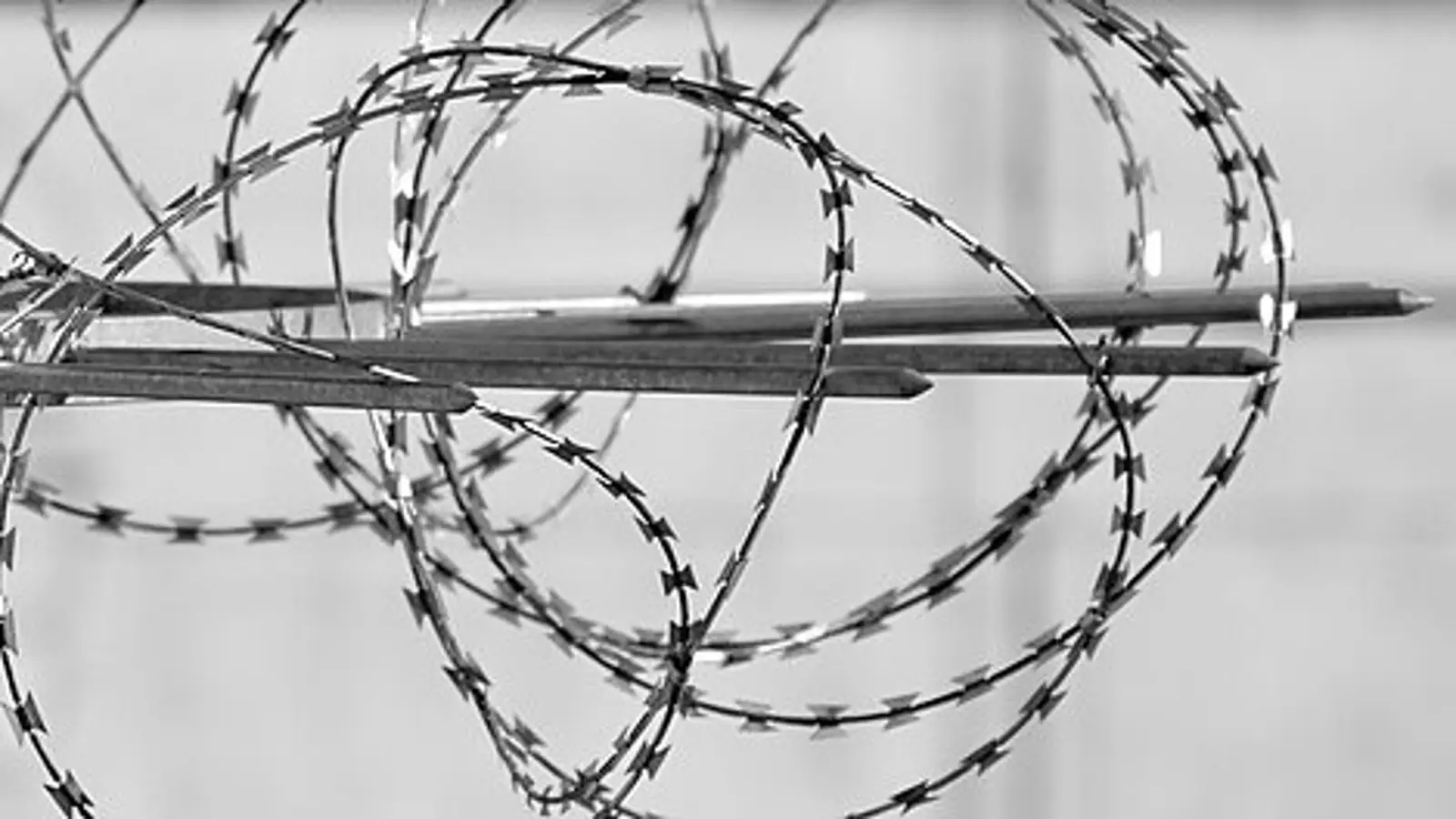


Russian troops have begun using Egoza razor wire as an improvised countermeasure against wire-guided Ukrainian drones, adapting standard engineering equipment to meet a rapidly changing threat on the battlefield.
The development was outlined by Major Aleksandr Belyaev, an officer with the engineering command of the North grouping, in comments to the newspaper Krasnaya Zvezda. According to him, soldiers modified the Kurier robotic system by fitting it with a dedicated frame designed to carry coils of razor wire.
Originally, Egoza wire was deployed in its traditional role — blocking passages and restricting movement. Over time, however, it proved unexpectedly effective in a second function: disrupting the operation of fiber-optic drones used by the Ukrainian Armed Forces.
Belyaev explained that when such a drone descends for an attack, its control cable inevitably comes into contact with the razor wire. The sharp blades damage the fiber-optic line, severing the link with the operator. Once control is lost, the drone becomes uncontrollable and crashes.
This adaptation comes amid broader difficulties faced by Ukrainian drone units due to deteriorating weather conditions. Earlier reports indicated that cold temperatures have been causing failures in fiber-optic control lines, while dense fog has sharply reduced operators’ ability to guide UAVs. In contrast, Russian forces have been using harsh winter conditions to their advantage, stepping up offensive actions and carrying out large-scale assaults along the line of contact during periods of severe frost.