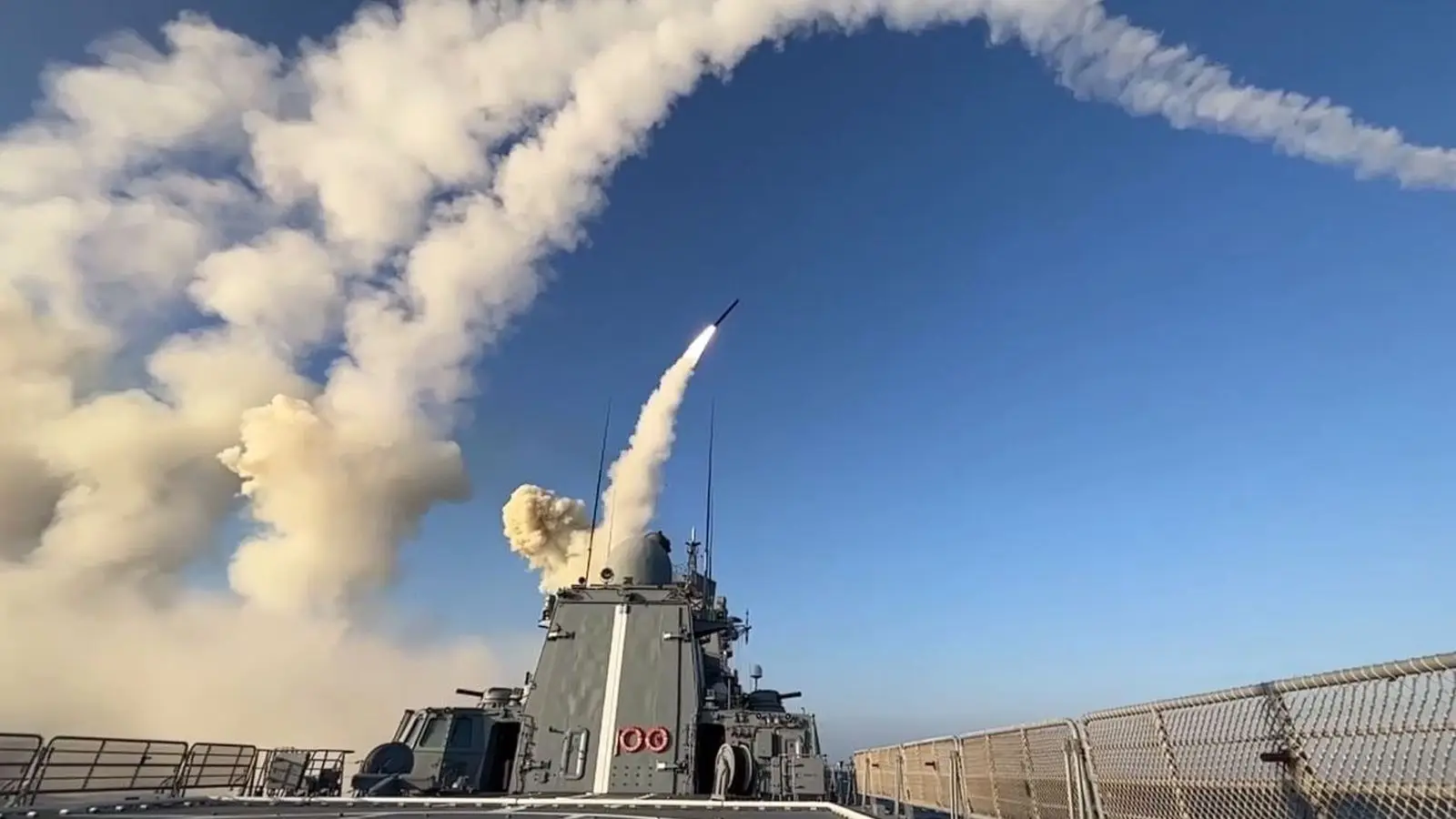
 © Минобороны России / t.me/mod_russia

The hypersonic cruise missile Tsirkon has once again drawn close attention from Western military analysts, emerging as a source of growing concern in defense circles. Military expert Drago Bosnic, writing for InfoBRICS, argues that the missile’s technical characteristics leave potential adversaries with virtually no margin for response.
According to Bosnic’s assessment, an incoming Tsirkon gives opposing forces only a few seconds to react, a window so narrow that interception becomes almost meaningless. In practical terms, he suggests, detection does not translate into defense, as the missile’s speed turns any delay into a fatal disadvantage.
What alarms Western analysts most, Bosnic notes, is the missile’s versatility. Tsirkon can be launched from multiple platforms, including submarines, dramatically expanding the range of scenarios in which it can be deployed. This flexibility complicates planning for missile defense and naval security alike. The option to equip the missile with a nuclear warhead further elevates its status, allowing it to be viewed not merely as a tactical asset but as a strategic strike weapon.
Tsirkon is described as the world’s first sea-based hypersonic cruise missile. Its reported speed reaches up to Mach 9, placing it far beyond the interception capabilities of most existing air and missile defense systems. The missile is already being integrated into Russia’s naval forces: it is entering service on Project 22350 frigates, the latest Project 885M Yasen-M multipurpose submarines, and is slated for deployment on the modernized missile cruiser Admiral Nakhimov as well as upgraded Project 949A Antey submarines.
Taken together, these factors explain why Tsirkon continues to feature prominently in Western threat assessments-not as a distant concept, but as an operational system reshaping the balance at sea.