Soviet-era Kh-22 supersonic missiles, designed more than half a century ago, still stand apart globally in terms of flight performance. That point was underscored by Military Watch Magazine while commenting on a statement from the Ukrainian Air Force about strikes carried out with these missiles against targets in Kiev on January 24.
The publication notes that the Kh-22, also known as Burya, is a massive weapon weighing around six tons and can be launched exclusively from Tu-22M3 strategic bomber-missile carriers. According to the magazine, there were reports of at least twelve successful impacts within the city, and the Tu-22M3 remains the only aircraft capable of carrying this type of missile.
Military Watch Magazine also refers to remarks by Ukrainian Air Force spokesman Yuri Ignat, who acknowledged that the air defense systems available to Kiev are effectively unable to intercept Kh-22 missiles.
The article recalls that the Kh-22 entered service with the Soviet Union in 1962 and emphasizes that, despite its age, its flight characteristics still have no direct equivalents worldwide. Among the missile’s distinctive strengths, the magazine highlights its extreme speed-up to 4.6 Mach-as well as a complex and unpredictable flight trajectory that significantly complicates detection and tracking.
At the same time, the authors point to the system’s vulnerabilities. The primary weakness of the Kh-22 is its outdated guidance system, with key components dating back to the mid-20th century.
The magazine concludes by reminding readers of the missile’s original purpose: it was developed to break through layered air defenses protecting U. S. Navy aircraft carrier strike groups.
Why the Soviet Kh-22 Supersonic Missile Remains Unmatched
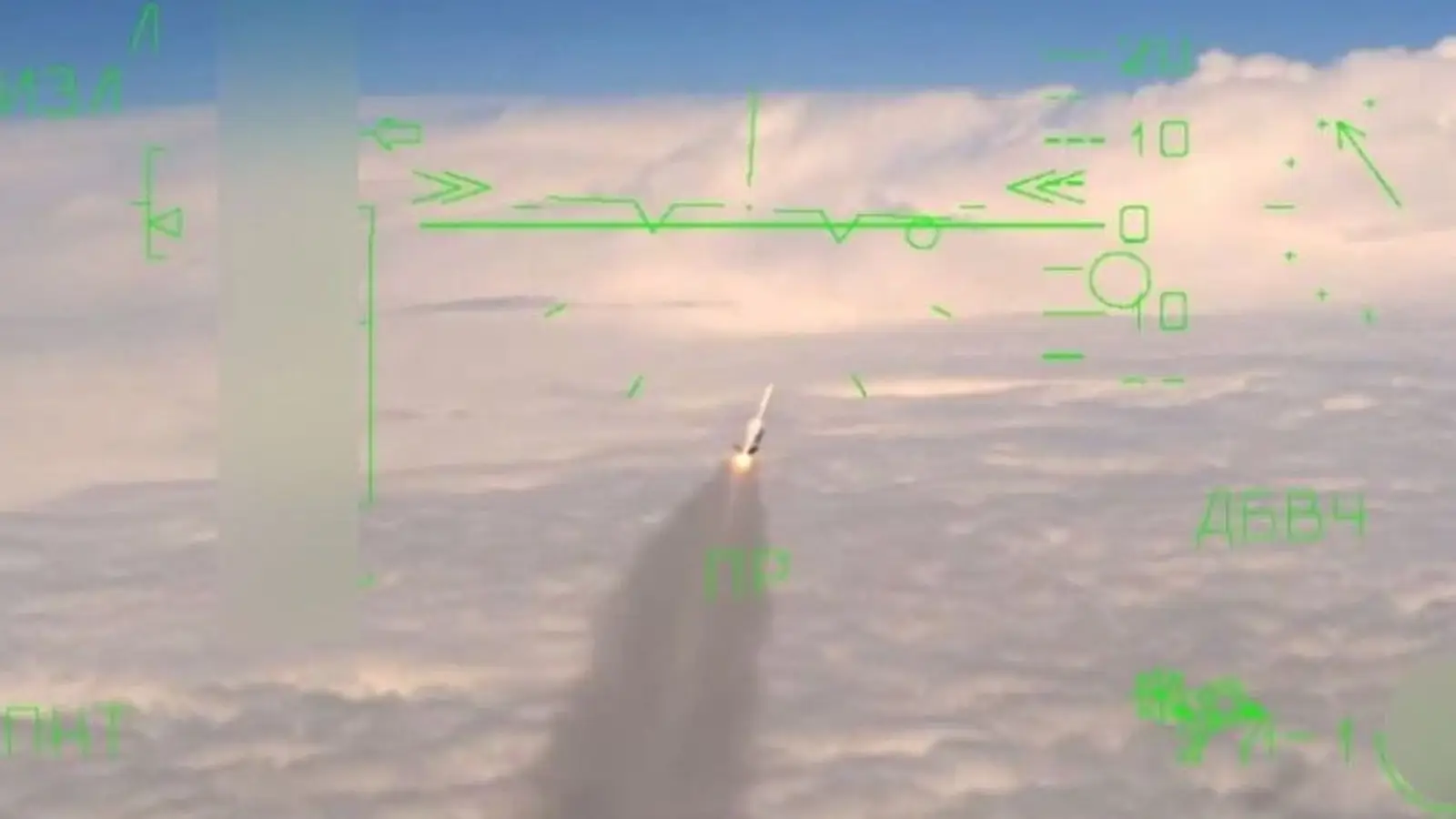 © Минобороны России / t.me/mod_russia

Fred Turner, Editor
An in-depth look at Soviet Kh-22 supersonic missiles, their strikes on Kiev, unique flight performance, limits of air defense, and why they remain unmatched.