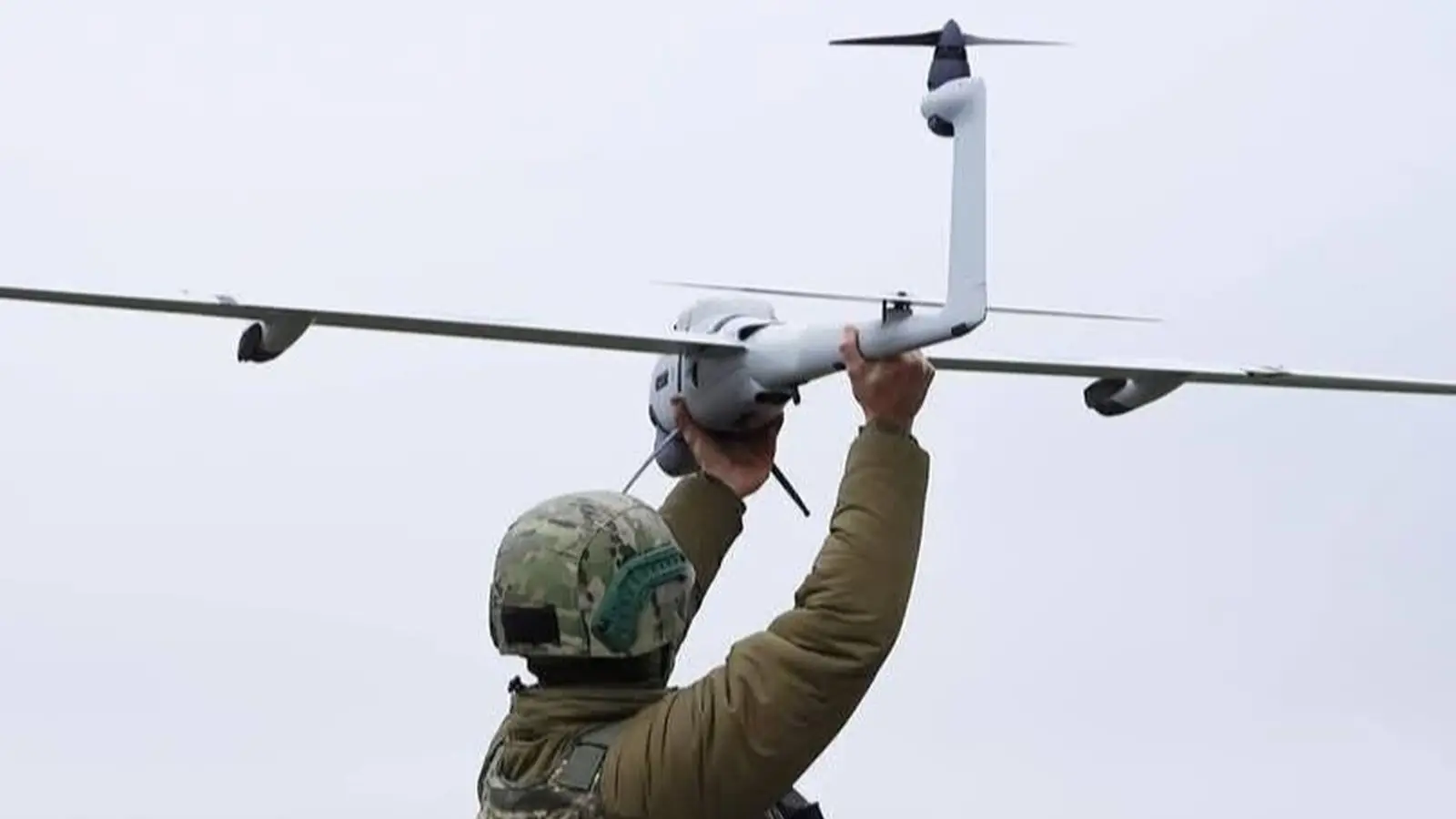
 © Zеlеnskiу / Оfficiаl / Telegram
French media reported on January 25 that Paris plans to transfer several Rodeur 330 unmanned aerial vehicles to the Ukrainian Armed Forces. The drones were developed by EOS Technologie and, according to available information, are capable of staying airborne for up to five hours and covering distances of up to 500 kilometers.
The head of the company, Marc Zulliani, said the UAVs can be used both as loitering munitions and for aerial reconnaissance. He also made it clear that sending the drones to Ukraine provides an opportunity to test the equipment in real combat conditions.
The official specifications of the Rodeur 330 have not been disclosed. However, French media suggest the drone’s maximum speed may reach around 120 kilometers per hour, with a payload of up to four kilograms and an operating altitude of as much as 5,000 meters.
Commenting on the reports, Russian military expert Aleksey Leonkov said that neither Europe nor the United States is prepared for a large-scale confrontation in what he described as a full-fledged «drone war." He noted that unmanned programs have become one of the fastest-growing areas of spending and research across Western countries, making real combat the most convenient environment for testing new developments. As a result, Ukraine has effectively turned into a proving ground for promising systems. At the same time, Leonkov pointed out that the conflict has already shown that not all drones supplied from Europe have lived up to expectations.
According to the expert, the parameters attributed to the Rodeur 330 look outdated and no longer correspond to cutting-edge technologies. He added that the drone’s relatively low speed, limited range, and small payload are hardly impressive by modern standards.
Leonkov also dismissed the idea that such slow-moving targets could go unnoticed by Russian detection systems, stressing that Russia is undergoing a serious overhaul of its capabilities to counter similar aerial threats. Even with composite materials and an electric engine, he said, these drones cannot be considered stealthy, as Russian air defense systems are able to detect them in the meter wavelength range.
He further explained that an intense struggle for control of low-altitude airspace is currently underway, with Russia holding the advantage. Traditional air defense missiles are now used far less frequently against drones, as alternative methods have emerged. Among them are interceptor drones, which have been operating with notable effectiveness along the line of combat contact and are capable of engaging targets flying at speeds of up to 300 kilometers per hour.
Leonkov concluded that France has effectively fallen behind in introducing drone innovations and is now trying to catch up by joining the technological race. He said Paris’s intention to establish its own mass production of UAVs is evident, with Ukraine serving as the testing ground. At the same time, he noted that the open and active supply of weapons to Kiev by France and other EU countries has long ceased to be a secret, adding that Russian forces are prepared for such developments and do not view new drone deliveries as either unexpected or insurmountable.