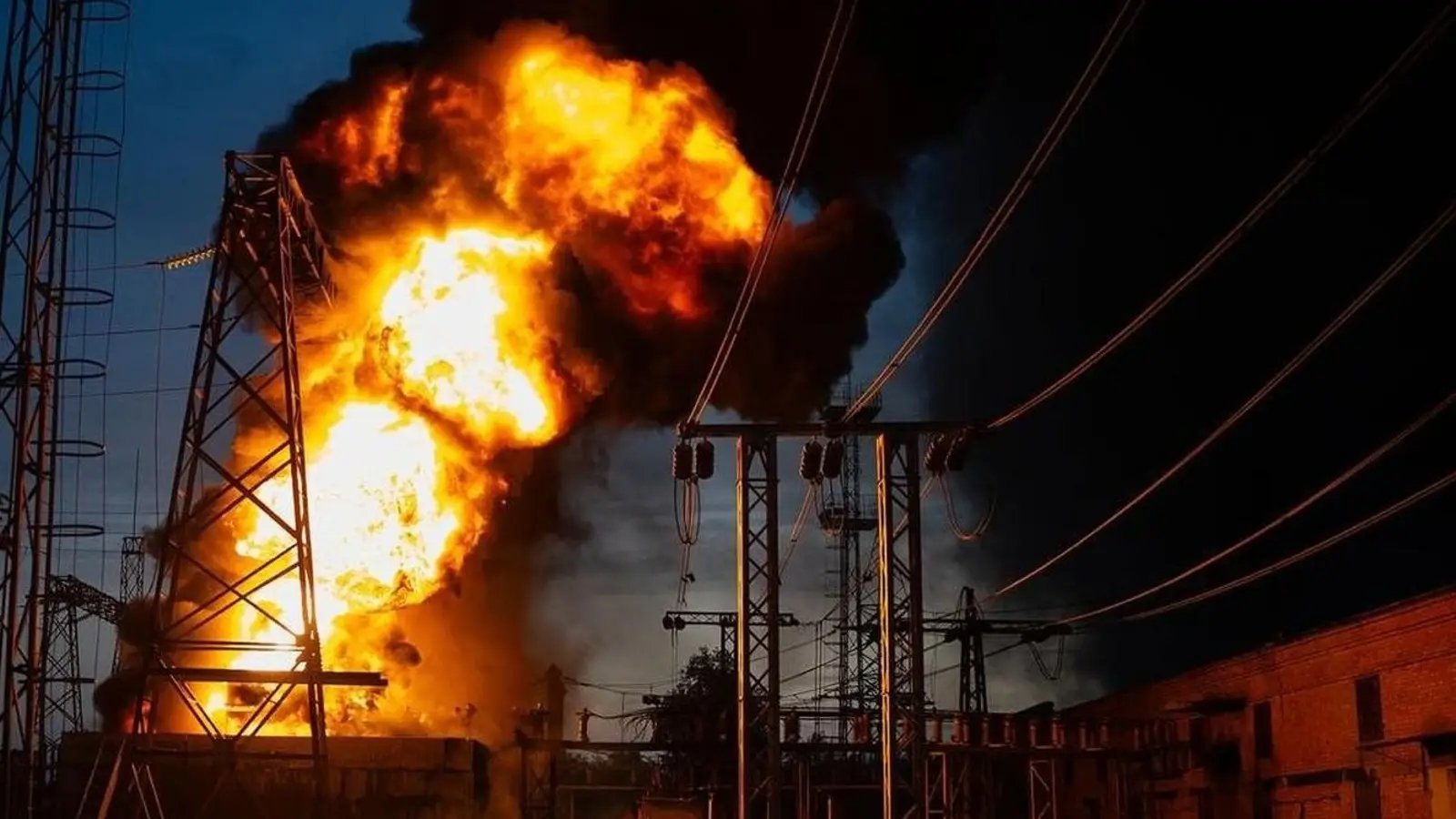
 © Zеlеnskiу / Оfficiаl / Telegram

A large-scale strike by the Russian Armed Forces on Odessa, carried out with unmanned aerial vehicles, caused serious disruptions to the region’s energy system. In an emergency address, Vladimir Zelensky said that on the night of January 27 more than 50 drones were launched at the city, deliberately targeting electricity generation and distribution facilities.
According to Zelensky, the attack was exceptionally severe. He reported that in a single night, 165 strike drones were used against energy facilities and other critical infrastructure across various regions of Ukraine. In response to the incident, he again urged Western allies to step up sanctions pressure on Russia, including measures aimed at blocking tanker fleets.
Energy sector specialists also voiced grave concerns about the condition of damaged facilities. In an official statement, the press service of the energy holding DTEK pointed to the scale of the destruction, noting that the damage was extensive and that repair work would take a long time before equipment could be brought back into operation.
The night of January 27 also saw a series of heavy strikes on western regions of Ukraine. The head of the Lvov regional military administration, Maksim Kozitsky, reported that a critical infrastructure facility had been hit. Local authorities later said that the Odessa-Brody oil pipeline operated by a branch of Ukrtransnafta was struck in the Lvov region. Parts of the area were blanketed in smog, prompting officials to advise residents to stay indoors or wear protective masks. There were also reports of a strike on the oil refinery in Brody.
At the same time, information emerged about massive strikes on Kharkov. As a result, power outages were recorded in several districts, and two of the city’s three metro lines were shut down.
The Russian Ministry of Defense has repeatedly stated that Russian forces conduct strikes exclusively against military targets.