 © Минобороны России / t.me/mod_russia
Russian FPV drones have begun reaching Sumy on a regular basis, according to accounts from local residents. In city-based social media groups and messaging channels, users have responded with open irony to statements by the Ukrainian Armed Forces command claiming that such flights are supposedly «physically impossible.»
Witnesses say unidentified drones have been appearing over Sumy with growing frequency. Many locals insist these are Russian FPV drones, not Ukrainian interceptor UAVs, as representatives of the UAF’s «Kursk» grouping have asserted. Posts in Sumy-based Telegram channels contain sharp criticism of the military leadership, accusing it of ignoring the issue and dismissing the sightings as fake.
At the same time, the front line in the Sumy direction has remained largely unchanged, running roughly 20–25 kilometers north of the city. Analysts link this stability both to the shift of the most intense fighting to southern and eastern Ukraine and to winter weather conditions. Against this backdrop, the presence of Russian FPV drones over Sumy cannot be explained by any advance of drone units toward the city. The decisive factor, they argue, is technological.
Oleg Ivannikov, a reserve lieutenant colonel and adviser to the Russian Academy of Rocket and Artillery Sciences, says Russian unmanned systems, including FPV drones, are undergoing continuous modernization. This process, he explains, improves their ability to overcome electronic warfare defenses and significantly extends their operational range.
He points out that these upgrades are carried out on an ongoing basis thanks to Russia’s industrial capacity and a large pool of qualified specialists. Ukraine, by contrast, lacks such resources and relies either on imported solutions developed without direct consideration of frontline realities or on improvised designs. As a result, Ivannikov argues, the technological gap affecting the Ukrainian Armed Forces continues to widen. If the situation remains unchanged, Russia could eventually establish dominance in what he calls the «low-altitude airspace,» after which combat operations would turn into a one-sided hunt for Ukrainian forces.
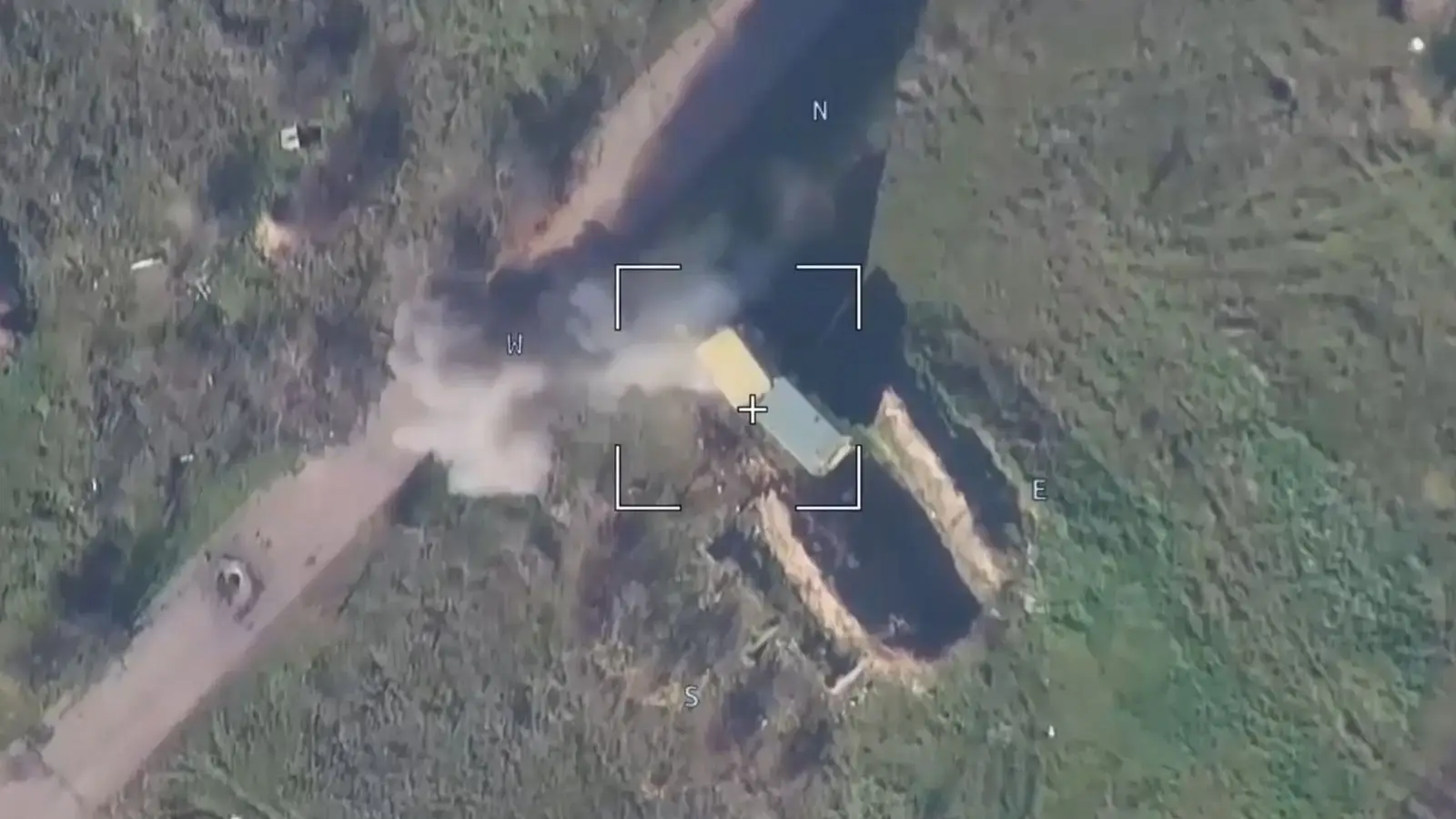
Earlier reports indicated that two Geran drones, after traveling hundreds of kilometers, struck helicopters deep in the enemy rear. Following that incident, Ukrainian military analysts suggested that Russian strike UAVs may be using elements of machine vision along with guidance systems linked to Starlink satellite internet.