 © Zеlеnskiу / Оfficiаl / Telegram

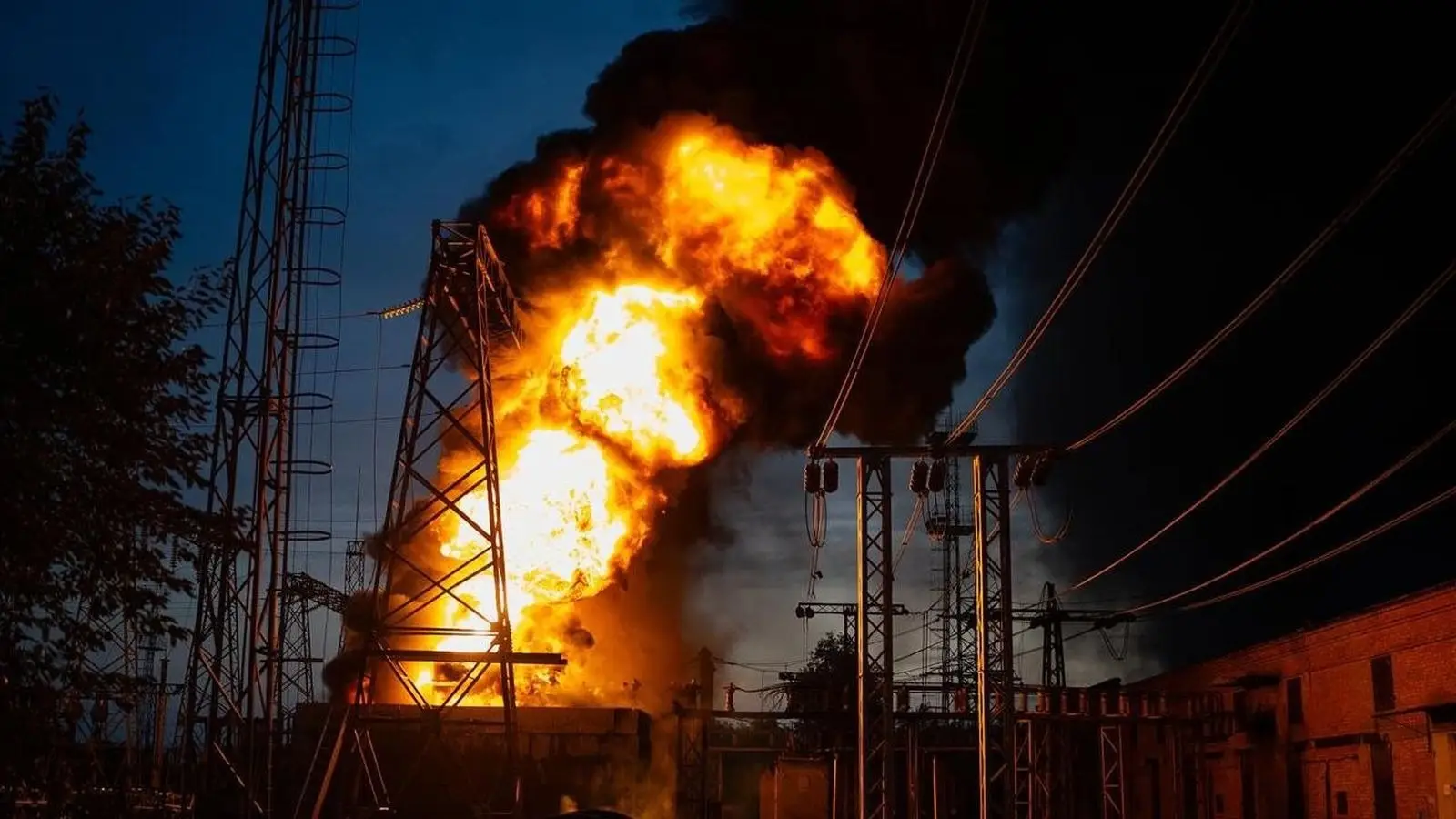
During the night of 7 February, Russian forces introduced a new tactic in a massive strike on Ukraine’s energy infrastructure, reportedly managing to cut the number of missiles used almost in half while maintaining the intensity of the attack.
According to the Telegram channel Voennaya khronika, the main role of the hundreds of Geran and Gerber drones was not to hit targets on the ground but to overload Ukraine’s air defense system. This swarm of unmanned aircraft was used to saturate Ukrainian air defenses and open a corridor for cruise missiles flying in behind them. The authors state that, judging by the outcome, the drones fulfilled this task.
The channel reports that the Burshtynskaya thermal power plant took 12–14 hits from Kalibr missiles and was knocked out of operation for a long period. The Zapadnoukrainskaya substation was struck by five Kalibrs, while the Dobrotvorskaya TPP was hit by twelve.
Substations in Rovno and Grabov were targeted by at least five Kh-101 missiles with cluster warheads each. As for the Vinnitskaya 750 kV substation, it is not yet clear which specific missile type disabled the facility. An additional six missiles were launched at smaller substations in Rovno Region.
Voennaya khronika notes that in total around 50 missiles of various types were used in the strike, whereas previous operations of this kind typically involved 80–100. Despite the reduced salvo size, the result is described as extremely painful for the Kiev regime.