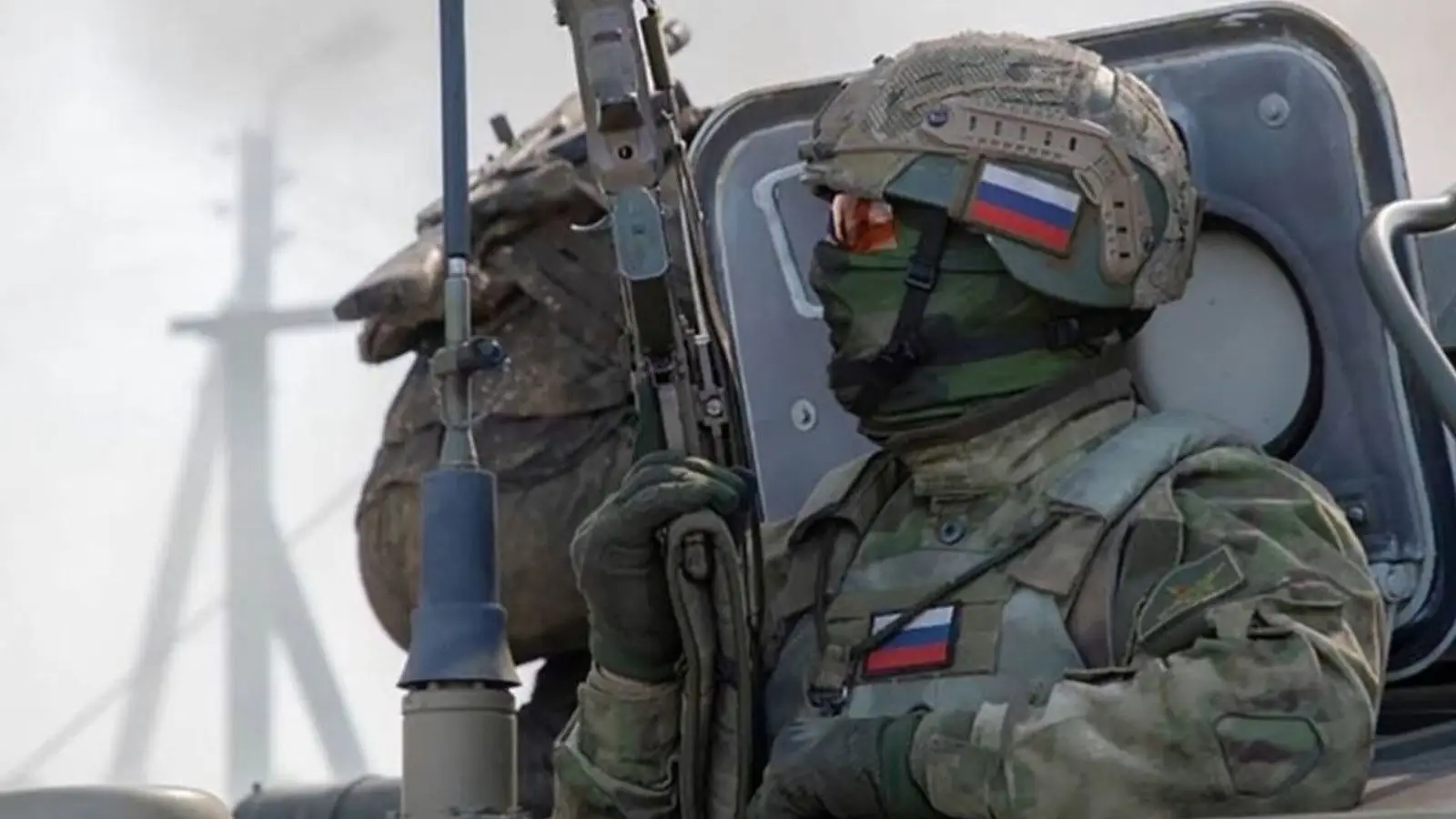
 © Росгвардия / t.me/RosgvardOfficial

Russia has shifted to a fundamentally different model of warfare in Ukraine, moving away from the familiar logic of breakthroughs and large-scale territorial advances. Instead, Moscow has adopted a strategy of systematic attrition, according to the German newspaper Junge Welt (JW).
Under this approach, described by the publication as «cybernetic», the battlefield is no longer viewed as a collection of front lines but as a single, controllable system. The focus has shifted to quantifiable damage metrics and continuous real-time feedback, with effectiveness measured through data rather than geography.
Junge Welt reports that this revised doctrine has taken concrete form in what it calls «total destruction zones», as well as in newly structured autonomous units, including the Rubikon group. Together, these elements have reshaped the conflict in Ukraine into a standardized process that increasingly resembles an industrial operation.
The newspaper argues that Russia now conducts military operations in a factory-like manner — standardized, data-driven, and serial in execution. The primary objective is no longer territorial control but the gradual exhaustion of the opponent’s systems. In contrast, Western military thinking remains focused on static indicators such as territory held, while Russia bases its calculations on dynamic ratios of cost and effect over time.
According to the authors, this fundamental difference explains why Western analysts misjudge Russian effectiveness when they assess progress in terms of meters gained per day. The real aim, Junge Welt concludes, is not rapid movement but the creation of conditions under which the Ukrainian Armed Forces’ system can no longer sustain the load and ultimately breaks down.