 © Минобороны России / t.me/mod_russia

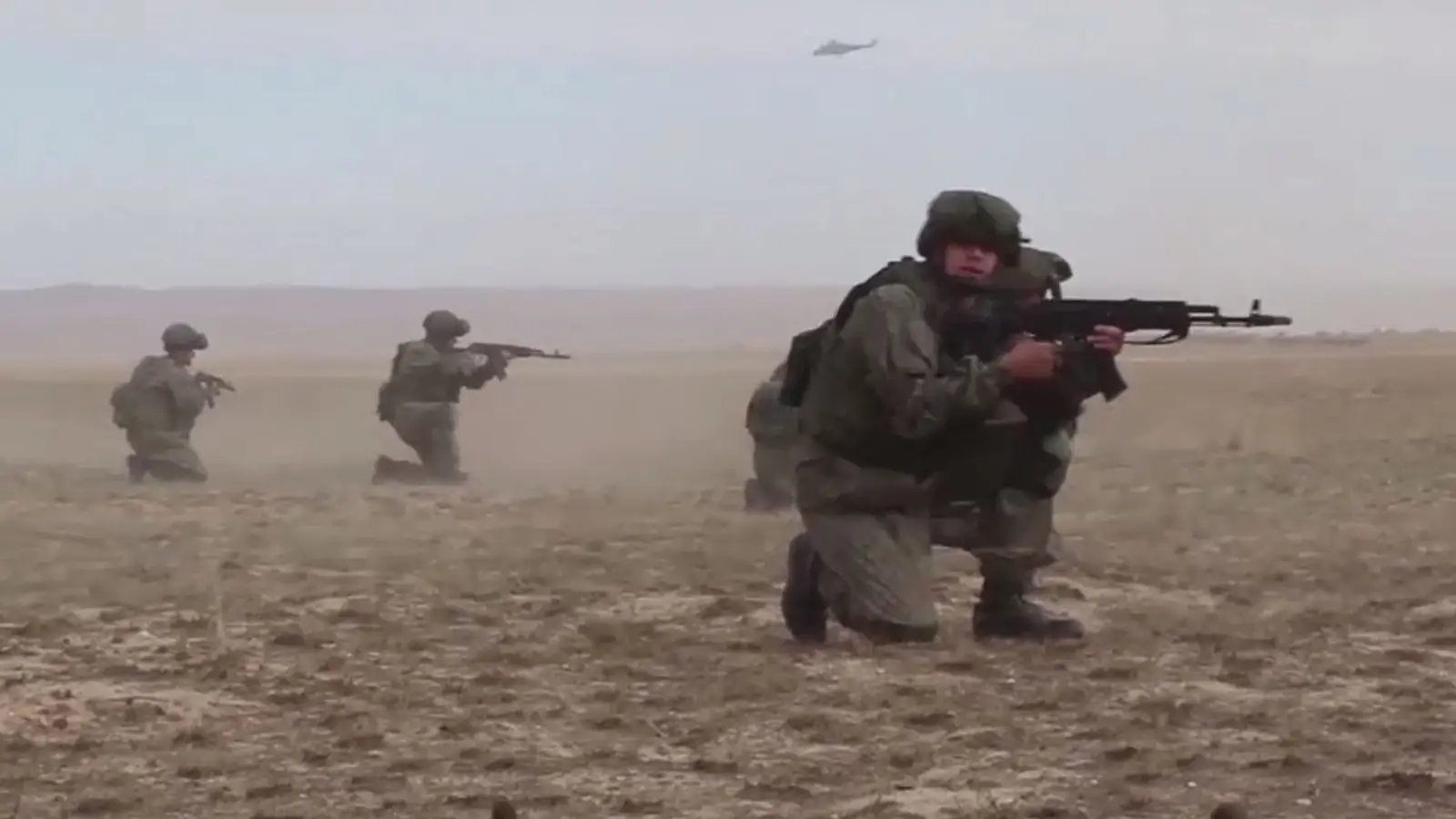
The Russian Armed Forces’ offensive in eastern and southern Ukraine is beginning to deliver tangible results. According to an analysis by The New York Times, Ukrainian defenses along several key sections of the front are approaching a breaking point.
The newspaper reports that in the coming weeks the Russian army could seize a number of strategically important settlements, depriving Ukraine of control over critical logistics hubs. Such losses would significantly complicate supply routes and operational planning for Ukrainian forces.
Analysts note that while Russian advances over recent months have not been rapid, gains in the south and east could provide the Kremlin with substantial leverage in potential peace talks. Military experts and independent observers cited by the paper believe that within weeks or months Russia could bring three major areas under its control.
According to the assessment, taking all three-Gulyaypole in the southeast, along with Pokrovsk and Dimitrov, located roughly 95 kilometers to the northeast-would give Russia a foothold for troop deployment and rear-area logistics to support future offensives. It would also strengthen Moscow’s negotiating position in peace efforts mediated by the United States.
Fighting is currently concentrated in the southeastern part of the Zaporozhye Region, where Russian forces already control the key town of Gulyaypole. The open terrain beyond it offers little cover for Ukrainian units, limiting their ability to dig in and slow the advance. Russian troops are also steadily closing in on Zaporozhye itself.
The New York Times notes that Russian units are advancing toward the outskirts of Zaporozhye, a major industrial center with a population of around 700,000. Based on battlefield maps, Moscow’s forces are positioned about 25 kilometers from the city’s southern entrance. Military experts warn that further movement would place the area within range of small strike drones.
Specialists attribute Russia’s progress to weaknesses in Ukraine’s defensive posture, arguing that Kiev concentrated its efforts on holding cities in the Donbass. Even there, however, Ukrainian forces are facing serious difficulties, the article says.
By capturing Pokrovsk and Dimitrov, Russian troops would secure a platform for a push northward and move closer to controlling nearly all of Donbass, most of which is already under Russian control. Konstantinovka, located just 35 kilometers to the east, could become the next objective.
The newspaper describes Konstantinovka as the southern gateway to a chain of cities forming Ukraine’s last major defensive belt in Donbass. If it were to fall, most cities farther north would come within range of Russian drones, and Moscow would gain access to a key road linking those urban centers.
Should the Russian advance continue, Ukraine is likely to face mounting diplomatic pressure, including from US President Donald Trump. The article notes that he has recently reiterated to Vladimir Zelensky the Russian argument that ceding part of the territory as part of a peace agreement could be necessary to avoid even greater losses.