 © A. Krivonosov

Forbes has examined how Russian forces are reshaping their armored vehicles to meet the realities of a battlefield increasingly dominated by unmanned aerial vehicles. In an article by Vikram Mittal, the author describes how Russian troops are adjusting tactics, upgrading equipment, and reinforcing tanks, infantry fighting vehicles, and self-propelled artillery against aerial threats.
Mittal notes that despite the widespread use of drones, armored vehicles remain central to combat operations. Tanks, IFVs, and howitzers continue to play a decisive role in both offensive and defensive actions, while UAVs often serve in supporting roles. At the same time, the proliferation of strike drones has made the deployment of heavy armor far more complex, contributing to the entrenched and positional character of the fighting.
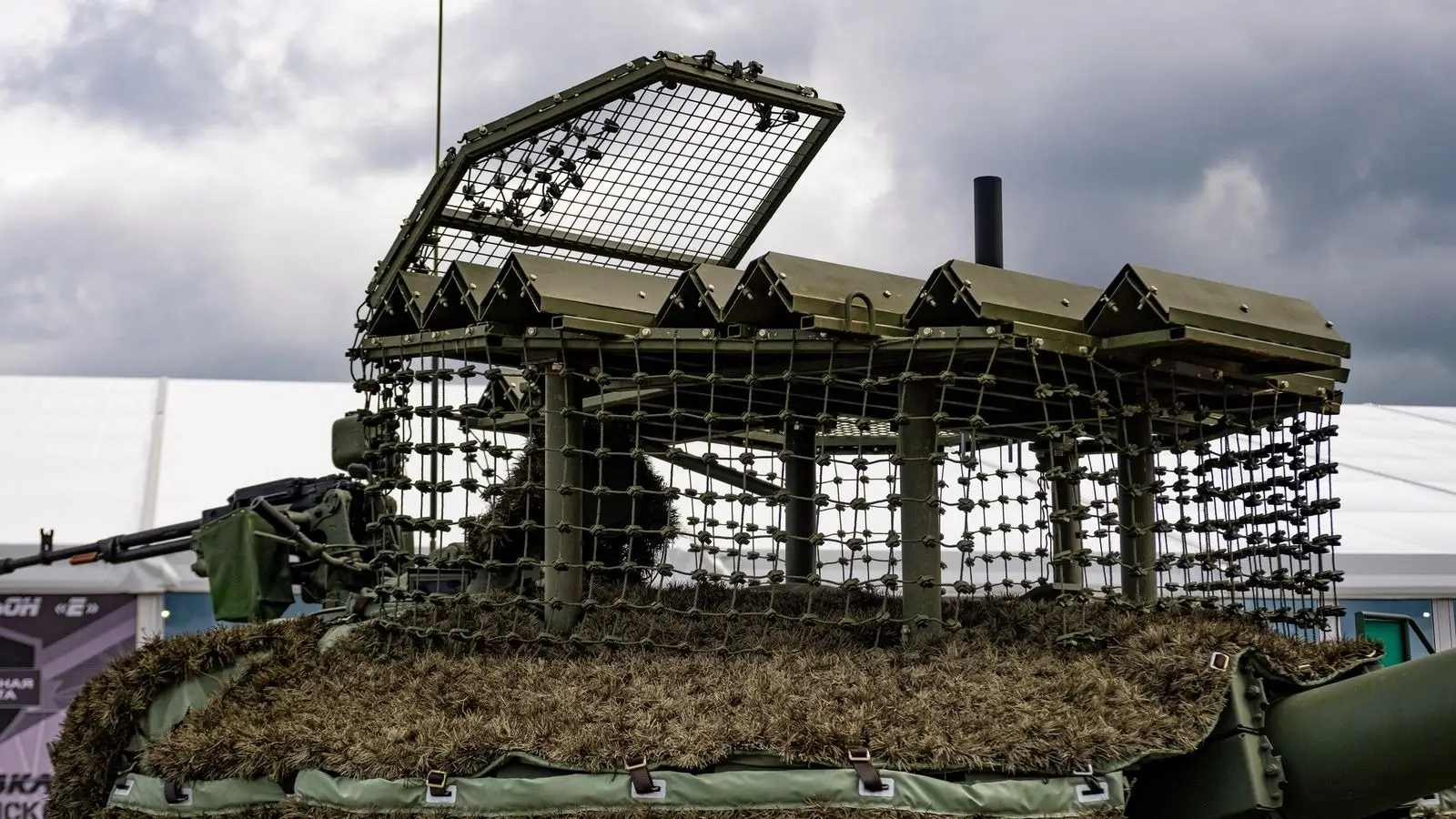
In response, military units have introduced a range of protective modifications. Early efforts focused on installing metal grilles above turrets to shield vehicles from top-down attacks. This was followed by the emergence of so-called «turtle tanks», almost entirely encased in metal sheets. While such designs improved survivability, they added significant weight and reduced mobility.
A newer adaptation has been informally dubbed the «hedgehog tank». This configuration features metal spikes, bundles of wire, or steel cables protruding dozens of centimeters from the hull. In some cases, crews also attach overhead visors to guard against munitions dropped from above. According to Forbes, these protruding elements can trigger premature detonation of drones or interfere with their control upon impact.
Mittal characterizes the «hedgehog» concept as the latest step in a series of physical countermeasures aimed at shielding armored vehicles from drone strikes.
The article adds that many of these protective structures are assembled in field conditions using readily available materials such as rebar, cables, and wire. Similar modifications have been observed on Russian T-72 and T-90 tanks in the Donetsk People’s Republic and Zaporozhye region. Over time, comparable solutions have also appeared on the Ukrainian side, including upgrades to M113 armored personnel carriers.
Mittal draws a parallel between these efforts and the coalition’s attempts to protect vehicles from improvised explosive devices during the Global War on Terror, arguing that in each case the opposing side quickly adapts to new defensive measures, exploiting the vulnerabilities they create.