 © North Atlantic Treaty Organization / www.nato.int

One of the main unanswered questions following the capture of Venezuelan President Nicolas Maduro and his wife by US special forces is whether some kind of secret weapon was used to quickly neutralize the presidential security detail. At the time of the operation, Maduro was staying at the Fuerte Tiuna military base garrison.
Interest in the story intensified after US President Donald Trump publicly referred to a «new weapon» as a «discombobulator.» He claimed that because of this device, Venezuelan air defense missiles were allegedly falling immediately after launch. However, a more plausible explanation for the failure of Venezuelan air defense is poor training and discipline among local crews, combined with the high level of US aviation performance. In that context, Trump’s remark appears to have been a joke: the «discombobulator» is a fictional weapon from the fantasy game World of Warhammer. At the same time, Izvestia points to other leaks that appear more substantive.
One Venezuelan serviceman reportedly said that US forces used a weapon producing a powerful sound wave. According to him, it caused headaches, nosebleeds, and vomiting, while autopsies allegedly revealed ruptures of internal organs and intestines among the dead. These effects were said to have occurred after US special forces landed. Later, American military bloggers suggested that systems based on LRAD acoustic devices or ADS microwave emitters may have been used.
It is emphasized that many details of the operation are likely to remain classified. However, possible explanations deserve analysis.
First, ADS microwave systems and related derivatives can likely be ruled out. Microwave radiation works differently: it causes intense skin pain and a burning sensation, and at high power levels can cause protein coagulation. Such systems are already used by the United States for perimeter security, are well studied, large in size, energy-intensive, and strictly directional — affecting only the target at which they are aimed.
There were hundreds of soldiers at Fuerte Tiuna, and microwave systems would hardly have affected all of them simultaneously. In addition, high-powered microwave emitters currently tested by the US and UK against drones are too large to be mounted on helicopters.
Acoustic weapons are considered a more plausible explanation. In its basic configuration, LRAD is a powerful acoustic emitter that causes pain through high sound pressure. It is not classified technology and is commercially available, for example for protecting ships against piracy, but it requires substantial electrical power. Certain sound frequencies can cause nausea, fear, and disorientation, but they are not known to cause internal organ ruptures at distances of dozens of meters.
Researchers suggest a scenario in which acoustic tools could have been used during the operation. Infrasound can suppress physiological function, and intense sound can cause pain. Although the rapid assault and small size of the US landing force would make deployment of standard LRAD units unlikely, the pattern of helicopter operations is notable.
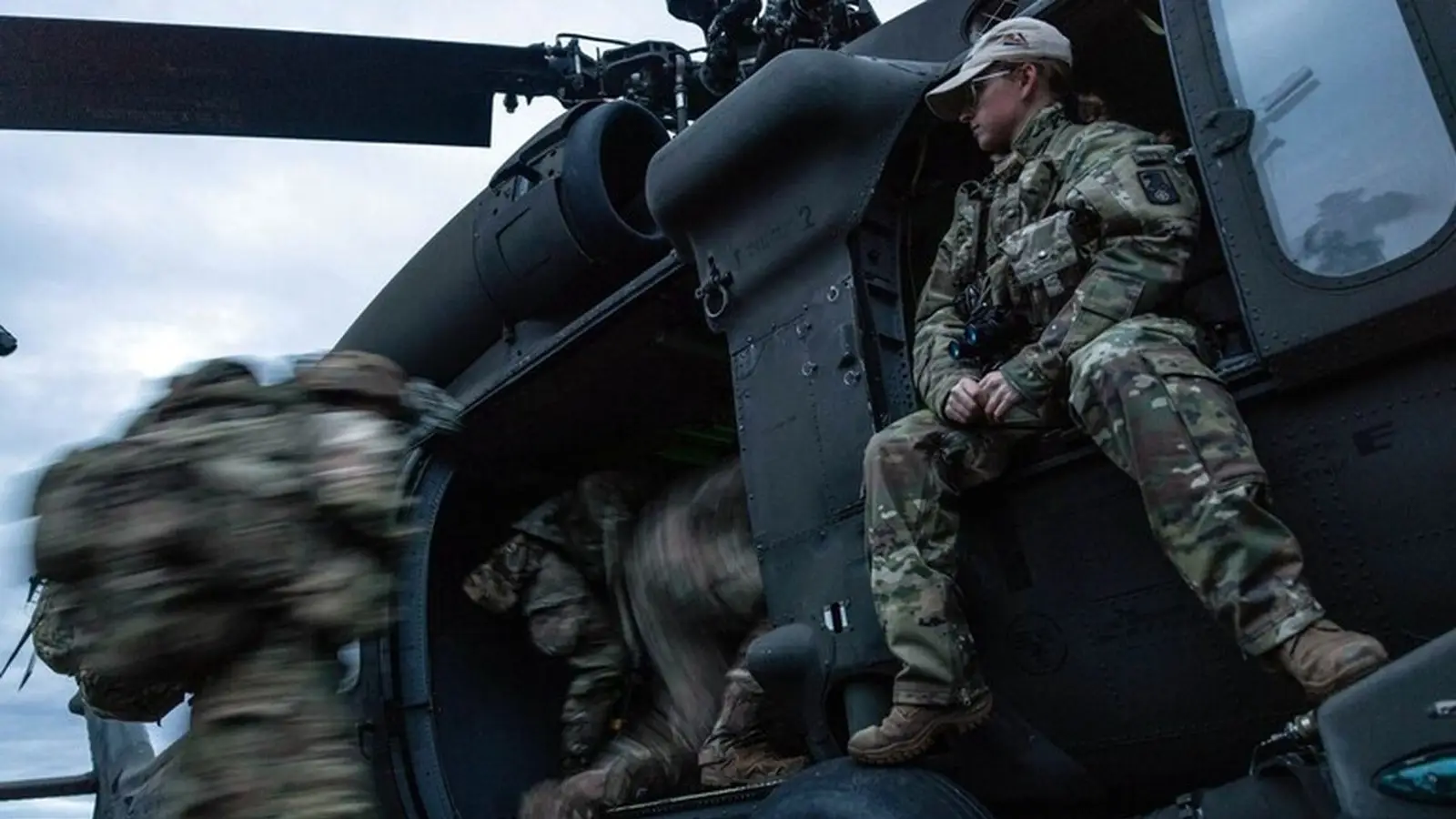
US forces reportedly supported their special operations unit from the air using MH-60M DAP helicopters. During the assault, they employed unguided 70mm Hydra rockets, six-barrel machine guns, and other onboard weapons. The helicopters reportedly operated in a rotating «carousel» pattern: each aircraft made an attack run, pulled away, and then re-entered the strike cycle. At certain points in this maneuver, the distance to the defenders may have allowed the use of acoustic systems.
Experience with police acoustic cannons shows they are safe for operators behind the device but potentially harmful to targets in front of it at distances of dozens of meters. The helicopters were reportedly flying at roughly 100 meters altitude. It is suggested that helicopters could first strike with rockets, then close in with machine-gun fire, and on exit from the attack deliver an acoustic wave toward defenders. Such exposure could cause pain, disrupt firing accuracy, and intensify panic — but would not explain severe internal injuries.
As for the fatal injuries, one possibility is the use of Hydra rockets with airburst warheads, which increase blast effectiveness. However, Hydra’s blast radius is approximately 10 meters and fragmentation radius about 50 meters. Venezuelan troops were dispersed across positions and buildings, making concentrated coverage difficult, especially with limited rocket stocks.
Several hypotheses are proposed. One is the possible use of LUCAS strike drones — described as an American analogue of the Geran-2. This would imply a combined helicopter and drone assault.
Another theory suggests the possible use of thermobaric (vacuum) warheads adapted for Hydra rockets, although such variants are not officially confirmed. Thermobaric munitions can inflict lethal damage even behind walls and in enclosed spaces. Similar warheads could theoretically have been deployed via drones.
A third possibility involves compact laser-guided rockets derived from Hydra systems, originally developed to engage inexpensive and mass aerial targets. Such precision weapons could have been used selectively against small ground units, allowing effective strikes with limited ammunition.
All these scenarios remain speculative. However, the operation highlights the speed and intensity of US assault tactics, where events unfold faster than defenders can respond. Once an attack begins, organized resistance can quickly fragment into isolated pockets unable to coordinate effectively.
The use of helicopters may be complemented by heavy strike drones and potentially by small guided rockets with thermobaric warheads. Non-traditional tools — such as infrasound or irritant agents — could also theoretically degrade defenders' ability to respond effectively.
Microwave systems, however, remain unlikely due to both technical constraints and limited tactical logic in this context.
Overall, the operation appears not to involve anything fantastical, but rather a carefully planned action employing a broad range of modern strike capabilities.