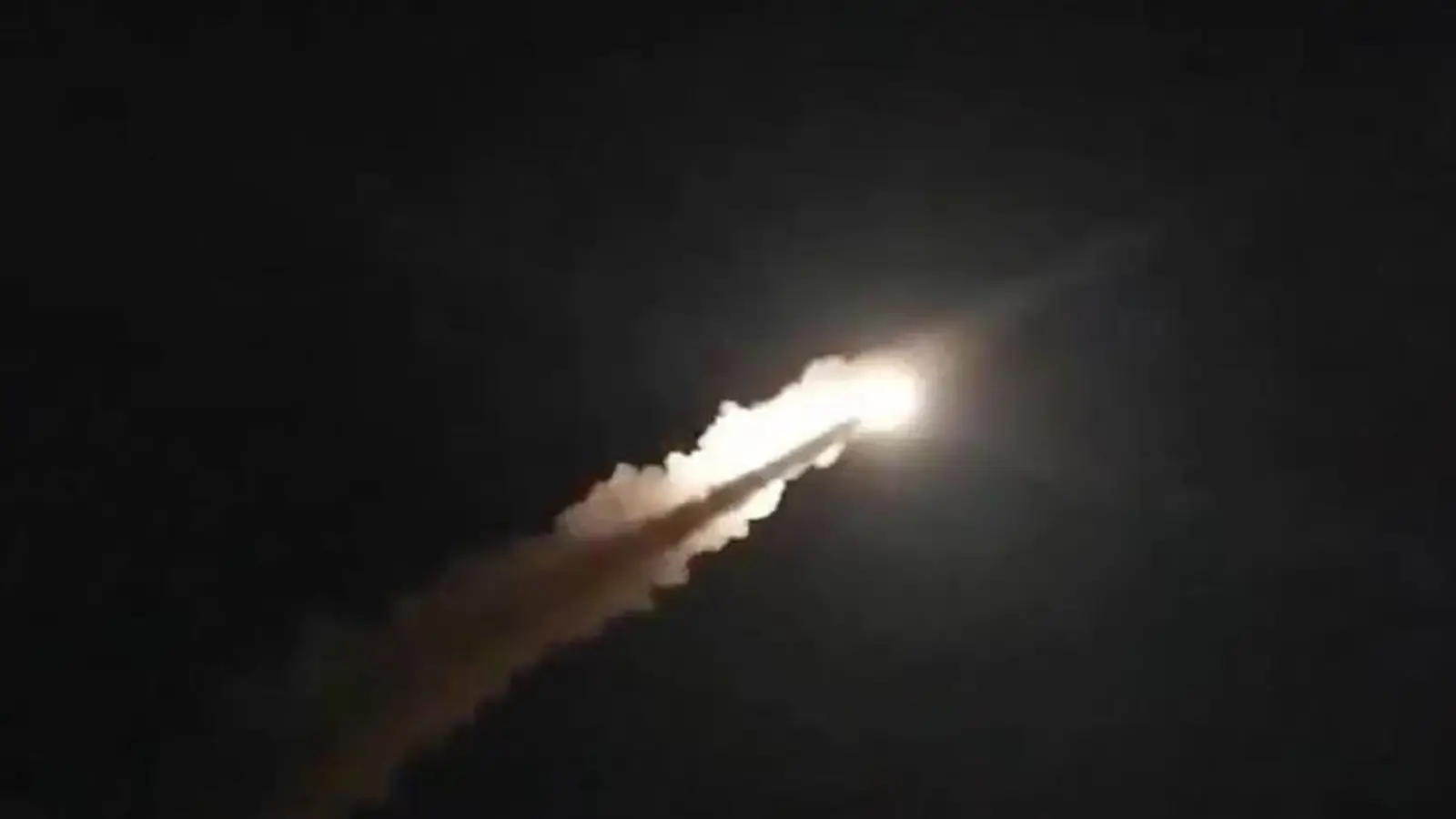
 © Минобороны России / t.me/mod_russia
The Armed Forces of Ukraine have resumed the use of long-range «Flamingo» missiles amid the prospect of renewed negotiations between Ukraine, Russia, and the United States. This assessment was shared with NEWS.ru by military expert and air defense historian Yuri Knutov.
The Armed Forces of Ukraine have resumed the use of long-range «Flamingo» missiles amid the prospect of renewed negotiations between Ukraine, Russia, and the United States. This assessment was shared with NEWS.ru by military expert and air defense historian Yuri Knutov.
In his view, the Ukrainian side is employing a layered strike strategy. The attacks begin with decoy drones, including Lyuty-type UAVs and other unmanned aircraft, sent in to distract air defense systems. Surface-to-air missiles are expended to intercept these targets, gradually depleting available munitions. Only after air defense capabilities are weakened are the primary strike assets launched — among them the «Flamingo» missiles.
Knutov noted that the missile itself is relatively inexpensive while capable of traveling distances of up to 3,000 kilometers and carrying a warhead weighing as much as one ton. Its high flight altitude further complicates interception. Even so, he stressed that Russian air defense systems are capable of countering such threats. For that reason, he argued, the use of «Flamingo» requires coordination with diversionary attacks to increase effectiveness.
According to Knutov, the renewed launches may indicate that Ukrainian forces have restored the production facility responsible for assembling the missile. He also linked the timing of the strikes to a possible new round of talks with Russia and the United States.
The expert suggested that the escalation may serve additional purposes. Kyiv, he said, could be seeking to demonstrate to Western partners that it retains the capacity to sustain military operations, thereby strengthening its case for continued financial assistance. Preparations for potential elections inside Ukraine may also be a factor, as the authorities would be interested in projecting an image of active resistance.
As for potential countermeasures, Knutov outlined two options. The first — and in his assessment the most effective — would be to locate and destroy the facility where «Flamingo» missiles are assembled. The second would involve further strengthening air defense systems to repel incoming strikes. However, he concluded that targeting the production site would be both more cost-efficient and more effective overall.