 © By Александр Сергеев,
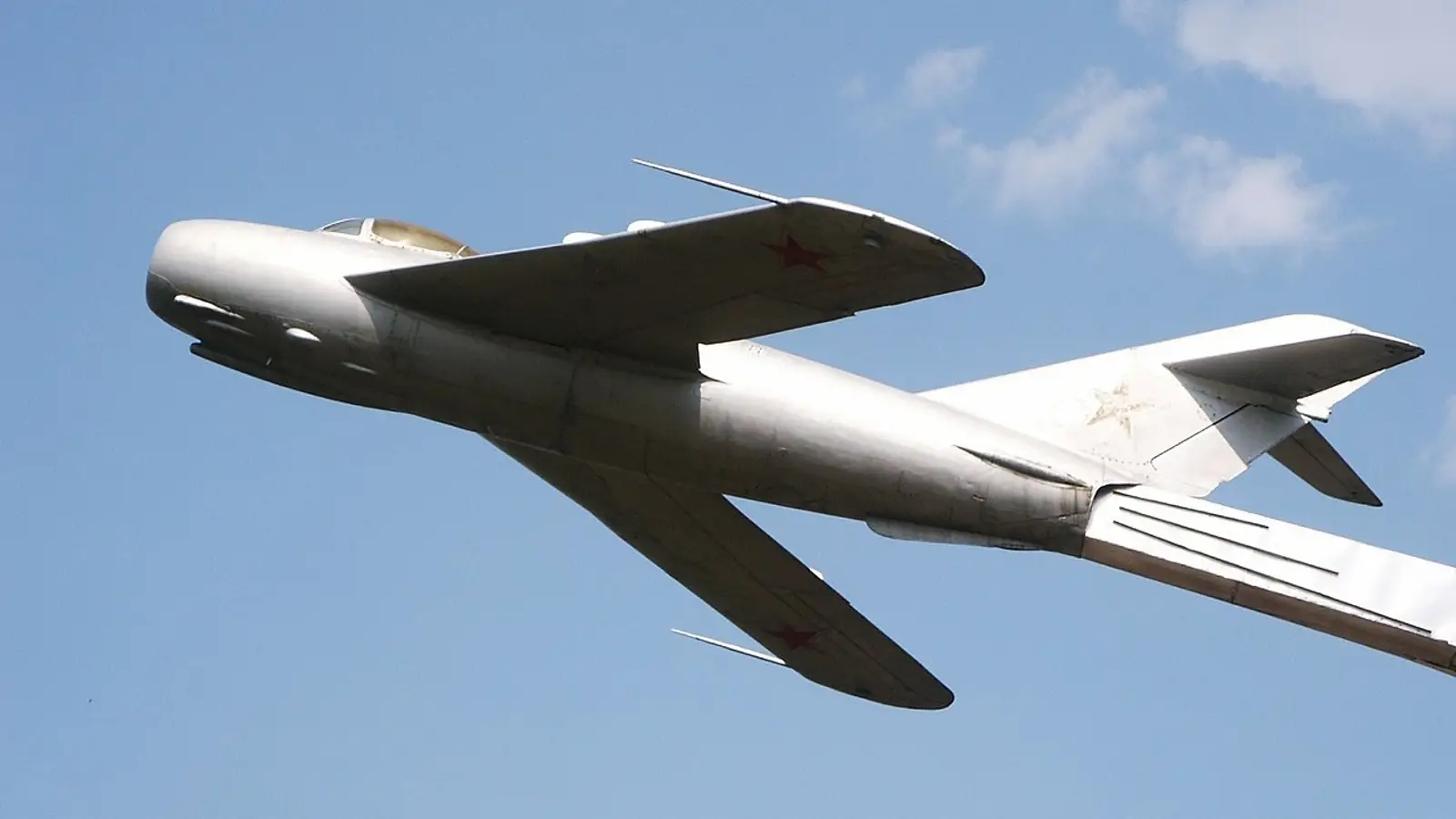
The Soviet-built MiG-15 jet fighter occupies a distinctive place in the history of global aviation. As Discovery writes, the aircraft reshaped the balance of power in the skies and forced Western countries to reconsider assumptions about their technological edge.
Developed in the late 1940s by the Mikoyan-Gurevich Design Bureau, the MiG-15 became the first mass-produced Soviet jet fighter and set new benchmarks for jet aviation. Its emergence was a direct response to the rapid advances in aircraft technology that followed the Second World War.
At the time, the Soviet Union lagged behind in jet engine development, while the United States and Britain already fielded advanced aircraft, including the B-29 Superfortress, de Havilland Vampire and Gloster Meteor. Early Soviet jet projects were largely adaptations of piston-engine designs, but the MiG-15 represented a fundamentally new approach.
Soviet engineers incorporated swept-wing technology, enabling the aircraft to reach near-supersonic speeds while retaining strong maneuverability. During the Korean War, the MiG-15 clashed with American F-80 Shooting Star and F9F Panther jets, demonstrating advantages in several performance areas. In response, the United States accelerated deployment of the F-86 Sabre, which became its principal rival.
Deliveries of the MiG-15 to the Air Force began in 1948, with full-scale production launching in 1949. More than 17,000 aircraft in various modifications were ultimately built.
The fighter saw active service in the Korean War, the Suez Crisis and the Taiwan Strait conflicts. In 1968, the first cosmonaut, Yuri Gagarin, was killed while flying a MiG-15UTI training variant. In Vietnam, the aircraft was used primarily in a training role.
Discovery’s reviewers describe the MiG-15 as one of the most successful jet fighters of its era. Its straightforward design, reliability and combat effectiveness shaped the trajectory of subsequent Soviet aviation projects, including the development of the MiG-17 and MiG-21.