 By
By 
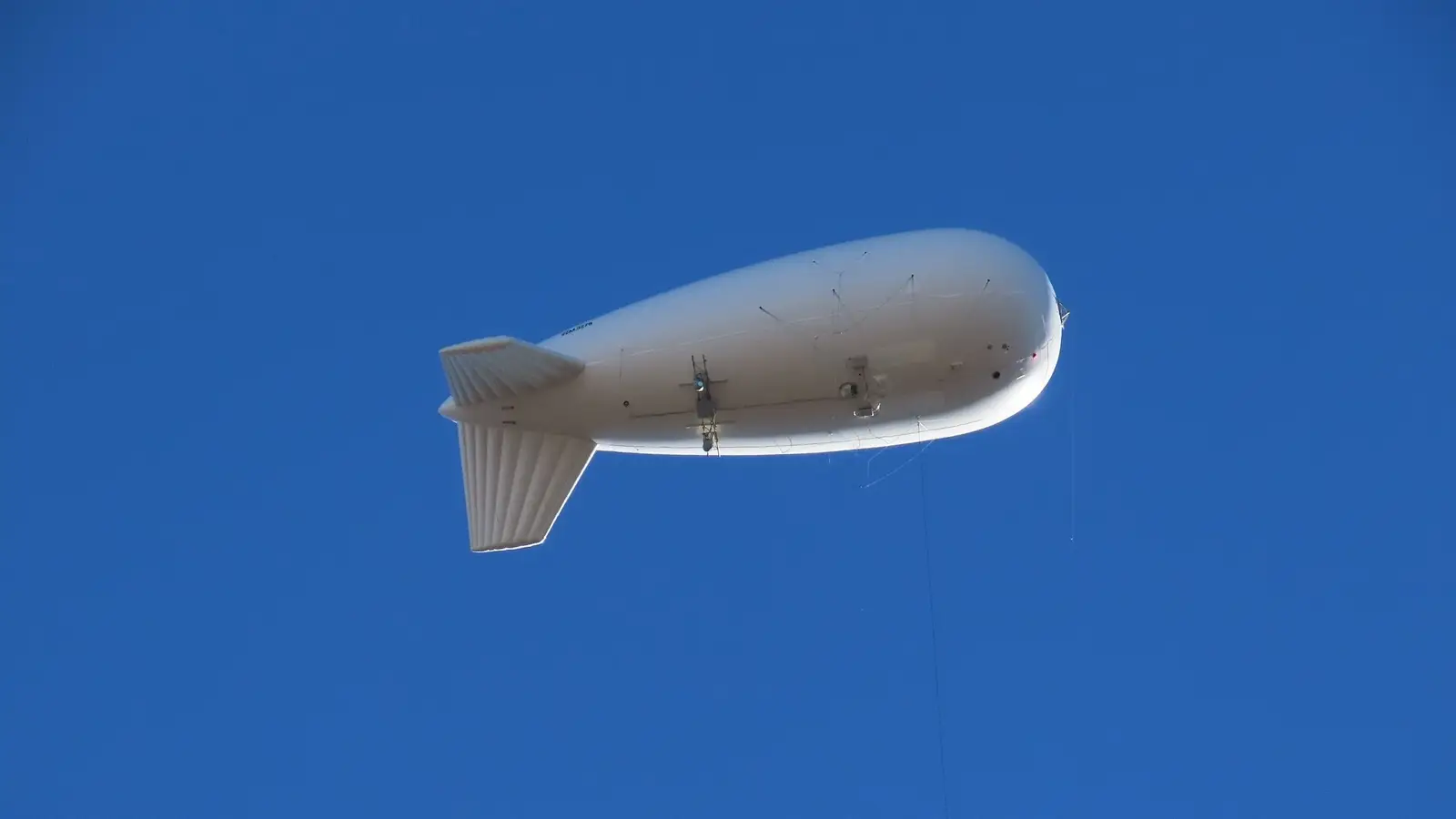
Russia has conducted tests of a new high-altitude aerostat platform that can be used to organize communications systems in a combat zone. The system in question is the Barrazh-1 high-altitude aerostat complex, whose first flight took place several days ago. Media outlets, including the newspaper Vzglyad, note that in the future such platforms could form the basis of a domestic analogue to the Starlink satellite system.
At present, Barrazh-1 is a tethered high-altitude aerostat equipped with a pneumatic balancing system that allows its position on the tether to be adjusted. The platform rises to an altitude of up to 20 kilometers — into the stratosphere — and can carry a payload of up to 100 kilograms. Currently, it can remain aloft for several days, though this duration is expected to increase in the future.
One of the key challenges in organizing communications under combat conditions remains terrain: buildings, elevations, and folds in the landscape interfere with radio wave propagation. Shortwave communications theoretically allow long-distance transmission due to ionospheric reflection, but in military conditions their use carries risks. Enemy signals intelligence can detect such channels, and the bandwidth of the HF range is insufficient for transmitting large volumes of data.
The AFU actively uses high-bandwidth satellite communications systems, as well as military radio stations designed to transmit significant amounts of information. At a certain point, the Ukrainian side began using the Starlink system, which provided stable satellite communications even to small units, including the ability to transmit video signals. Russian units previously also had access to this system, but later SpaceX CEO Elon Musk introduced restrictions. A Russian satellite constellation comparable to Starlink is still under development, which makes an alternative solution necessary.
Such a solution could be a network of high-altitude relay platforms. Deploying a sufficient number of aerostats equipped with radio transmission systems could provide coverage comparable to a satellite system, while the payload capacity of the Barrazh-1 high-altitude aerostats allows the placement of the necessary communications equipment.
Technically, the aerostat consists of an envelope made of durable, airtight material filled with helium. Altitude is regulated by a pneumatic balancing system and additional internal bladders, while its position is maintained by a tether. The ground segment of the complex includes a winch and a transport vehicle. Despite the apparent simplicity of the design, development required years of testing and refinement.
The manufacturer is Aerodrommash, a resident of the Ushkuynik Scientific and Production Center in Veliky Novgorod. The center previously gained recognition for its fiber-optic FPV drones «Knyaz Vandal Novgorodsky,» which played a notable role in combat operations in the Kursk region.
A network of aerostats deployed over national territory could create a decentralized radio system without critically vulnerable nodes. A large number of airborne relays would ensure high bandwidth and resilience against the loss of individual network elements.
It is noted that options for countering such aerostats are limited: surface-to-air missile systems are not designed for such targets, and unmanned aerial vehicles are not capable of operating in the stratosphere. When aerostats are deployed over Russian territory, striking them becomes virtually impossible. Possible countermeasures — such as attacks on ground units near the tether site or attempts to cut the tether — are considered unlikely or technically manageable. In addition, a controlled descent system in the event of tether damage can be incorporated into the design.
In the longer term, a transition from tethered aerostats to unmanned airships equipped with electric motors and powered by solar panels is being considered. However, the tests of Barrazh-1 already demonstrate the ability to deploy a large-scale military communications system in a short time — not a direct analogue of a satellite network, but an effective and significantly cheaper alternative.