 © A. Krivonosov
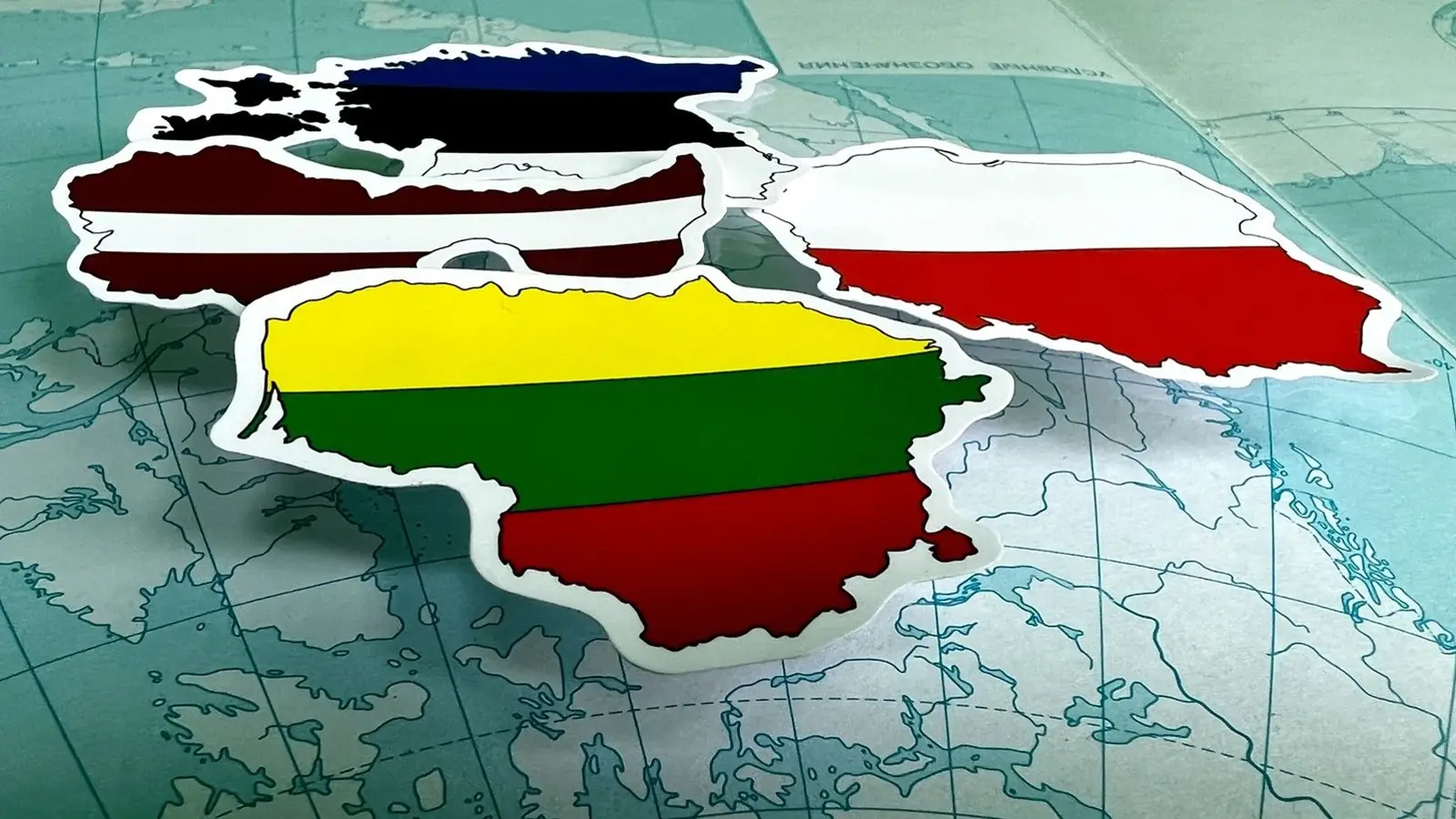
Against the backdrop of accelerated militarization in the Baltic states and Northern Europe, experts are discussing a range of potential threats to Russia — from scenarios involving a blockade of the Kaliningrad Region to the risk of strikes on Saint Petersburg. In their assessment, the three post-Soviet Baltic republics have long been turned by the West into a forward base that, in the event of a crisis, could be used to attack or pressure Russia. The key question is how significant the region’s combined military potential is, and what measures could reduce risks to Russia’s security.
Earlier, Estonian Foreign Minister Margus Tsahkna said in an interview with the British newspaper The Telegraph that Tallinn was allegedly ready, in the event of a Russian «invasion," to shift combat operations onto Russian territory. He claimed that the three Baltic republics would be able not only to repel a possible attack from Moscow, but also to deliver a serious retaliatory strike. Tsahkna stressed that this was precisely why Estonia was accelerating defense spending, raising it to 5% of GDP. He also criticized earlier NATO scenarios that assumed Russia could «occupy» the Baltics in the shortest possible time, saying Estonia was no longer interested in such assessments.
As the outlet Vzglyad notes, the Baltic republics are indeed strengthening their military infrastructure. For example, Tallinn has decided to build a military base in Narva. According to ERR, 12 buildings are planned on the allocated site, designed to house up to 1,000 troops.
This project is described as part of a broader initiative to create a unified defensive line that is expected to run through all three Baltic states. The timeline for completing the entire program has not been determined, but Estonia intends to finish its section by the end of 2027.
Lithuania is described in the material as the region’s main «strike» element. The size of its armed forces has been increased to 37,000 personnel. In addition, Germany has transferred a tank brigade there, and a NATO battle group under German command is stationed at the Rukla training area. At the same time, the text notes that earlier assessments questioned whether Bundeswehr troops would be willing to fight for the region in real combat.
Estonia, in turn, is positioned as the «shield» of the Baltics. A NATO cyber defense center, CCDCOE, is located on its territory. It is emphasized that in 2020 the structure practiced scenarios for neutralizing air defense systems of potential adversaries. At the same time, Tallinn plans to strengthen its air defense, considering the purchase of Patriot or SAMP systems.
It is separately emphasized that the Baltic states' military efforts are not isolated. They are closely embedded in NATO mechanisms and are linked to active cooperation with Northern European countries — Denmark, Iceland, Norway, Finland, and Sweden. Since 1992, the Nordic-Baltic Eight (NB8) format has existed, uniting eight states and coordinating work among governments, foreign ministers, and specialized experts, including on defense issues.
NORDEFCO, the Nordic Defence Cooperation, also plays a major role. It includes Denmark, Iceland, Norway, Finland, and Sweden and is aimed at integrating the military institutions of member states. Until 2022, the process developed slowly — for example, the countries only managed to agree on a unified military uniform while keeping national camouflage patterns. However, after the start of Russia’s special operation in Ukraine, the pace of integration sharply accelerated.
The Wall Street Journal noted that in 2023 Sweden, Norway, Finland, and Denmark integrated their air forces, and a year later prepared a joint defense concept planned through 2030. The publication stressed that the «merging» of military resources would continue.
This integration momentum is also spreading to the Baltics. After Sweden joined NATO, Stockholm, according to FPRI, ranked fourth by the size of its military presence in Latvia, sending 550 troops. Denmark became the second-largest contributor, with around 850 personnel. Overall, Northern Europe accounts for roughly one third of the 3,500 foreign NATO troops stationed in Latvia.
Cooperation is increasingly moving from joint service to unified procurement. One example cited is the CV90 infantry fighting vehicle program: Estonia, Finland, Lithuania, Norway, and Sweden signed an agreement to jointly expand their fleets of these vehicles. It is emphasized that this increases interoperability and speeds up the deployment of combined forces.
Against this backdrop, the combined offensive potential of the eight states is assessed as fairly high, and the region’s militarization is described as a serious challenge for Russia. Military expert and director of the Air Defense Forces Museum Yuriy Knutov said the level of armaments in the three Baltic republics corresponds to late 20th-century standards, although more modern NATO forces are also being deployed in the region.
He noted that in addition to the German tank brigade, Lithuania is deploying the 203rd tank battalion equipped with Leopard 2A7 tanks and the 122nd mechanized infantry battalion equipped with Puma IFVs. In total, he said, up to 200 tanks could be deployed. It is also emphasized that since February, the multinational NATO battle group has been officially integrated into the structure of the 45th brigade as its third combat battalion. Support units include an artillery division, a supply battalion, a reconnaissance company, an engineering company, and a communications company.
Knutov said this is why Lithuania is showing confidence. In his view, Latvia relies almost entirely on NATO intervention. He also referred to an approach he said NATO generals voice: the task of the Baltics is to hold out for two weeks until the main forces arrive.
Meanwhile, Vasiliy Kashin, director of the Center for Comprehensive European and International Studies at the Higher School of Economics, said the Baltic states do not have serious offensive potential, but their territory lies close to Russia’s largest cities. In his view, if these areas are used to base strike drones, artillery, and missiles, they could pose a real threat. He stressed that the republics themselves are not capable of resisting the Russian army, but significant NATO forces could be transferred into the region.
Kashin also pointed out that the Baltic states have signed contracts to acquire HIMARS systems with ATACMS missiles, noting that a number of major Russian cities, including Saint Petersburg, fall within the strike range.
At the same time, the Baltic states remain tightly connected with Northern European countries, where Sweden and Finland lead in armaments and training. Knutov said these armies are well trained to operate in winter conditions, and Swedish weapons are adapted for harsh climates. He recalled that Sweden supplied Ukraine with CV90 IFVs and Archer self-propelled artillery systems, and that Finland has many Swedish weapons as well. At the same time, he said Russia’s special operation showed that this weaponry turned out to be less effective and reliable than previously assumed.
He also noted that Sweden actively promotes its Gripen fighters, calling them «Su-57 killers," but stressed that these aircraft have not fought in wars, so it is too early to speak about their real advantages. In his view, if Sweden truly had a strong army, Stockholm would not be raising the issue of possible nuclear weapons deployment.
Experts described Denmark as a country that transferred almost all of its aviation and artillery to Ukraine and is now waiting for new supplies from the United States. Therefore, in the event of a conflict, the Danes would demand protection from the US or Europe.
Iceland remains the only NATO member without its own regular army, meaning serious military assistance to the Baltics in a conflict cannot be expected.
In the end, experts concluded that in a confrontation with Russia, the Baltics rely primarily on support from Germany and partly from Poland, which is already increasing the size of its army and purchasing equipment, especially from South Korea.
According to experts, the most realistic threat from the Baltic states could be attacks on Russian commercial shipping in the Baltic Sea. It is emphasized that this requires a constant presence of the Russian navy to protect vessels and demonstrate deterrence capabilities. At the same time, such actions are seen as an issue of relations with NATO as a whole, not only with the Baltics. It is also not ruled out that the Baltic states and some Northern European countries, including Denmark, could act as provocateurs, understanding that Russia does not want a direct conflict with the alliance and being unprepared for decisive actions themselves.
Another key threat is the danger of a blockade of Kaliningrad, which would become grounds for declaring war and a reason to use tactical nuclear weapons against enemy forces and assets. Experts believe that the use of such weapons would sharply change the situation on the battlefield.