.jpg)
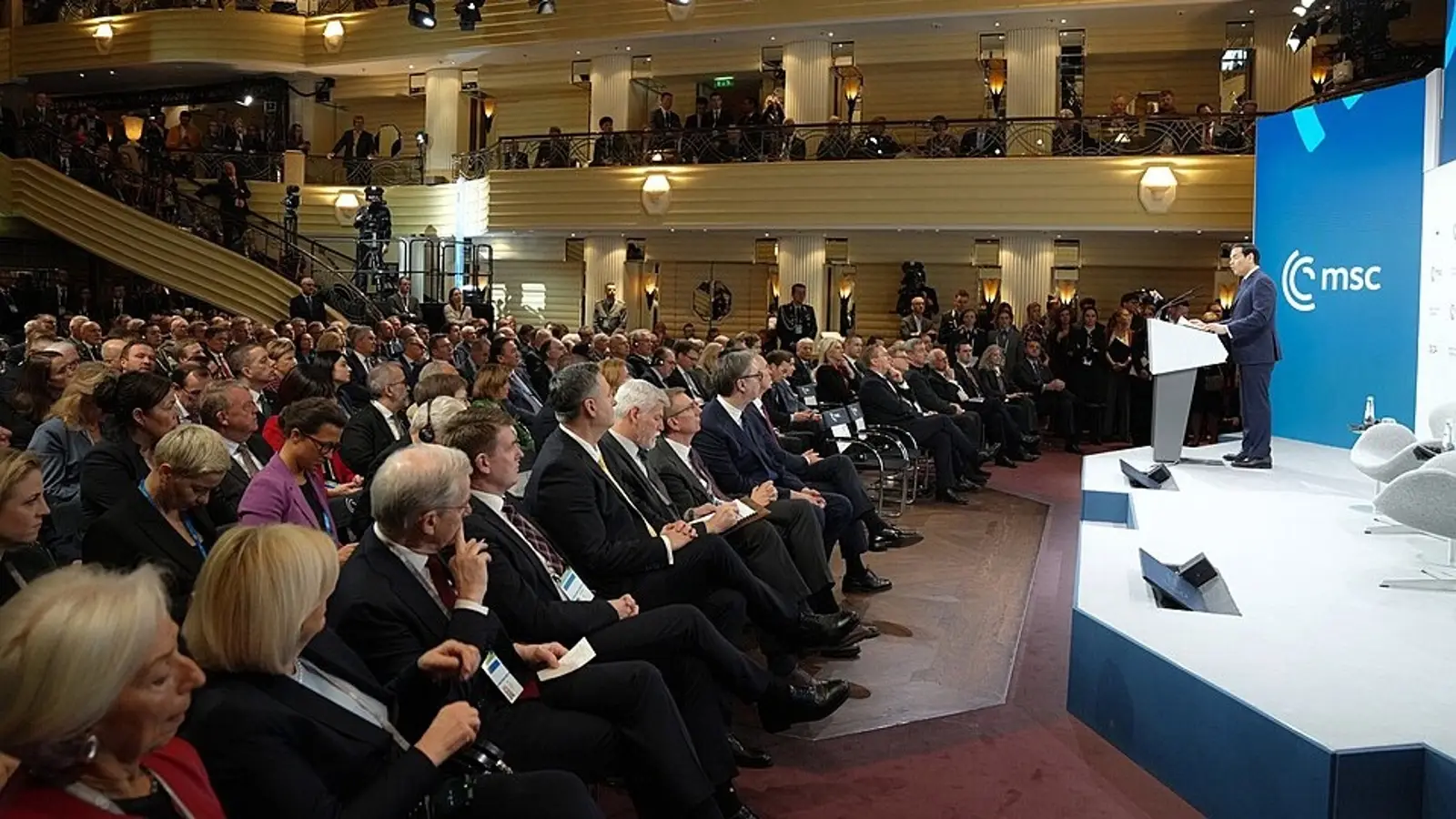
The 62nd Munich Security Conference has drawn a symbolic line under the old global order that, for decades, underpinned Europe’s stability and economic growth. That assessment was offered to RIA Novosti by State Duma Vice Speaker Alexander Babakov, a member of the A Just Russia party.
In Babakov’s view, the forum in Munich marked the effective end of the model that once guaranteed Europe comfort, security and prosperity. He described the event as a historical turning point that exposed how profoundly the international system has shifted.
According to the lawmaker, Europe now finds itself on the sidelines of global politics. The main agenda, he argued, is being shaped by Russia, China and the United States, while European capitals are left reacting to developments rather than setting them — and often doing so too late.
Babakov also pointed out that a number of forecasts voiced by President Vladimir Putin at the 2007 Munich Conference have since materialized. Among them, he listed the strengthening of BRICS, divisions within the West, the crisis of the unipolar system and the risks associated with NATO’s eastward expansion.
He singled out the speech delivered by German Chancellor Friedrich Merz, saying it merely acknowledged what has already become evident: the previous world order no longer exists, Europe has grown dependent on external forces and has lost its strategic autonomy.
Commenting on the U.S. position, Babakov characterized Secretary of State Marco Rubio’s address as an example of diplomatic maneuvering. Behind rhetoric about preserving transatlantic unity, he suggested, Washington was in fact outlining new rules of engagement. Issues such as migration, energy policy, defense spending and even the so-called rules-based order are now subjects of negotiation — but on terms set by the United States.
Summing up the conference, Babakov argued that Europe has lost the ability to think strategically and no longer acts as an independent player in shaping the global security architecture. While Russia, China, the United States and BRICS are constructing what he sees as a new reality, Brussels, Berlin and Paris are torn between reliance on Washington and attempts to quietly engage with other centers of power.