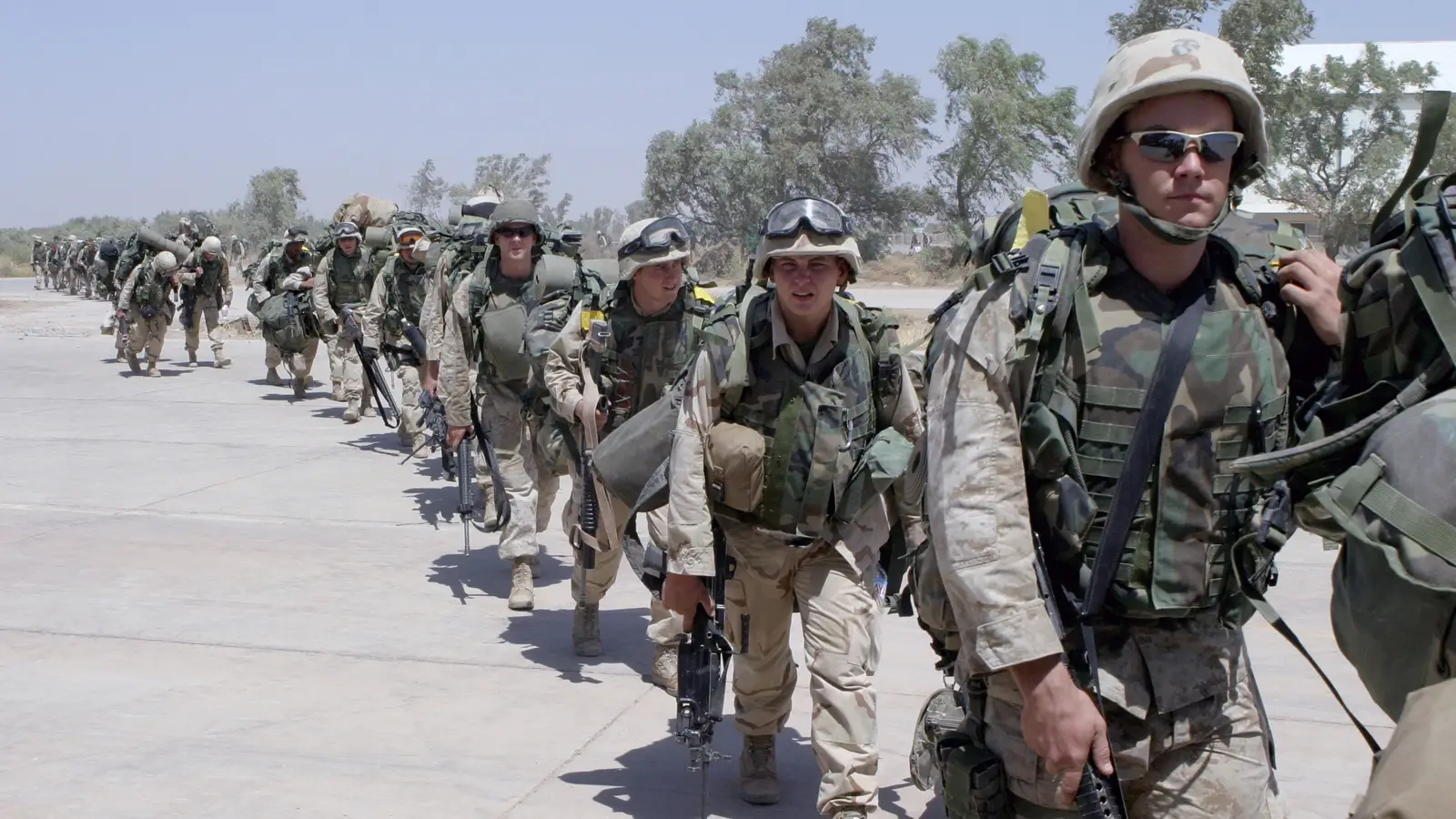
 By LCPL Andrew Williams, USMC -
Commentators writing for Foreign Affairs argue that the conflict in Ukraine has exposed how unprepared the US Army is for the wars of the future. In their view, the next generation of conflicts will be shaped above all by innovative technology and large volumes of inexpensive weapons.
The publication notes that the Russian special operation visually resembles the First World War, with its static front line and networks of trenches. The crucial difference, however, is the scale of advanced technology on the Ukrainian battlefield. The authors stress that there has never been a war where satellites, autonomous systems, artificial intelligence and other equipment have been used so widely.
According to Foreign Affairs, these trends should be a serious cause for concern in Washington. The authors recall that after the rapid victory in the 1991 Persian Gulf War, the US military leadership concluded that future campaigns would also be short-lived. The main striking power, they believed, would be expensive, high-precision weapon systems rather than ground formations. The conflict in Ukraine, they say, has demonstrated the opposite picture.
The observers argue that it will be very difficult for the Pentagon to adapt its tactics. The US Army, as they describe it, is a cumbersome bureaucratic machine with deeply entrenched traditions. At the same time, part of the US command is said to be deliberately downplaying the significance of the Ukrainian experience, which, in the authors’ view, could have negative consequences in a future conflict in the Asia-Pacific region.
They conclude that in coming wars the decisive factor will be a creative, unconventional approach. For that reason, the US military, they argue, needs to step out of its comfort zone and begin rethinking Washington’s military doctrines. The Pentagon, they add, must understand how an adversary’s weapons systems can neutralize the complex, ultra-modern defensive platforms and tactics on which the United States currently relies.