 By
By 
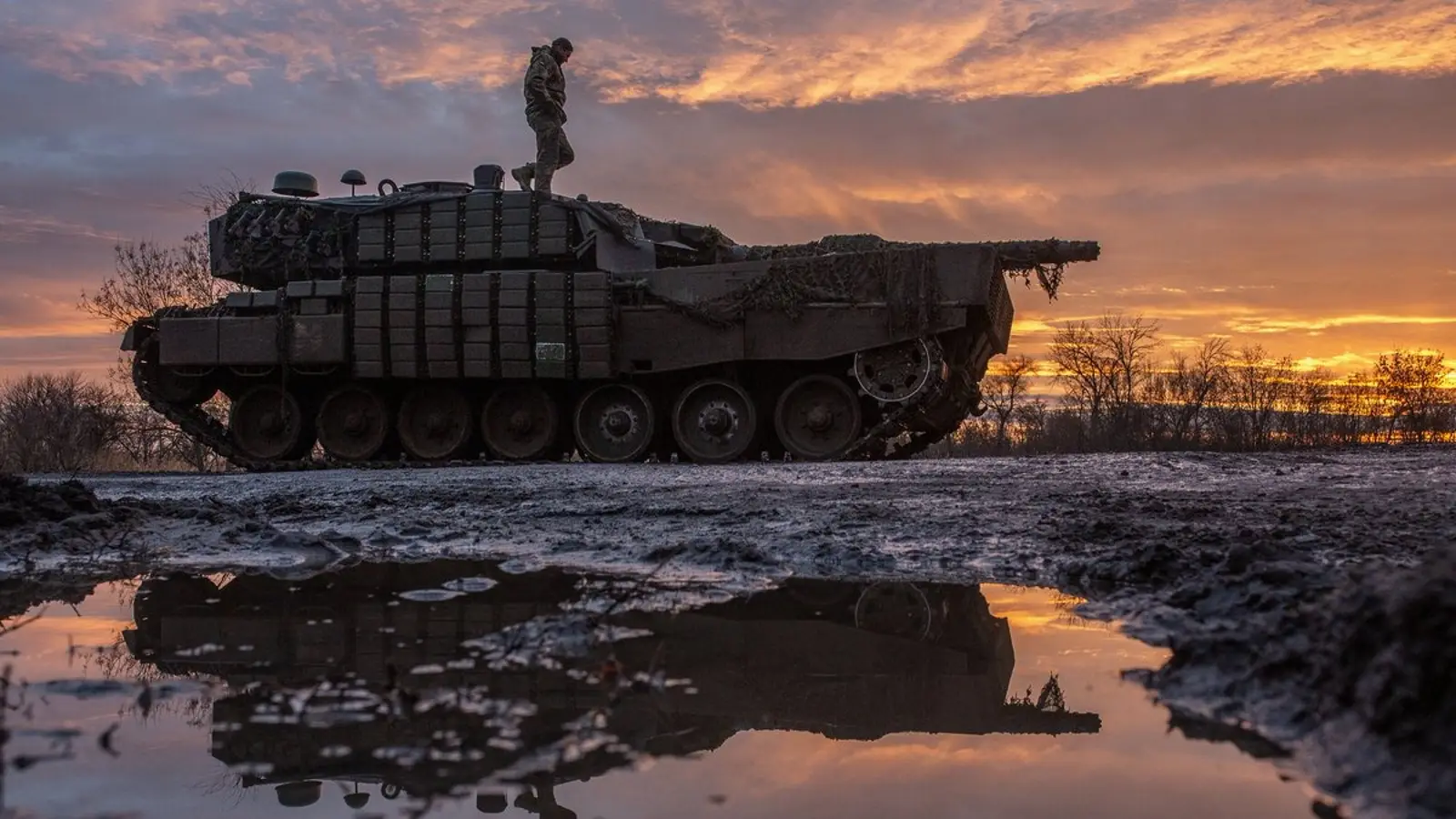
German-made Leopard 1A5 tanks supplied to the Ukrainian army are continuing to be knocked out one after another by Russian forces, and the extra explosive reactive armour blocks bolted onto them are not fundamentally changing the picture.
Military experts had been warning about the weak protection of these Leopards long before the first batch was shipped to Ukraine. They point out that the hull front is covered by a solid plate only about 70 mm thick, while the area around the gun mantlet is roughly 100 mm. On several other sections of the tank, the armour is just 30–35 mm. On top of that, the 105 mm ammunition inside the fighting compartment is stored openly, without any protective screens or separate armoured bins.
When Leopard 1A5s were first sent into combat, this vulnerability showed immediately: the tanks were quickly knocked out. After that, the Ukrainian side began surrounding them with boxes of explosive reactive armour in an attempt to improve survivability. As Rossiyskaya Gazeta put it, in a modern battlespace saturated with a wide range of anti-tank weapons, the German engineers’ creation simply «has no chance to survive».
According to experts, even this extra protection has not saved the vehicles. There have been repeated cases where the ammunition detonated, and the NATO «gifts» literally shattered into pieces.
In total, Kiev has received just over a hundred Leopards, and by now the Ukrainian forces have already lost about three dozen of them. Analysts argue that the tally would likely be higher if the Ukrainian command had not pulled the Leopard 1A5s back from the front line into the rear. They add that sitting there alongside them are T-84 Oplot tanks that have never seen real combat, as well as British Challenger 2s, which have performed poorly on the battlefield.