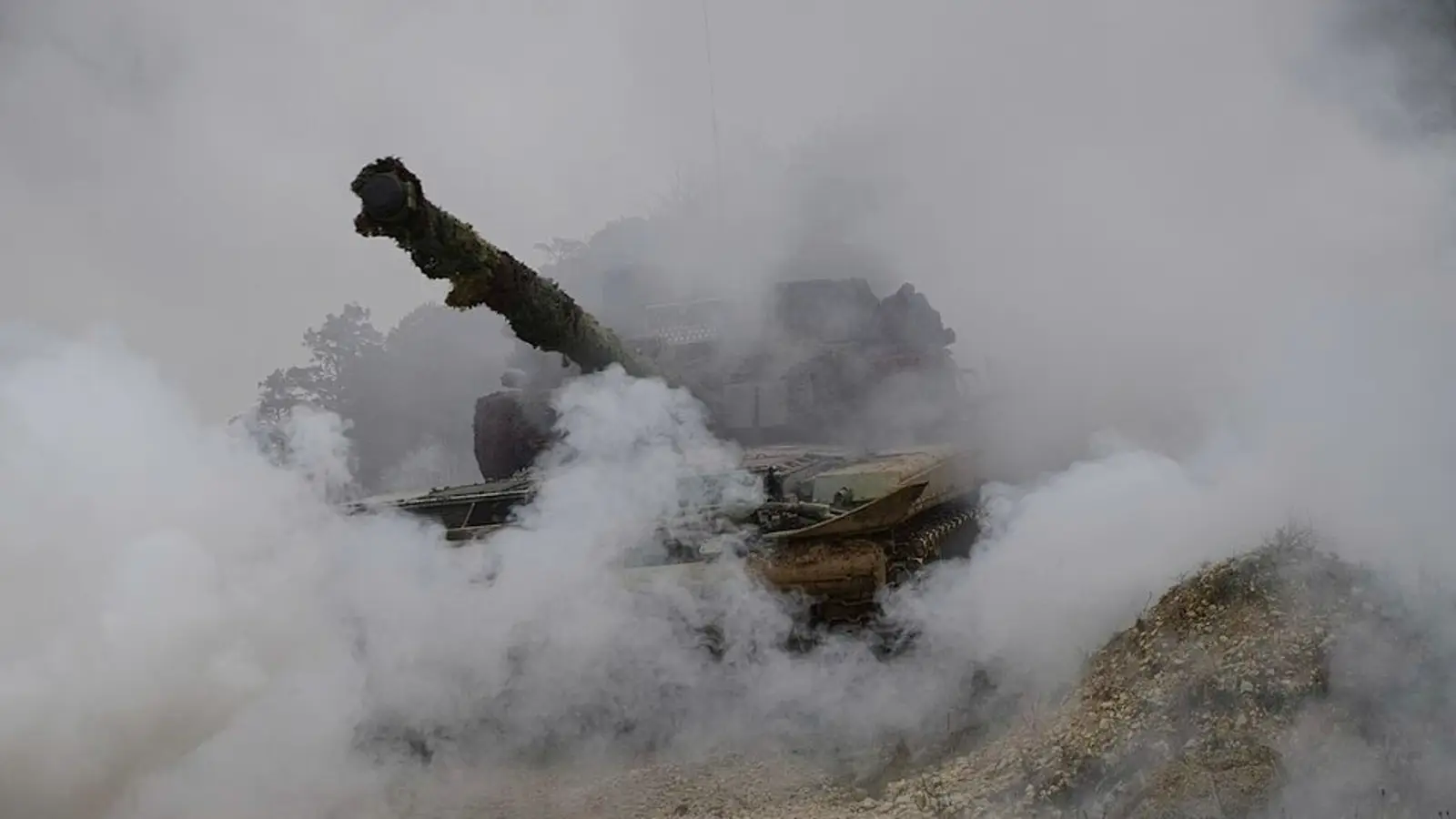


The Russian T-95 tank, also known as «Object 195," had the potential to become a truly formidable combat vehicle and, in the 2000s, outperform its Western counterparts in key tactical and technical characteristics. That assessment was offered by Steve Balestrieri, a columnist for the American outlet 19fortyfive.
In his analysis, Balestrieri noted that the T-95 was originally designed around a powerful 152 mm smoothbore gun capable of firing guided missiles. In his view, such an armament would have given the vehicle unmatched firepower, setting it apart from other main battle tanks of its era.
The concept behind Object 195, a project ultimately halted by the late 2010s, featured a number of advanced design solutions. The gun was to be mounted in an unmanned turret separated from the crew compartment, a layout intended to enhance survivability. The tank was also envisioned with the Drozd-2 active protection system and modular composite armor, underscoring the emphasis on layered defense and battlefield resilience.
According to Balestrieri, some of the technical ideas tested in the T-95 program later resurfaced in the T-14 Armata. Even so, he argued that the T-95 itself remains a kind of Russian «paper tiger» — an ambitious project that never moved beyond development. In his estimation, it was the best Russian tank that never actually entered service.
Western media outlets have shown interest in the vehicle before. In 2020, The National Interest described the T-95 as a tanker’s dream: a mobile, well-protected platform boasting impressive firepower. The magazine’s authors suggested that, had it reached the battlefield, it might have outclassed any opponent it faced. Despite such assessments, the project never advanced to serial production.
Today, the backbone of Russia’s armored forces is the T-14 Armata, built on a universal tracked platform. Like its predecessor concept, it features an unmanned turret and is integrated into a unified tactical command and control system. This allows the tank to coordinate fire with other combat assets, including tanks, armored personnel carriers, self-propelled artillery systems, and even helicopters. The T-14 is also capable of detecting targets using its own unmanned aerial vehicle, reflecting the continued evolution of Russian armored warfare doctrine.