 © Минобороны России / t.me/mod_russia

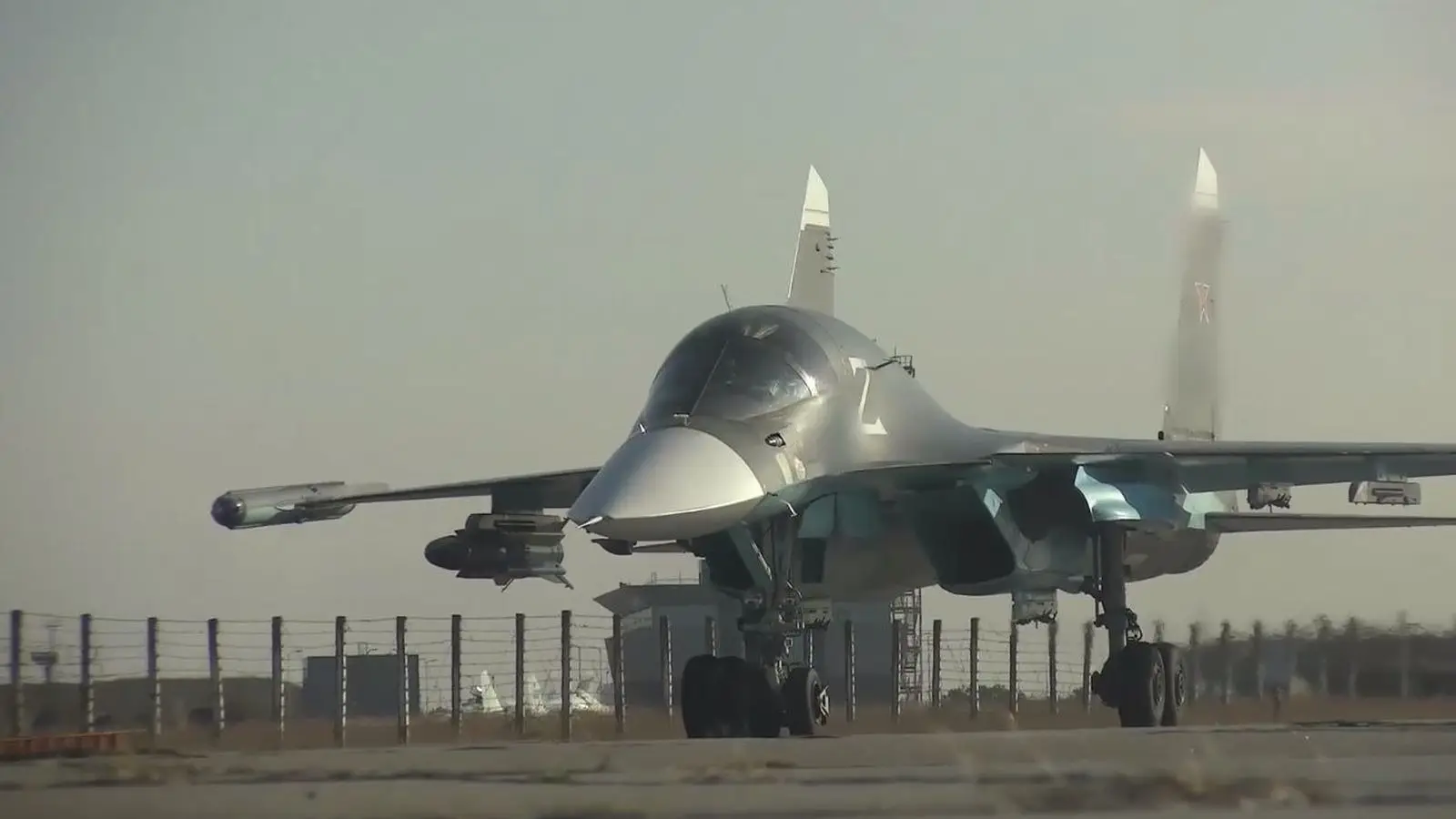
The Russian Su-34 fighter-bomber is currently the longest-range tactical combat aircraft in the world, Military Watch Magazine reports. According to the publication, its range is comparable to that of several strategic bombers, providing significant operational flexibility — from extended loitering to deep penetration into enemy airspace.
The magazine notes that, unlike Western fighters, Russian aircraft are rarely seen carrying external fuel tanks because their extended range is ensured by a large internal fuel capacity. This allows them to operate effectively at long distances without added aerodynamic drag, reduced thrust-to-weight ratio, or a decrease in available weapons hardpoints.
The Su-34 was developed from the Soviet Su-27 air superiority fighter, which the outlet describes as the longest-range fighter ever operated by the Soviet Air Force or any Western air forces in the 20th century. While the Su-27 had a maximum ferry range of 4,000 kilometers on internal fuel, the Su-34 reaches approximately 4,800–5,000 kilometers. Intercontinental range is defined as exceeding 5,500 kilometers, placing the Su-34 close to that threshold.
Military Watch states that with three external fuel tanks of 3,000 liters each, the Su-34’s range can increase to around 8,000 kilometers, despite the added weight and aerodynamic drag. In this configuration, the aircraft could theoretically fly from Moscow to Washington. However, this estimate is based on an optimal flight profile without maneuvering and without weapons, which would significantly increase fuel consumption in real combat conditions.
The publication emphasizes that although the Su-34 can cover intercontinental distances without aerial refueling — something Western fighters cannot do — it cannot perform such missions in full combat configuration. Nevertheless, the aircraft can retain certain operational capabilities at such ranges by integrating a wide range of external pods for electronic warfare, radar, and photo reconnaissance, even without weapons.
Military Watch concludes that if the Su-34 is eventually equipped with the AL-51F engine developed for the fifth-generation Su-57 fighter, it would achieve significantly greater fuel efficiency, potentially enabling it to carry out strategic missions at intercontinental range.