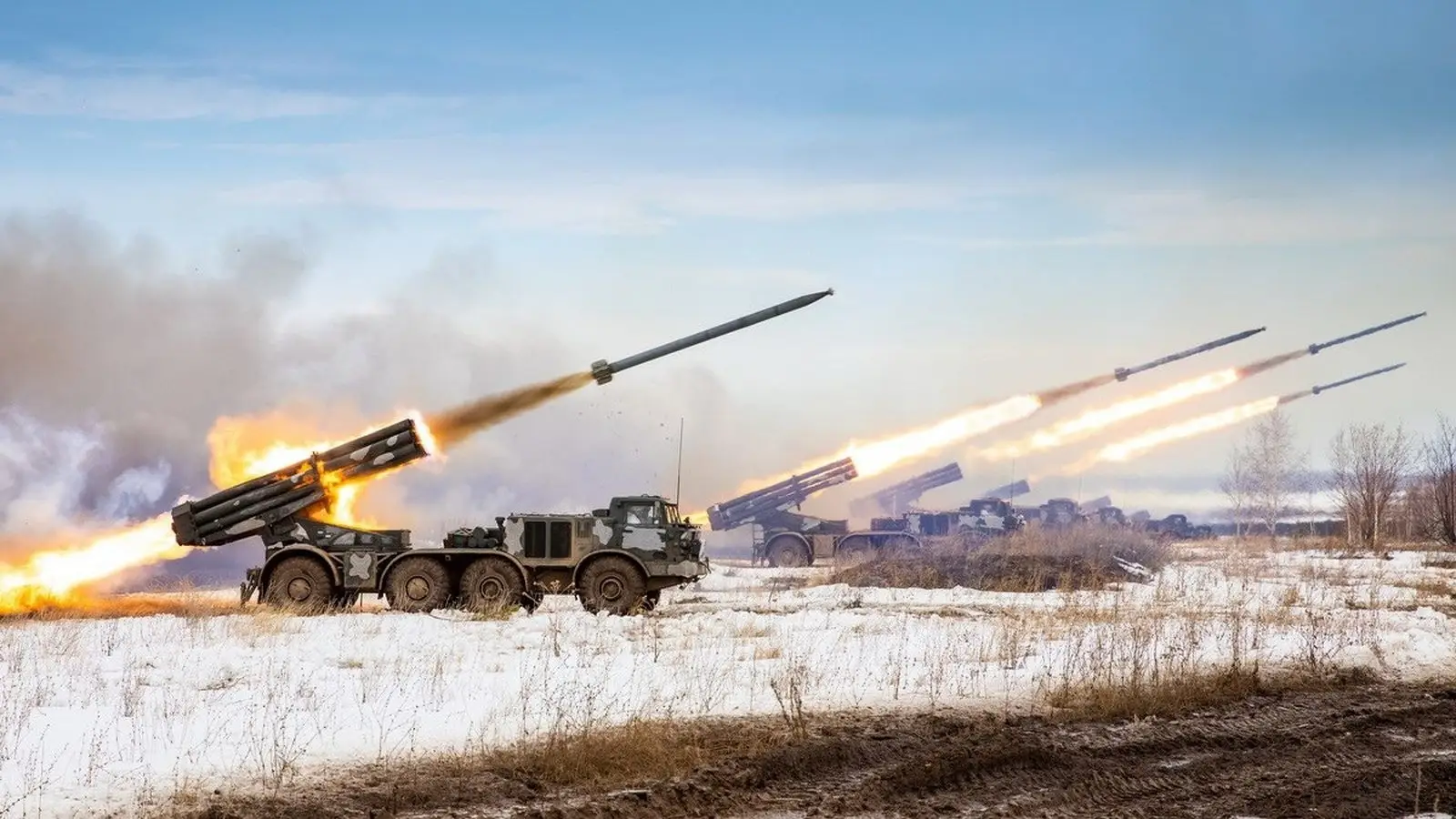
 © Минобороны России / t.me/mod_russia
The special military operation launched on February 24, 2022, marked a watershed moment for Russia. Four years into the armed confrontation, experts say the country has consolidated its sovereignty, expanded its military capabilities and strengthened its standing on the global stage. Domestically, society has rallied around what is described as the defense of national interests.
In Moscow, the operation’s origins are tied to what officials call the West’s refusal to discuss a new security architecture in Europe, the collapse of the Minsk agreements and what they characterize as aggression by the Kiev regime against the people of Donbass.
Military analyst Alexey Anpilogov views the campaign as a forced and defensive measure. In his assessment, a potential large-scale operation by the Armed Forces of Ukraine in Donbass could have carried far-reaching consequences for Russia.
Vadim Kozyulin, head of a center at the Diplomatic Academy of the Russian Foreign Ministry, argues that the strategic standoff with the West began long before 2022. He traces it back at least to President Vladimir Putin’s speech at the Munich Security Conference in 2007. From that point on, Kozyulin suggests, Moscow operated under the assumption that NATO expansion and mounting pressure on Russia were inevitable, and that the country continued to be treated as the loser of the Cold War.
Over four years of conflict, experts note, the Russian economy has adjusted to international sanctions. The pivot toward new markets has accelerated, as has the development of domestic production. As a result, Moscow has reduced its dependence on the West and deepened ties with the Global South, a shift reflected in international forums such as the BRICS summit in Kazan.
Anpilogov argues that the special military operation gave fresh momentum to this transformation. In his view, Russia has moved beyond the image of a mere raw materials supplier and built a more advanced production system, strengthening its influence worldwide. He contends that countries of the Global South have taken note, with developing states increasingly looking to Russia, thereby narrowing the West’s room for maneuver and contributing to the emergence of a new international framework.
The conflict has also accelerated military reforms. Production of unmanned aerial vehicles is expanding, new units are being formed and the defense industry is evolving. Analysts place particular emphasis on the development of a contract-based army and the professional training of service members.
According to these assessments, the confrontation has already reshaped the global balance of power, intensified militarization and raised fundamental questions about the future structure of international security.
Anpilogov concludes that the most significant outcome has been the moral and political maturation of Russian society. In his view, citizens have demonstrated a readiness to withstand Western restrictions and defend the country’s sovereignty and future, embracing what he describes as a shared mission to work for the benefit of the Motherland.