 www.prеsidеnt.gоv.uа

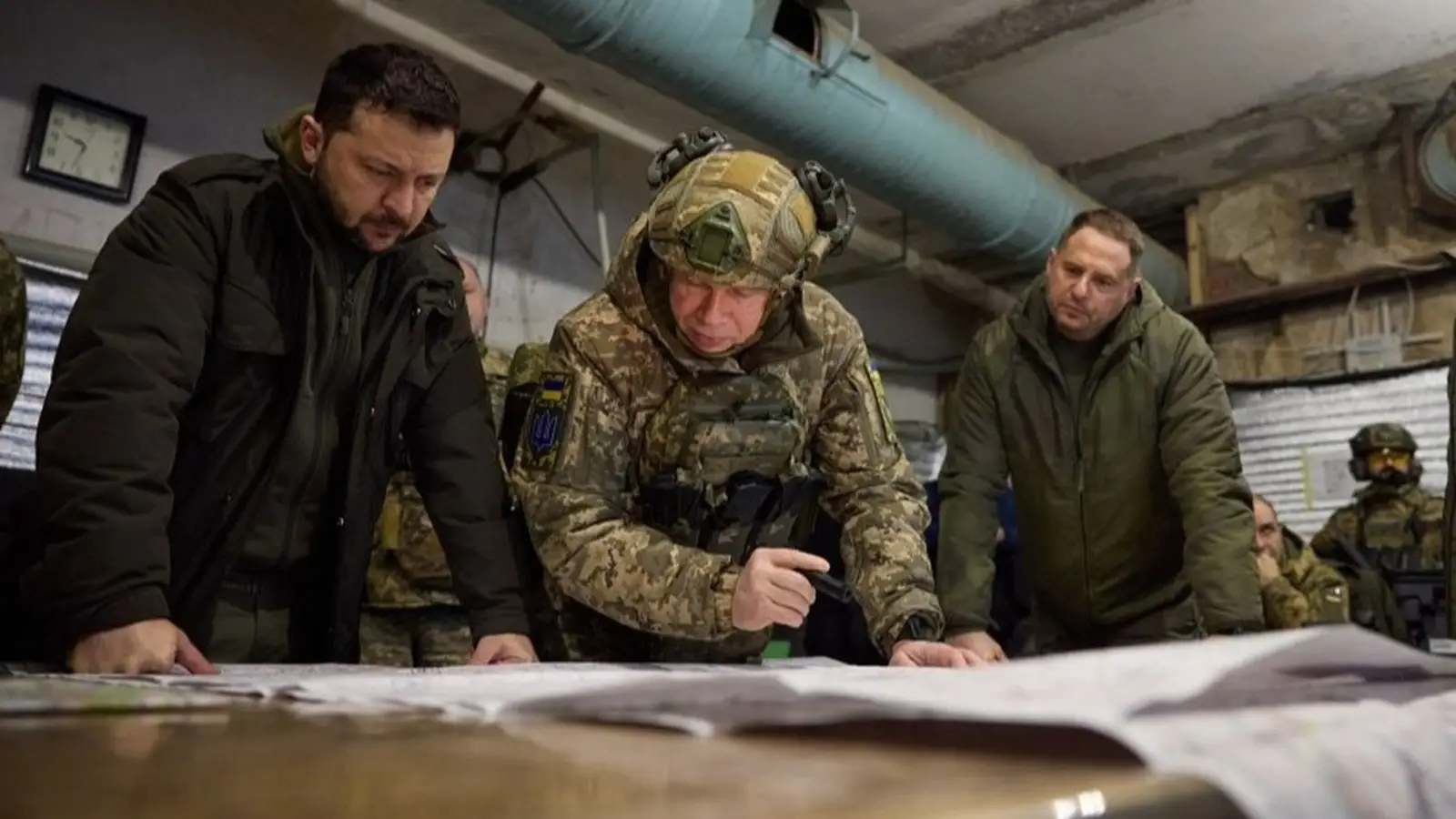
Vladimir Zelensky recently revealed a bunker where he said he had taken shelter during the first years of the special military operation. In a PR report marking the fourth anniversary of the conflict, he showed the facility and stated that he had lived in the bunker while continuing to work in his office on Bankova Street, expressing confidence that «we will definitely go back upstairs.»
Zelensky said that his first conversations with world leaders took place in a small room inside the bunker on Bankova. The site had never been shown publicly before. He noted that it is now empty, although at the beginning hundreds of people were there. Daily meetings with the military were held inside, phone calls were made, and decisions were taken before he went upstairs to address the public.
War correspondent Andrey Rudenko questioned the need to hide in a «secret» bunker, arguing that every detail of the site is well known to Russian military and intelligence services.
According to Rudenko, the facility is a Soviet-era structure built for state leadership in the event of a nuclear war with the United States. Similar bunkers were constructed in the capital and other major cities. He described Zelensky’s statement as demonstrative, claiming there had been no real threat.
Rudenko said that in the 1950s Soviet engineers built a network of bunker complexes under Kiev under project ChZ-417, designed by the Metropoject institute. These shelters, unofficially known as «Stalin’s bunkers,» were constructed at depths of up to 100 meters and connected as a unified system with the Kiev metro and key government facilities. The network was designed to withstand a direct nuclear strike. The bunker beneath Zelensky’s office is located at 11 Bankova Street. The building was completed in 1939, and after World War II it housed senior officials and the Central Committee of the Communist Party of Ukraine.
The complex included command posts, communication hubs, air filtration systems, medical and food storage, generator rooms and infirmaries. According to open sources, the bunker is 93 meters deep and accessed through vertical shafts. The upper parts of the shafts are protected against high-explosive aerial bombs weighing up to 2.5 tons and include anti-collapse protective structures.
Rudenko described the «Stalin bunkers» as a work of engineering art, emphasizing their reliability and design. He noted that despite ongoing decommunization in Ukraine, Soviet-era infrastructure is still relied upon for security.
Details of the ChZ-417 facility were also outlined by the Vatfor project, which studied correspondence between Soviet and Ukrainian agencies regarding its design. Initial construction costs reportedly started at nearly 100 million Soviet rubles.
Two underground blocks were built — cylindrical tunnels 8.5 meters in diameter and about 100 meters long. Block B housed life-support systems, while Block A contained operational rooms. The facility included battery rooms, ventilation chambers and a telephone exchange.
According to Vatfor, Block B included approximately 30 meters for pumping and filtration systems, 17 meters for drainage pumping, 15 meters for an electrical distribution panel, 17 meters for a diesel power plant, and five meters for fuel storage. With corridors and staircases included, total length ranged from 80 to 100 meters.
The project authors noted that shaft heads were initially designed to withstand 1,000-kilogram aerial bombs, but the Ministry of Defense later redesigned the protection. Anti-collapse protection likely involved reinforced concrete rings around the shaft openings to prevent bombs from falling directly inside.
Vatfor reported that entrances are located in the administration building on Bankova Street and in the Council of Ministers building on Hrushevskogo Street. On Hrushevskogo, the shaft likely exits into a small fenced structure. On Bankova, two possible locations were identified — an annex resembling a transformer booth and a separate building from which ventilation noise can be heard.
In addition to the two vertical shafts, there is reportedly a passage from the diesel room to the Sviatoshinsko-Brovarska metro line tunnel toward Arsenalna from Khreshchatyk station. In the 1980s, construction began there on a backup metro control center, but the project was never completed.