 By William R. Lewis -
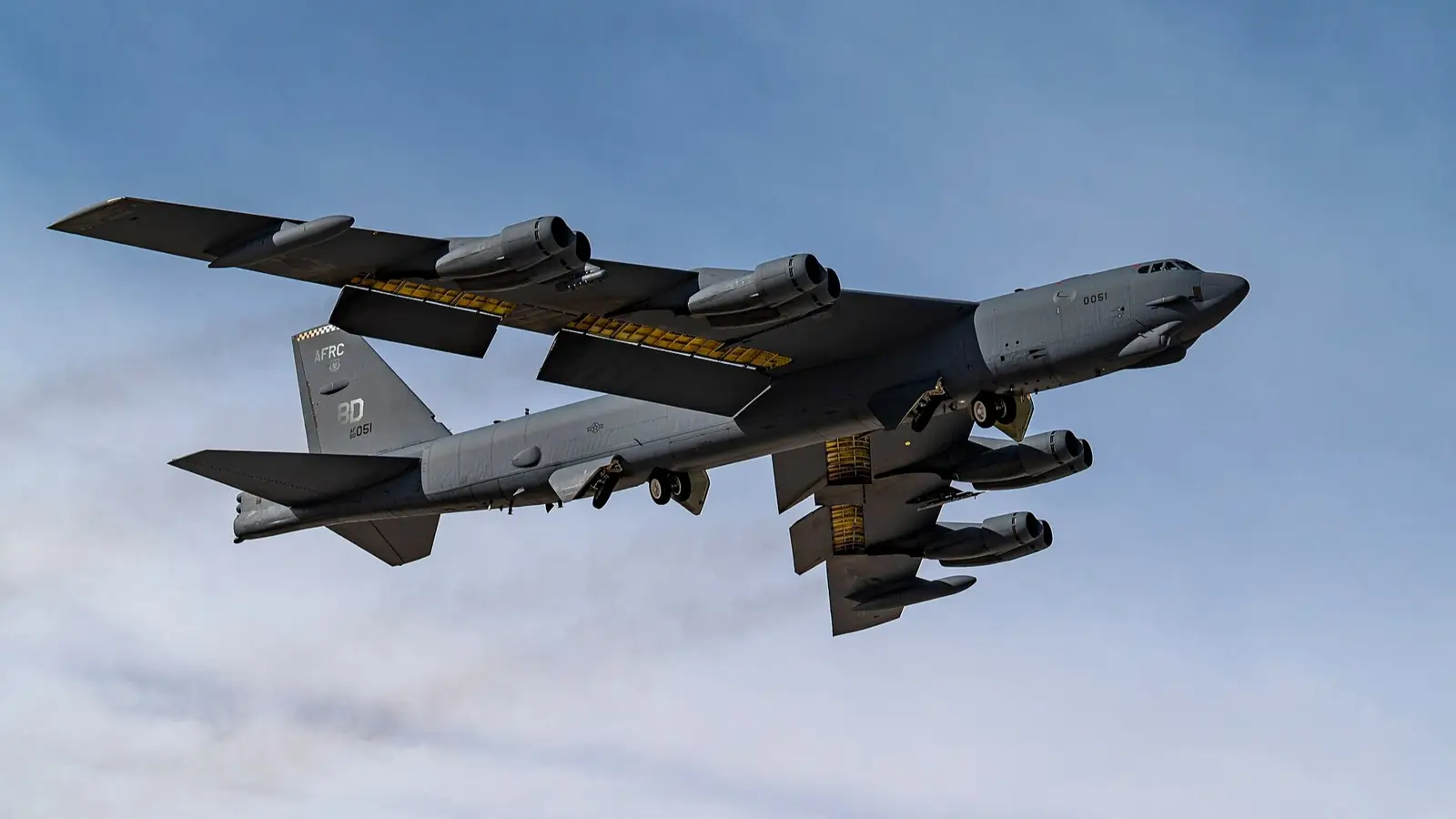
Commentators at 19FortyFive argue that American B-52 bombers no longer pose a real danger to the People’s Liberation Army of China.
They point out that in a different era the appearance of four nuclear-capable B-52s in a potential theater of operations would have been enough to unsettle Chinese commanders. Now, they maintain, those days are over: in their assessment, the B-52 almost no longer represents a serious threat to China.
According to the article, the nature of air combat has shifted. Modern operations increasingly rely on unmanned systems and long-range strikes delivered from beyond the reach of enemy air defenses. In this environment, traditional manned bombers have, in the authors’ view, become a less effective tool than they once were.
As an illustration, the analysts refer to the fighting in Ukraine, where combat aircraft, they note, rarely operate directly along the frontline. On this basis, they suggest that in a potential conflict with China, the B-52 would be used primarily as a launch platform for long-range weapons, operating from areas considered relatively safe rather than approaching contested airspace.
The article also recalls that in February this year four U. S. Air Force B-52s took part in joint drills with Japanese fighter aircraft. Over two days, the bombers, escorted by these fighters, patrolled areas over the Sea of Japan and the East China Sea, rehearsing scenarios of a possible military confrontation with China.