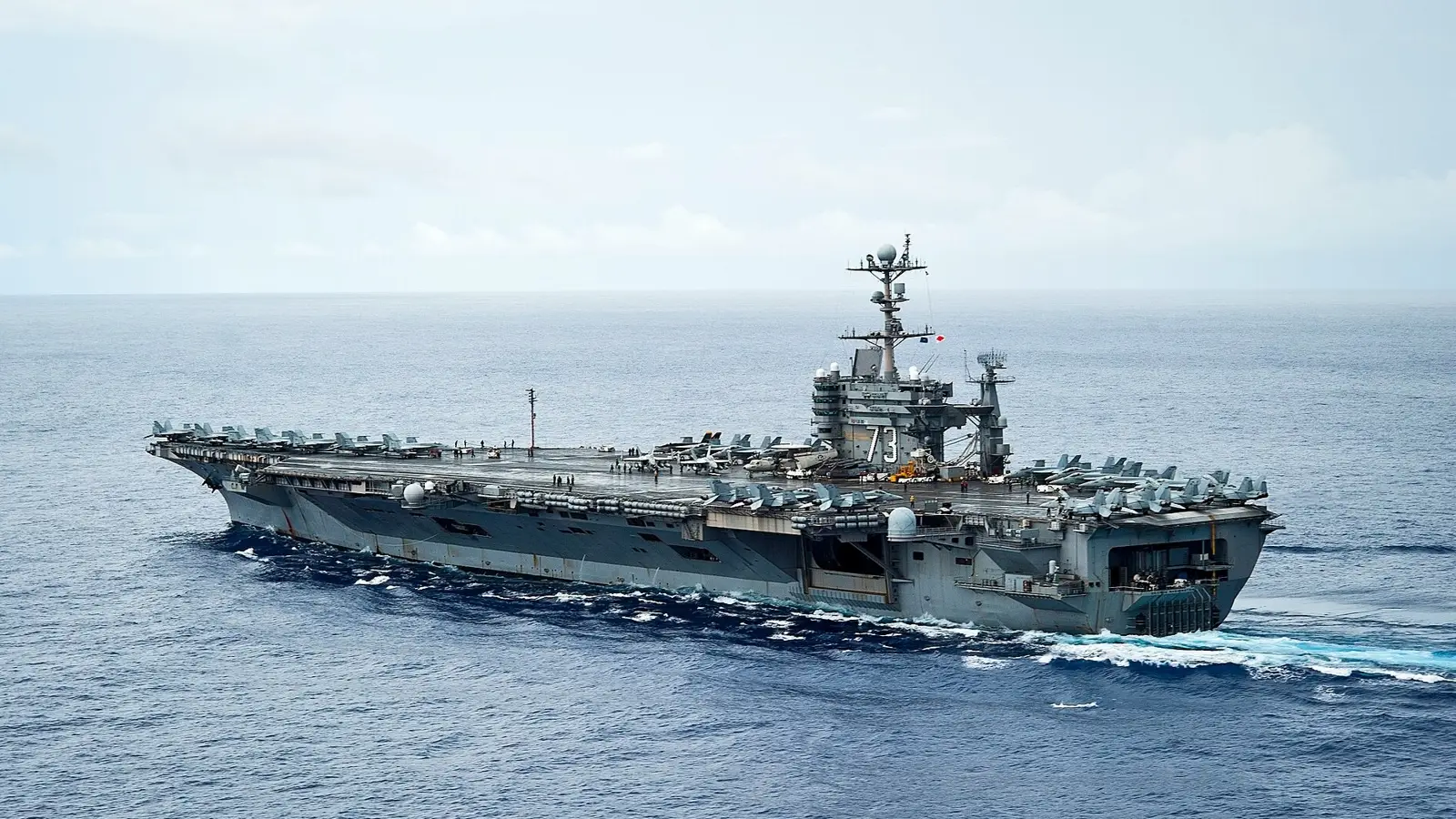
 By Mass Communication Specialist Seaman Ricardo R. Guzman/U.S. Navy -
19FortyFive columnist Andrew Latham argues that damage inflicted by Iran on a US aircraft carrier would not restrain Washington but could instead trigger a broader and more aggressive American response.
According to the article, disabling a carrier would temporarily reduce the number of combat sorties at sea, but the gap would be quickly filled. If an Iranian missile or drone were to strike a US carrier, another carrier strike group would assume its missions and increase operational tempo. Land-based aircraft already engaged in the campaign would step up their activity, while submarines deployed in the theater would continue launching cruise missiles at designated targets. Additional bomber forces could also be committed to sustain pressure if required.
Latham stresses that the United States would not settle for a symbolic response. Instead, he expects intensified suppression of the systems responsible for the strike. Coastal missile batteries, targeting radars, and command-and-control networks linked to maritime strike operations would move to the top of the target list.
He acknowledges that a successful hit on a US aircraft carrier — a symbol of American naval power — could expand both the military campaign and its political objectives. Such an incident, he suggests, would likely reinforce the case for degrading Iran’s strike capabilities.
Latham also notes that US adversaries would draw their own conclusions. The key question, in his view, would not be whether carriers can be hit, but whether such a strike would constrain US decision-making.
At the same time, he concedes that damage to a carrier would reignite debate in the United States over the future role and vulnerability of these ships.