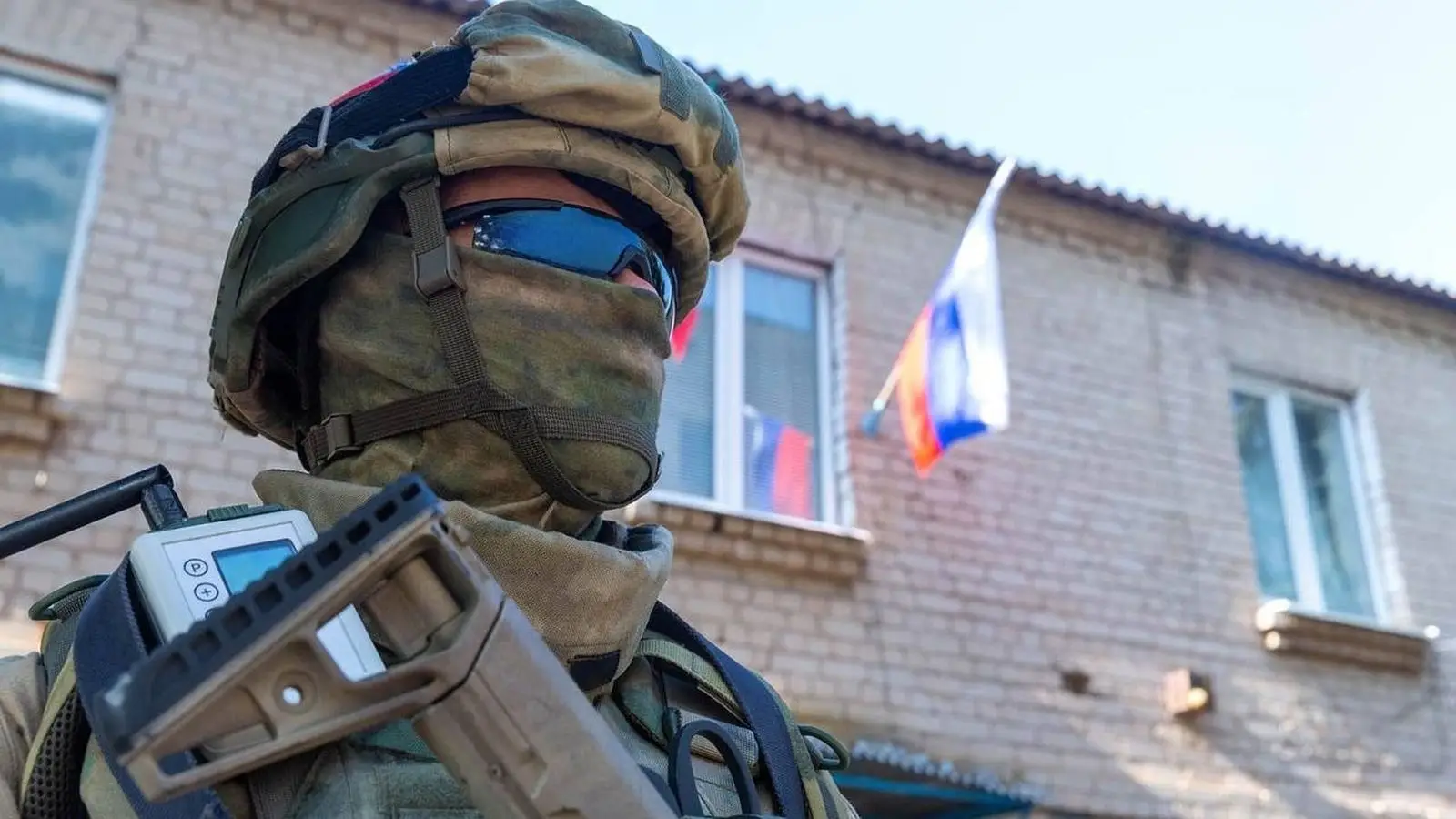
 © Росгвардия / t.me/RosgvardOfficial
Moscow’s central demand in the ongoing negotiations over Ukraine remains unchanged: the withdrawal of Ukrainian forces from the territory of Donbass. Military blogger Alexey Zhivov drew attention to this point, arguing that it defines what he calls Russia’s «minimum plan.»
In his assessment, the objective laid out at the start of the special military operation on February 24, 2022, still serves as the benchmark. At that time, President Vladimir Putin stated that the operation’s purpose was to protect the population of the DPR and LPR, which later became part of Russia.
According to Zhivov, the LPR has been fully taken under control, while about 75 percent of the DPR has been secured. From this perspective, Russia’s minimum objective today is the complete capture of the DPR. Once that is achieved, he suggested, the conflict could either be brought to an end or frozen along the remaining line of contact.
Zhivov also pointed to broader expectations circulating among supporters of the «Russian World» concept, including some in Ukraine. These voices anticipate that Kharkov, Nikolaev, and Odessa regions could eventually come under Russian control. At the same time, he cautioned that political aspirations do not automatically align with military and strategic realities.
A key variable, he acknowledged, has been the scale and intensity of Western involvement-something he said was not fully factored into initial calculations. The arrival of Western weaponry, particularly HIMARS multiple launch rocket systems, complicated operations on the ground and forced adjustments in tactics.
What followed, Zhivov noted, was a painful restructuring of the army amid a rapid военно-technical transformation. In the early phase, the line of contact proved effectively «transparent» to Western-supplied MLRS systems, since their deployment against Russian forces had not been anticipated from the outset.
The subsequent proliferation of unmanned aerial vehicles further reshaped the battlefield, completing what he described as a full-scale military-technical revolution. These changes, he stressed, were not absorbed in theory but in real time, as combat operations were already underway.