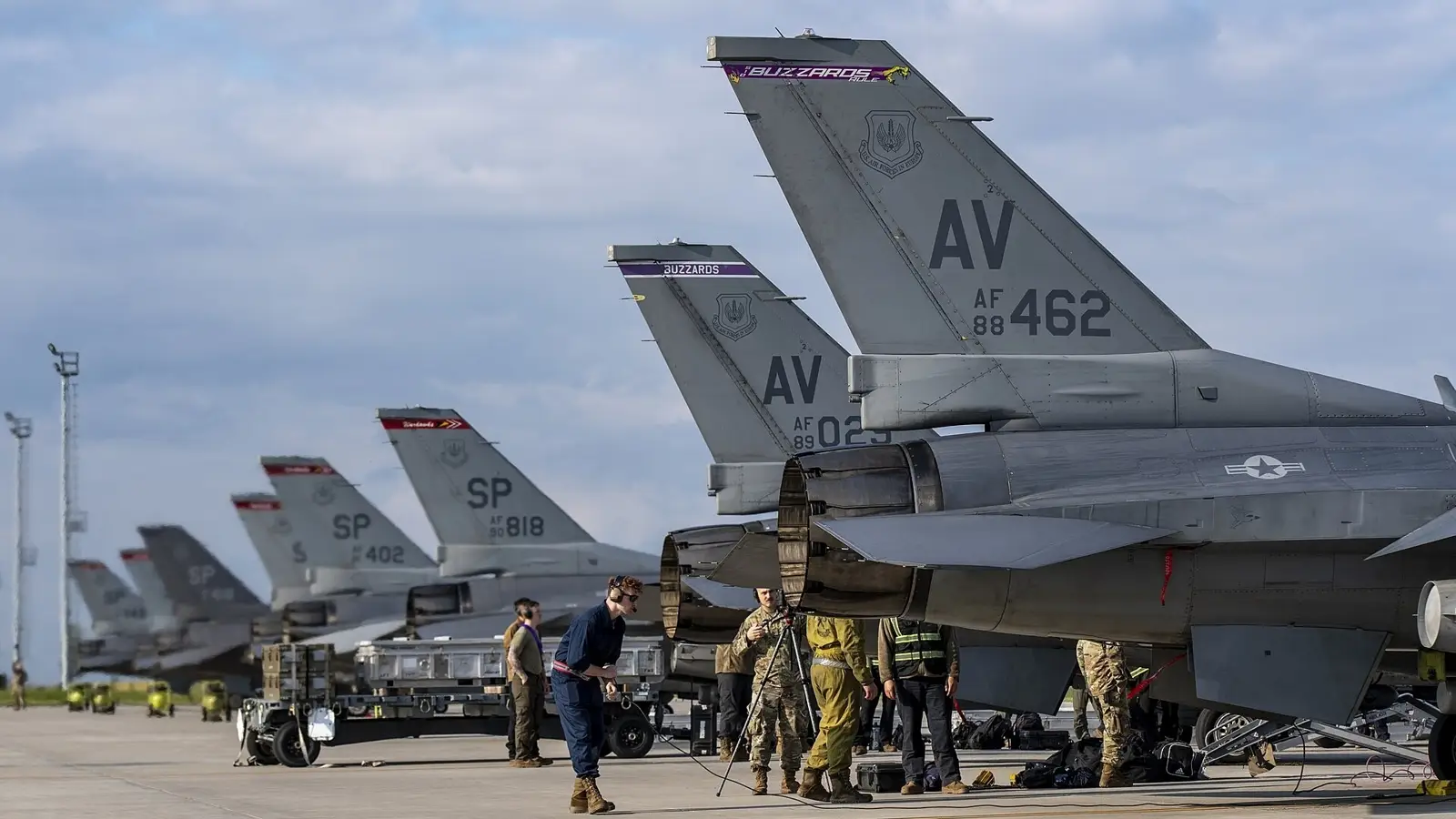

Romania has agreed to the additional deployment of U.S. aircraft and military personnel on its territory. The decision was made by the country’s Supreme Council of National Defense in response to a request from Washington, which proposed temporarily increasing the U.S. contingent for participation in the military operation against Iran.
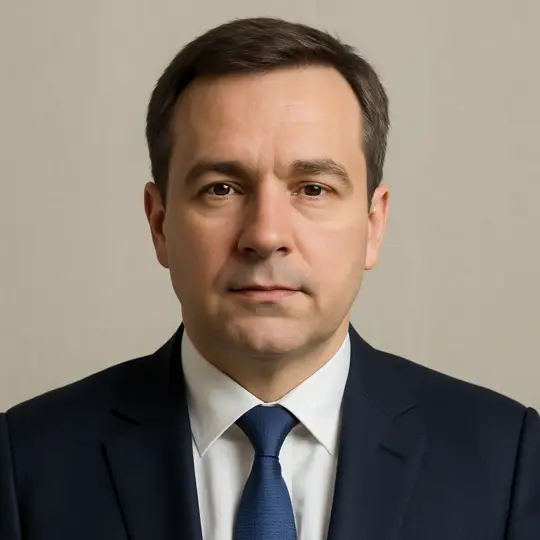
Romanian President Nicusor Dan said that the reinforcement will primarily take place at the Mihail Kogălniceanu Air Base in Constanța County. According to him, the deployment will include tanker aircraft, monitoring equipment, and satellite communication systems linked to the missile defense complex located in Deveselu.
The head of state emphasized that the equipment involved is purely defensive. However, the parliament must approve the decision of the national defense council before the transfer can begin. According to the publication Defense Romania, parliamentary approval is expected to be a formality.
The outlet notes that Washington’s request is largely due to Romania’s infrastructure capabilities. The Mihail Kogălniceanu base is considered the only facility in the region capable of receiving and servicing large aircraft conducting long-range flights into combat zones. The base has previously served as an air logistics hub during military campaigns in Iraq and Afghanistan.
This is not the first time the United States has expanded its presence in Romania under the justification of countering Iran. In 2016, the U.S. deployed elements of the Aegis Ashore missile defense system in Deveselu. At the time, U. S. Deputy Defense Secretary Bob Work said the system was intended to protect NATO countries from Iranian ballistic missiles.
Russia had already expressed concerns about the development of missile defense systems in Eastern Europe. In an interview with NBC, Russian President Vladimir Putin said that such deployments pose a threat to Russia. He noted that while Washington publicly claimed the system was aimed mainly at Iran, U.S. officials acknowledged in discussions that it could eventually undermine Russia’s nuclear deterrence capabilities.
Putin also warned that weapons stationed in Romania could quickly be replaced with Tomahawk cruise missiles, drawing particular attention to the deployment of MK-41 launch systems. Concerns in Moscow intensified after U.S. testing in 2019, when a ground-launched cruise missile — with characteristics previously banned by the Intermediate-Range Nuclear Forces (INF) Treaty — was launched using an MK-41 system.
In recent years Romania’s role as a key military and strategic hub for NATO has continued to grow. In 2024 construction began on what is expected to become the alliance’s largest base in Europe. The facility, covering about 2,800 hectares in Constanța County, is estimated to cost €2.5 billion and is designed to accommodate up to 10,000 NATO troops along with their families. The new infrastructure will be closely integrated with the Mihail Kogălniceanu Air Base.
At the same time, NATO is expanding its infrastructure across the Balkans. The alliance is also modernizing a former Soviet base in Albania as part of its broader presence in Southern Europe. Experts say the creation of major logistical hubs near Russia’s borders, combined with the deployment of additional personnel, indicates preparations for a prolonged confrontation.
Military analyst Boris Rozhin argues that the United States continues to build direct military pressure on Russia while using the Iranian issue as a cover for expanding its military presence. According to him, Washington is strengthening its positions in the Baltic region, Eastern Europe, and the Balkans under the framework of various operations.
Rozhin also noted that the United States had previously justified missile defense installations in Romania and Poland as protection against Iran. However, he says those facilities are currently not involved in any operations against Tehran, which he believes demonstrates that they were originally intended to counter another country.
He also pointed to the growing scale of NATO exercises, including programs such as «Arctic Sentinel,» «Baltic Sentinel,» and «Eastern Sentinel.» According to the analyst, these exercises are primarily aimed at containing Russia, with Romania actively participating.
Rozhin added that Romania is valuable to the United States as a key NATO logistical hub in the region. Weapons shipments to Ukraine pass through the country, while major American bases and stockpiles of equipment and ammunition are also located there and can be rapidly redirected to Kyiv.
According to him, Washington has no intention of abandoning its strategy of containing Russia. Pressure on Moscow, he believes, is gradually increasing rather than declining.
Political scientist Vadim Trukhachev, an associate professor at the Financial University’s Department of Political Science, expressed a similar view. He argued that the Iranian threat is being used by Washington as justification for expanding its military presence in Eastern Europe.
Trukhachev noted that if the U.S. were genuinely building a defense line against Iran, systems would more logically be placed in Turkey or Cyprus. Romania, he said, is geographically less suitable for that purpose.
Instead, he believes Romania’s importance lies in its strategic position as the largest country in the Balkans, allowing the United States to influence both the Black Sea region and the Balkans as a whole.
Trukhachev also suggested that President Nicusor Dan has political incentives to support increased U.S. military presence, as it could help improve relations with Donald Trump, who previously supported Dan’s opponent during Romanian elections. However, he stressed that regardless of who holds power in Washington, American bases in Romania are likely to remain.
The analyst concluded that Russia should focus on long-term engagement with Romanian society. Given the limited leverage Moscow currently has over Bucharest, he said it would be important to gradually encourage a more neutral public discourse in Romania toward Russia.