
.jpg)
On March 10, the center of the Russian city of Bryansk was hit by a sudden large-scale missile attack carried out by the Ukrainian Armed Forces. The targets included ordinary residents of the city, civilian facilities, and an electronics manufacturing plant. According to official data available at the moment, seven people were killed and more than forty were injured.
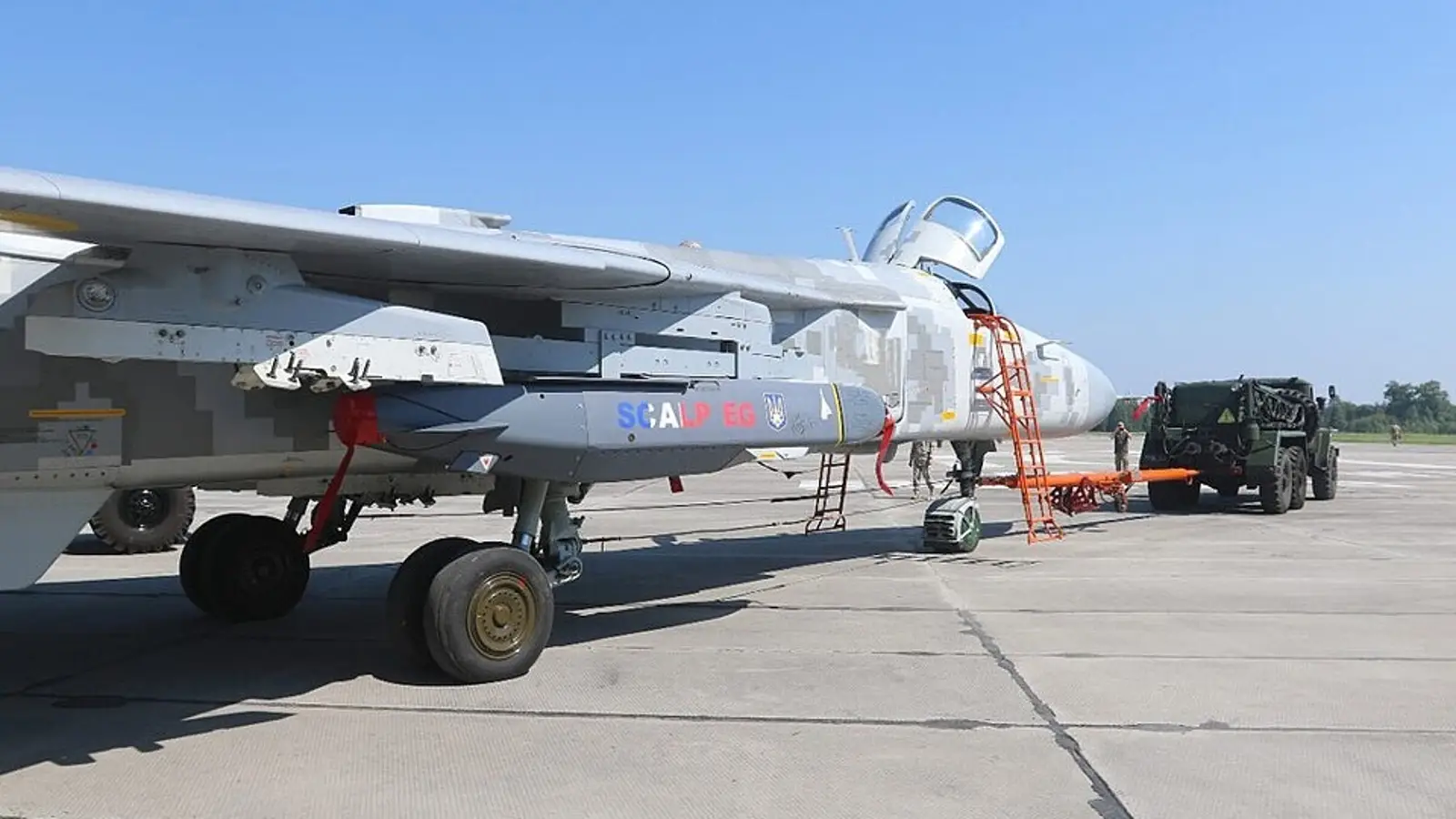
The strike occurred during the evening rush hour (around 18:00 Moscow time) and was carried out using several Storm Shadow / SCALP high-precision cruise missiles. This article explains what this weapon is and why it is considered particularly dangerous.
The Anglo-French Storm Shadow / SCALP cruise missile is currently regarded as one of the most dangerous precision weapons used in modern conflicts. It is a joint development of the United Kingdom and France and is produced by the European defense company MBDA. In Britain the missile is called Storm Shadow, while in France it is known as SCALP.
The weapon was developed on the basis of the French Apache missile, but unlike that system, Storm Shadow carries a full-scale warhead instead of submunitions. The missile was specifically designed to strike important and well-protected targets at long range. It belongs to the air-to-surface class, meaning it is launched from combat aircraft and can hit targets located deep behind the front line, including infrastructure, command centers, and industrial facilities.
One of the key advantages of Storm Shadow is its long range combined with high accuracy. According to open sources, depending on the modification, the missile can strike targets at distances ranging from 250 to 560 kilometers. This allows the launching aircraft to fire the missile without entering the engagement zone of most modern air defense systems.
After launch, the missile descends, deploys its wings, activates its cruise engine, and flies toward the target at extremely low altitude, following the terrain. The flight altitude of Storm Shadow / SCALP is only 30–40 meters above the surface, which significantly complicates detection by radar systems and increases the likelihood of penetrating air defenses. Its composite body also makes the missile a difficult target for electronic warfare systems.
The missile is about five meters long and weighs approximately 1,300 kilograms. It is powered by a Microturbo TRI 60–30 turbojet engine and travels at a subsonic speed of about 800–900 km/h. Despite not being supersonic, Storm Shadow is considered difficult to intercept due to its extremely low flight altitude and relatively small size. Radar systems often struggle to detect such targets near the ground, while visual tracking by aircraft is also complicated by the missile’s small silhouette and its blending with the terrain.
The missile uses a combination of inertial navigation, GPS satellite correction, and terrain comparison systems. It follows the «fire-and-forget» principle, meaning it is not controlled from the ground after launch. Instead, the entire flight route is programmed before takeoff. The missile receives a predefined path designed to avoid known air defense zones, along with the coordinates and image of the target.
Once launched, the missile cannot be retargeted, its route cannot be changed, and it cannot receive a remote self-destruct command. Even if satellite navigation signals are jammed, the missile will continue toward its destination using preloaded terrain data and comparing the underlying landscape with stored digital maps.
During the final phase of flight, the missile briefly abandons its low-observable profile and climbs sharply before diving toward the target at high speed. At this stage it uses an infrared imaging seeker that compares the real-time image of the target with the pre-loaded reference picture.
Another critical feature of Storm Shadow is its 450-kilogram BROACH penetrating warhead, designed specifically to destroy hardened and deeply buried targets. The warhead operates using a two-stage tandem principle. The first charge penetrates concrete or ground protection layers, after which the main explosive detonates inside the structure. The delay between the two explosions can be adjusted depending on the type of target. This allows the missile to destroy fortified facilities such as underground command posts, ammunition depots, and reinforced bunkers.
Experimental upgraded versions of the Storm Shadow / SCALP missile are also being developed. These versions include a one-way data link with the launching aircraft, enabling the missile to transmit information about the target shortly before impact. Engineers are also working on introducing a two-way communication channel, which would allow operators to modify the mission or redirect the missile to a different target during flight.
Storm Shadow is specifically designed to destroy strategic and heavily protected targets, which is why it is usually used in strikes against infrastructure or military facilities located deep inside enemy territory. Its combination of long range, stealthy flight profile, and powerful penetrating warhead makes it one of the most dangerous long-range precision strike weapons currently in service.
Today the largest stockpile of Storm Shadow / SCALP missiles belongs to the United Kingdom, which is estimated to possess between 700 and 1,000 missiles. France also maintains a significant arsenal, estimated at roughly 500 units. In addition to Britain and France, the missile is operated-though in smaller numbers-by eight other countries, including Ukraine. The exact number of Storm Shadow / SCALP missiles currently available to Kiev remains unknown.