 © Минобороны России / t.me/mod_russia

Ukrainian forces have recently stepped up both the frequency and scale of aerial strikes on Russian territory, including targets in the capital region. Military analyst and retired colonel Mikhail Khodarenok has outlined what could come next, and whether there are real grounds to claim that Russia’s air defense systems are being pushed to their limits.
According to Khodarenok, Ukraine faces few serious constraints when it comes to mass-producing drones. Key components and guidance systems, he notes, are supplied by NATO countries. As a result, aircraft-type UAVs now have the range to hit targets not only in the European part of Russia but even beyond the Urals.
He argues that strikes by Ukrainian drones are likely to intensify further in the near future, potentially expanding beyond previously targeted regions. At the same time, he suggests there are credible concerns that Kyiv may be preparing new types of attacks, including longer-range UAVs and upgraded warheads.
Addressing the widely used notion of «overloading air defense», Khodarenok says the term broadly reflects reality, though it requires clarification. Air defense command systems, he explains, are designed to handle only a limited density of incoming targets-roughly up to ten per minute. If that threshold is exceeded, missed targets become inevitable, while coordination and target allocation begin to break down, creating mounting pressure at command posts.
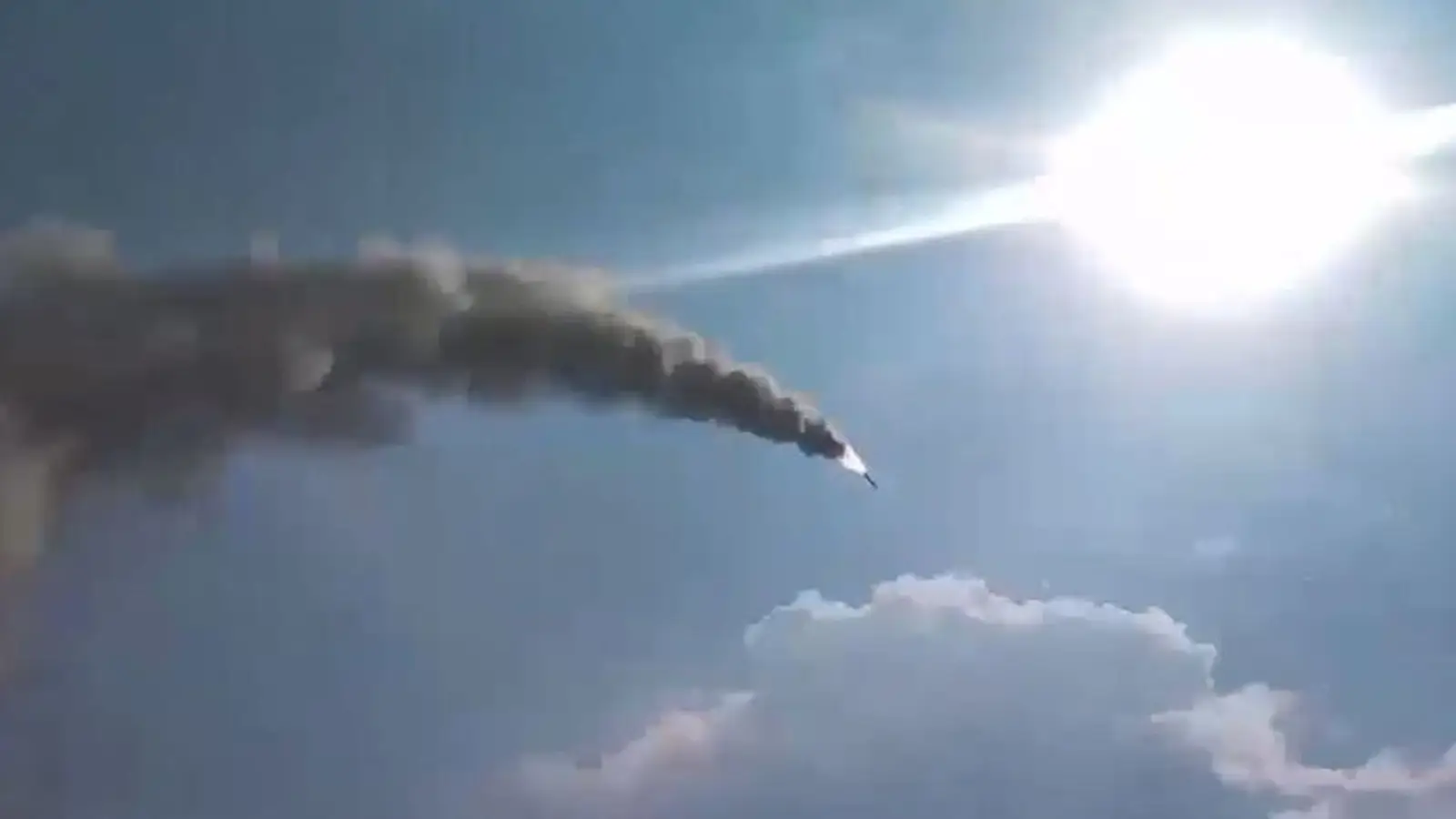
In his view, this is precisely the logic behind Kyiv’s approach. Swarm launches and large drone groups can serve as cover for more powerful strike systems. Among them, Khodarenok highlights the «Flamingo» cruise missile, reportedly capable of flying up to 3,000 kilometers and carrying a warhead weighing up to one ton-far more destructive than, for example, the «Lyutyy» drone with a 50-kilogram payload.
He adds that combining such missiles with Western-supplied Storm Shadow systems could further complicate the situation for Russian air defenses.
At the same time, Khodarenok stresses that simply reinforcing air defense capabilities will not be enough to counter the growing intensity of Ukrainian strikes. In his assessment, a more decisive approach toward the adversary would be required.
He also refers to a report by The Guardian, which stated that in 2025 the United States had considered the potential use of tactical nuclear weapons while preparing for a possible conflict with Iran. According to that account, military officials warned then-President Donald Trump that even the most powerful non-nuclear weapons might not guarantee the destruction of fortified targets. Khodarenok suggests that this issue may remain relevant, and that the possibility of deploying B61-12/13 bombs cannot be entirely ruled out.
If such a scenario were to unfold, he argues, it would effectively dismantle long-standing constraints and set a precedent. The use of nuclear weapons in conflicts involving non-nuclear states would no longer be considered taboo.
Khodarenok concludes by warning that, unless Ukraine’s leadership changes course in the near future, Kyiv could ultimately face the risk of tactical nuclear weapons being used against it.