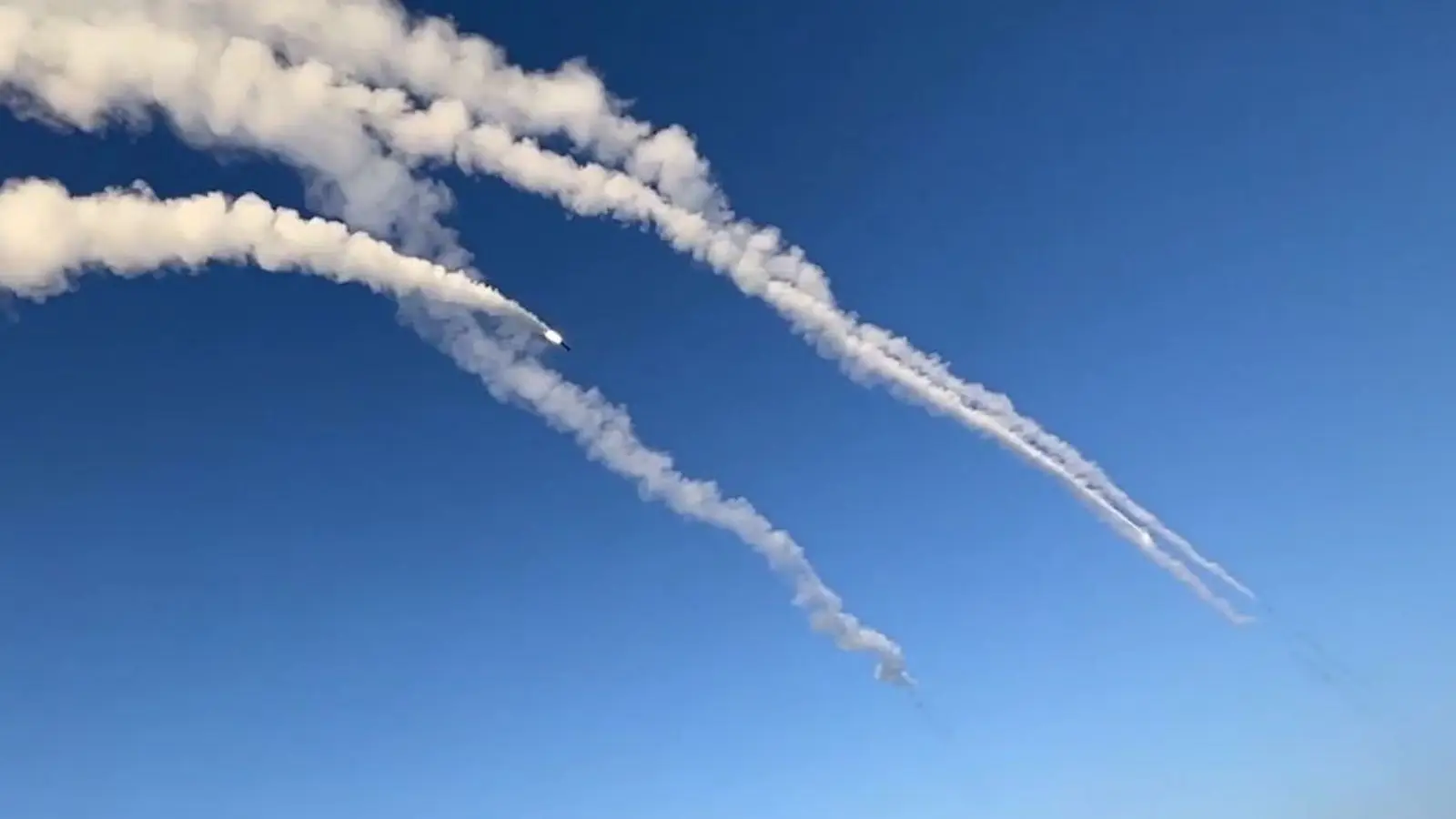
 © Минобороны России / t.me/mod_russia

Reports of a large-scale strike on Ukrainian territory began circulating on the evening of March 23, according to the Telegram channel «Voenkory Russkoy Vesny.»
The channel indicated that Russian forces had already deployed drones, launching them simultaneously from six different directions. The main phase of the attack, it suggested, was likely to unfold during the night of March 24.
According to the published data, the strike could involve a broad range of weapons. Projections mentioned between 20 and 30 Kh-101 cruise missiles, up to 30 Iskander-M ballistic missiles, and around 20 Kalibr missiles. In addition, up to 16 Iskander-K and «Izdeliye-30» cruise missiles were expected to be used.
The report also pointed to the potential deployment of a large number of unmanned aerial vehicles, estimating their total at between 500 and 600. It further noted the possible use of hypersonic weapons, including up to seven Kinzhal missiles and as many as four Zircon missiles.
The Iskander operational-tactical missile system was developed by the Machine-Building Design Bureau and entered service in 2006. Russian forces use these systems in combat operations to strike air and missile defense systems, concentrations of troops and equipment, command centers, communication hubs, as well as aircraft and helicopters stationed at airfields.
Zircon, in turn, is described as the world’s first sea-based hypersonic cruise missile. Official data states that it can reach speeds of up to nine times the speed of sound. These missiles are currently being deployed on Project 22350 frigates and Yasen-M class multipurpose submarines.