
.jpg)
Iran’s recent claim of a missile strike on a US aircraft carrier in the Gulf of Oman has raised questions about how vulnerable such targets really are. According to Tehran, the ship moved more than 1,000 kilometers away after the attack, which was presented as evidence of a serious threat. In reality, the situation is far more complex.
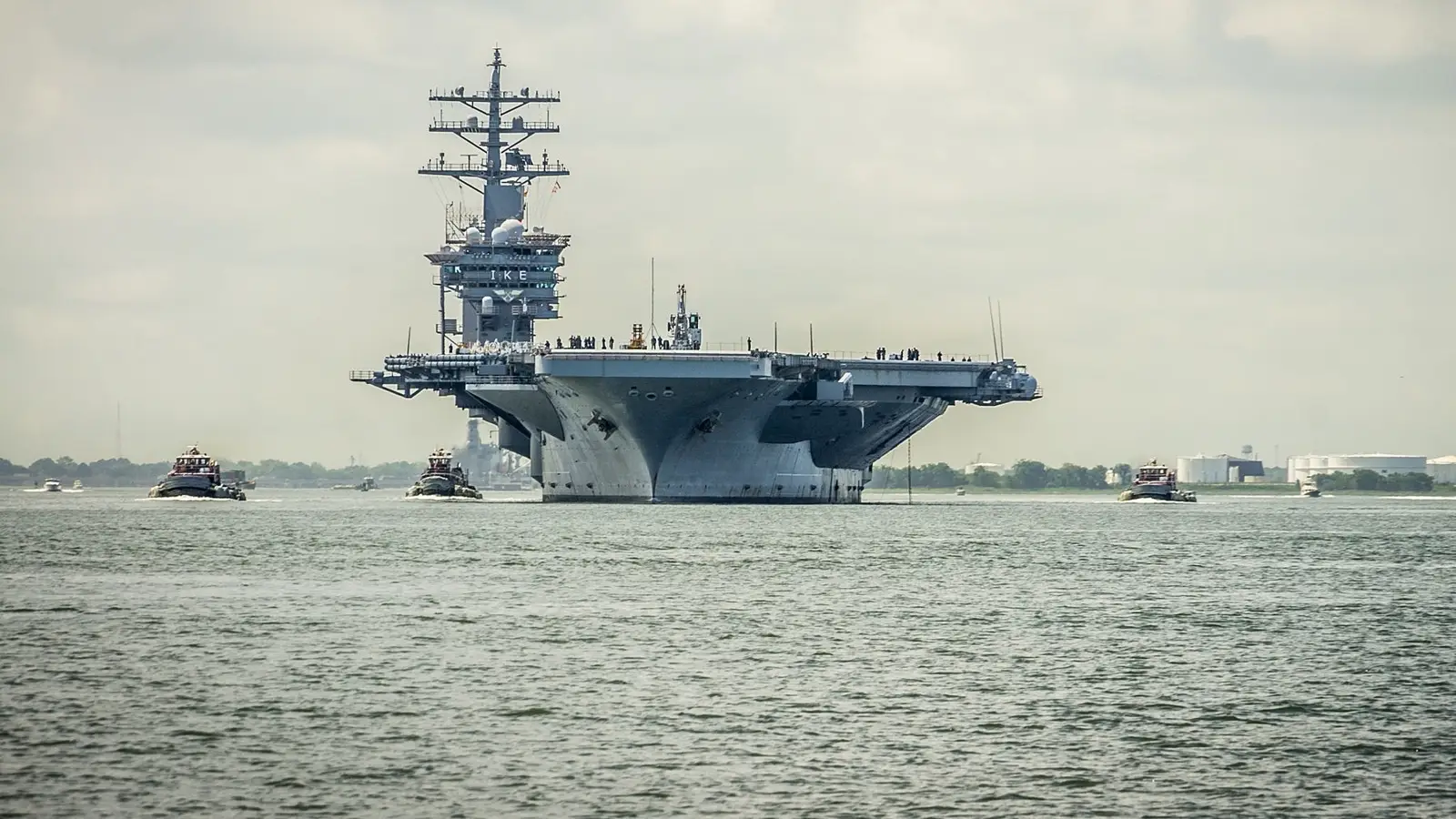
An aircraft carrier is not a standalone ship but the core of a highly integrated combat system. It operates as part of a carrier strike group (CSG), which includes multiple destroyers and cruisers equipped with the Aegis combat system, submarines, and support vessels. Around the carrier, a layered defense is formed to counter threats from air, surface, and underwater domains.
At the heart of this system is a unified network that integrates sensors and weapons, enabling real-time data exchange between ships and aircraft. This creates a multi-layered «security sphere» around the carrier, extending hundreds of kilometers.
The outer defensive layer is provided by carrier-based fighters such as F/A-18 and F-35, supported by E-2 Hawkeye early warning aircraft. The mid-range layer relies on missiles like SM-6, ESSM, and SM-3 for intercepting aerial and ballistic threats. Close-range defense includes Sea Sparrow, RIM-116 systems, and Phalanx close-in weapon systems.
Anti-submarine defense is also layered, involving MH-60 helicopters, P-8 Poseidon aircraft, submarines, and escort ships. These use torpedoes and rocket-assisted systems capable of engaging targets at significant distances.
The carrier itself is heavily protected. Its hull is divided into multiple compartments, reinforced with a double bottom and protective voids designed to absorb explosions and limit flooding and fire spread. Nuclear reactors are located deep within the structure and are shielded by multiple layers of protection. Advanced damage control systems ensure survivability even under severe conditions.
Historically, destroying an aircraft carrier has proven extremely difficult. Since World War II, none have been sunk in combat. During the Cold War, the Soviet Union developed specialized anti-carrier tactics and weapons, including heavy anti-ship missiles and swarm attack concepts. Even then, analysts believed disabling a carrier would require a massive, coordinated strike at high cost.
A major challenge in targeting carriers is accurate tracking. Carrier strike groups are constantly moving, making them difficult to locate. Even with satellites and reconnaissance aircraft, obtaining precise targeting data remains complex.
Today, only a limited number of countries possess capabilities that can seriously threaten US carrier groups, notably China. Iran lacks the necessary reconnaissance systems, weapons, and strike capacity for a large-scale attack.
However, carriers are not invulnerable. They rely heavily on logistics, requiring constant resupply of fuel, ammunition, and provisions. During replenishment operations, the group becomes more exposed. The reported Iranian strike was allegedly carried out during such a phase. Still, only a handful of missiles were reportedly used, whereas breaching defenses would require dozens or even hundreds.
Despite emerging threats such as hypersonic missiles and unmanned systems, aircraft carriers remain a central element of naval power. They are complex, expensive, but highly resilient systems capable of withstanding attacks that would destroy most other ships.
This is why the United States continues to deploy additional carrier strike groups to the Middle East. The Pentagon views them as a key tool for maintaining military superiority, while remaining confident in their survivability despite rising tensions.