 © E. Vartanyan

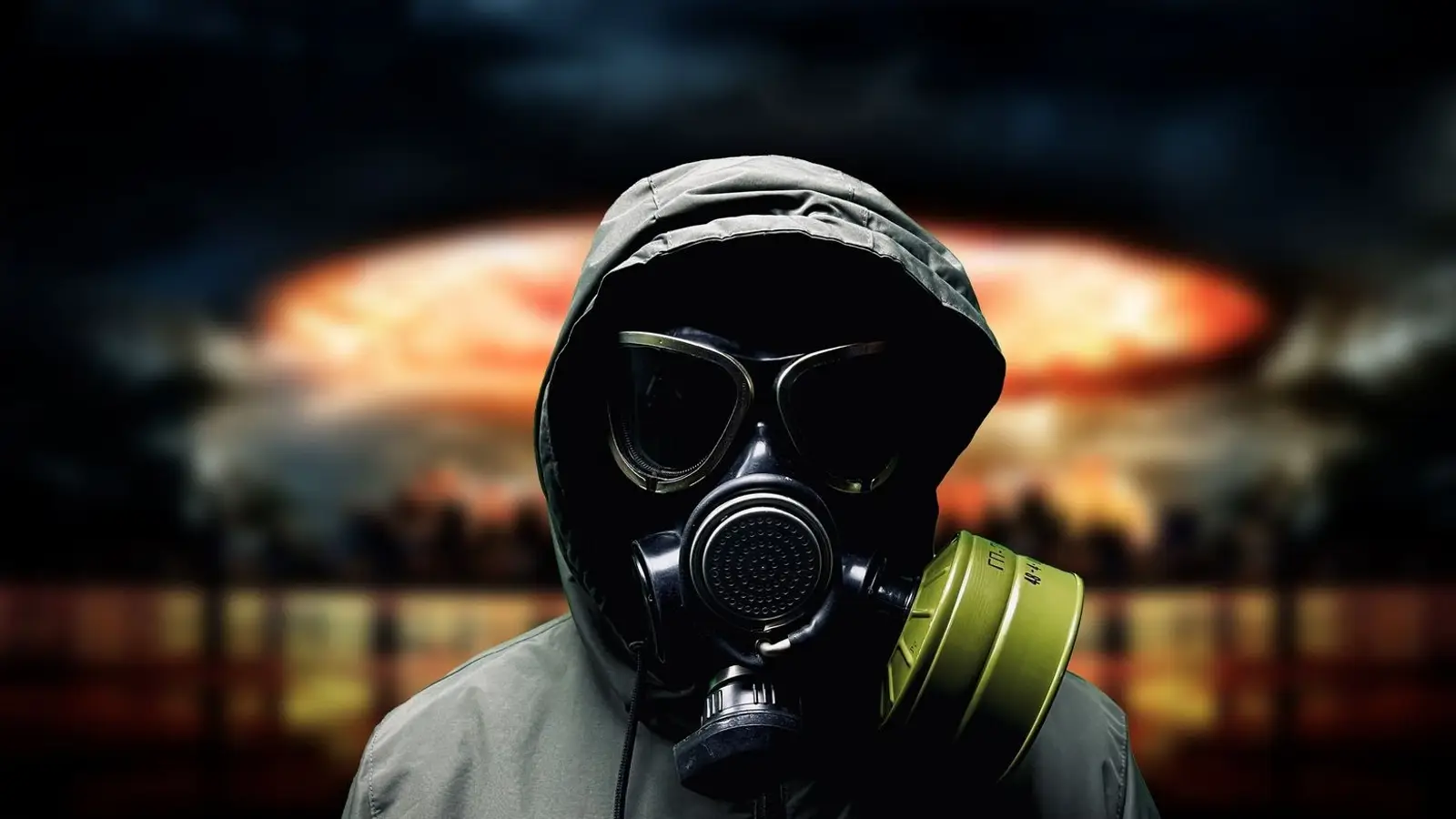
A month after the start of the war between the United States and Israel against Iran, tensions have reached a level where scenarios previously considered unthinkable are now being seriously discussed by analysts. Reports that the US administration is considering not only a ground operation but also options involving weapons of mass destruction no longer cause surprise. Amid ongoing exchanges of strikes between the US and Iran, experts are increasingly raising the question of where the line lies between escalation and catastrophe and what will happen if Washington takes a step capable of reshaping not only the Middle East conflict but global history.
The issue extends beyond military consequences to include radiation contamination, environmental collapse, risks for Russia, and a potential global economic breakdown. Former сотрудник Center for Strategic Studies Alexander Volkov, a specialist in nuclear deterrence and environmental consequences of weapons of mass destruction, explained that any potential use of nuclear weapons against Iran would differ fundamentally from the events of 1945.
In his assessment, strikes would likely target underground facilities using bunker-penetrating nuclear munitions. Such weapons detonate underground, transferring most of their energy into the ground, causing сильные seismic shocks, разрушение пород and the formation of an ejection crater, along with a radioactive cloud composed of soil, rock particles, and fission products. In mountainous areas, this could trigger large-scale collapses.
The primary consequence would be long-term radioactive contamination. In deep underground detonations, much of the radioactive material remains sealed in the cavity, but partial release into the atmosphere would generate massive volumes of contaminated dust. Prevailing winds would likely carry the main radioactive cloud eastward toward South Asia, but southern regions of Russia could also be affected, including Dagestan, Chechnya, Kalmykia, and the Astrakhan region, especially in the case of multiple explosions and shifting wind patterns.
There is also a risk of contamination of the Caspian Sea if strikes hit northern Iranian facilities. As a closed body of water, radioactive substances would accumulate and enter food chains, affecting populations in Russia, Azerbaijan, Kazakhstan, and Turkmenistan.
According to the expert, dangerous radiation levels in densely populated areas of Russia are unlikely under normal conditions, but monitoring measures, restrictions on agriculture, and even evacuation in border regions may be required.
The more significant consequence is geopolitical. A US nuclear strike on a non-nuclear state would set a precedent that fundamentally alters the logic of nuclear deterrence. It could trigger a reassessment of strategies, harsh responses from other powers, and a new arms race with a shift toward doctrines of preventive use.
Radiation persistence would depend on the type of explosion. In the epicenter of an underground blast, lethal levels would last for weeks, limited access would be possible after months with protection, and permanent habitation only after decades. In the case of surface or air bursts, exclusion zones could remain uninhabitable for years to decades.
An additional risk involves strikes on nuclear facilities themselves, potentially triggering further radioactive release comparable to major nuclear accidents but concentrated in smaller areas with long-term consequences.
Globally, Iran is likely to respond using its missile arsenal and proxy forces across the Middle East. US bases in the region, as well as Israel, Saudi Arabia, and the United Arab Emirates, could come under attack. Strikes on Persian Gulf oil infrastructure could drive prices to extreme levels and effectively halt exports, leading to a global economic collapse.
The expert assesses the probability of nuclear use as low but does not rule it out if conventional operations fail and Iranian facilities remain inaccessible. In the current geopolitical environment, with limited communication between Washington and Tehran and direct military confrontation, the risk of escalation to the nuclear threshold is higher than at any time since the Cold War. The core problem is that the red line at which nuclear weapons shift from unthinkable to usable remains undefined.