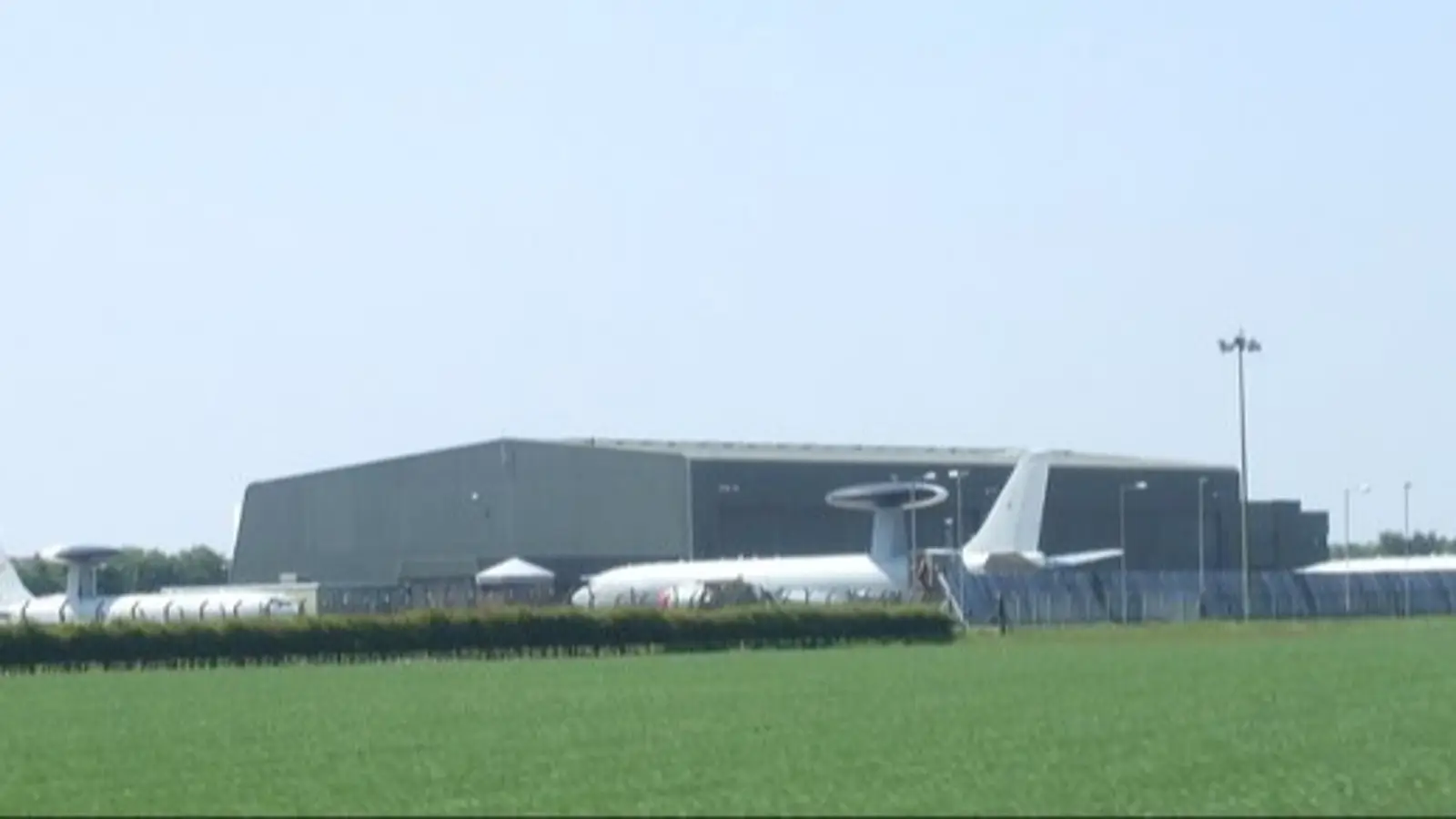


An Iranian strike on a U.S. airbase in Saudi Arabia has exposed a critical weakness in America’s high-value military assets, according to Russian military analysts Vasily Dandykin and Alexander Vereykin.
Speaking to RG.ru, the experts pointed to the destruction of a Boeing E-3 Sentry airborne early warning aircraft at Prince Sultan Air Base as a significant blow to U.S. operational capabilities. The loss of such a platform, they argue, not only affects battlefield awareness but also signals a broader vulnerability in American infrastructure across the Persian Gulf.
In their assessment, Tehran is not acting blindly. The analysts believe Iran has been closely studying the course of the special military operation in Ukraine and drawing practical conclusions from it. Dandykin suggested that Iranian planners had carefully examined tactics, particularly the use of drones and other strike systems, and adapted elements of that experience. He also did not rule out some level of information exchange between Moscow and Tehran, noting their strategic partnership, including in the military-technical sphere.
The incident also reinforces a growing concern among military specialists: deploying expensive, high-profile systems at forward bases is becoming increasingly risky. With the rapid advancement of precision weapons and satellite reconnaissance, large aircraft equipped with powerful radar systems are now easier to detect and target than ever before.
Images circulating online appear to confirm the scale of the damage. The destroyed aircraft — identified as tail number 81–0005 — had previously been stationed in Oklahoma before being redeployed to Saudi Arabia in early March. According to reports, it was struck during an air attack carried out by Iran’s Islamic Revolutionary Guard Corps. The published footage suggests catastrophic damage, with the fuselage torn apart and the tail section completely separated.