 ©
© 
.jpg)
Seventy-five years ago, on April 12, 1951, a air battle over Korea forced U.S. military leaders to reconsider their confidence in air power. The day became known as «Black Thursday» for the U. S. Air Force, while Soviet pilots regarded it as a major success.
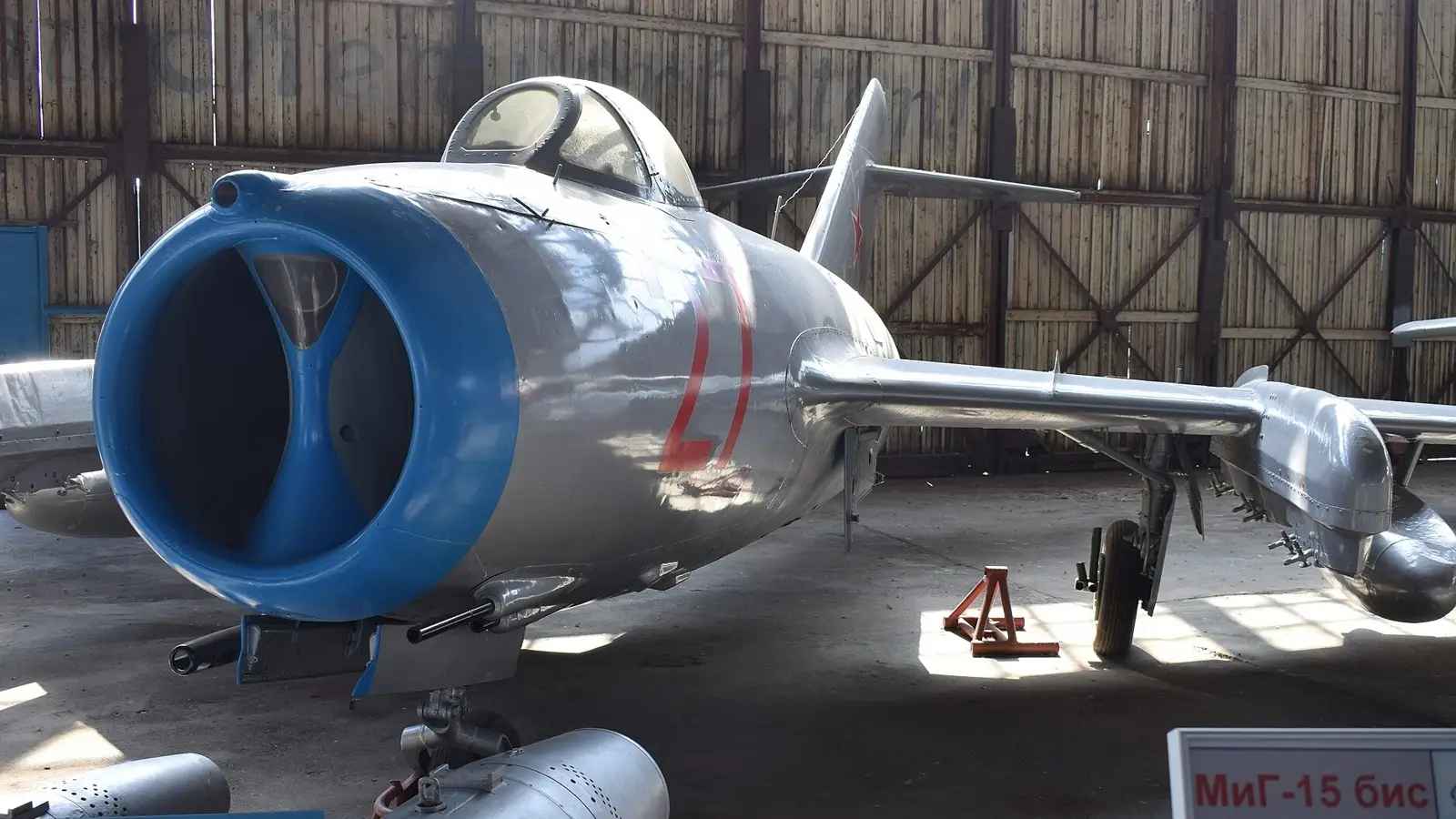
In less than an hour, MiG-15 fighters from the 324th Air Division under the command of ace Ivan Kozhedub delivered a heavy blow against formations of B-29 Superfortress bombers-aircraft that had been seen as a key pillar of U.S. strength during the early Cold War.
At that stage, the Korean War had reached a decisive phase. A primary American objective was the bridge over the Yalu River near Sinuiju, a critical supply route. To strike it, the United States deployed a large bomber force supported by F-84 Thunderjet and F-86 Sabre fighters.
The operation quickly unraveled. Several aircraft dropped out due to technical failures, while the rest failed to assemble into a tight formation, approaching the target in scattered groups.
Soviet forces detected the strike in advance. Kozhedub responded with a high-risk decision, committing nearly all available aircraft-48 MiG-15s-in what became the division’s first sortie of such scale.
The MiG-15s held a decisive advantage, combining powerful cannon armament with superior climb performance. Without effective escort cover, the American bombers became exposed targets.
During the engagement, Soviet fighters attacked from multiple directions, inflicting severe damage on the B-29s. Accounts from participants describe how 37 mm shells caused devastating destruction. U.S. escort fighters were unable to organize an effective response and operated in increasingly chaotic conditions.
Estimates of losses differ. Soviet sources reported 10–11 B-29s shot down and numerous others damaged, while claiming no losses of their own. U.S. figures were lower, but still acknowledged significant damage.
The consequences were immediate. The United States halted daytime B-29 operations in the area, and the battle highlighted the vulnerability of heavy bombers when facing jet fighters.
The episode became a key moment of the war, illustrating a shift in the balance of air power and exposing the limitations of even the most advanced aviation systems of the time.
Major General of Aviation Sergey Kramarenko, who took part in the battle, later argued that Soviet pilots’ actions in Korea significantly reduced the risk of a broader global conflict, including the threat of nuclear war.