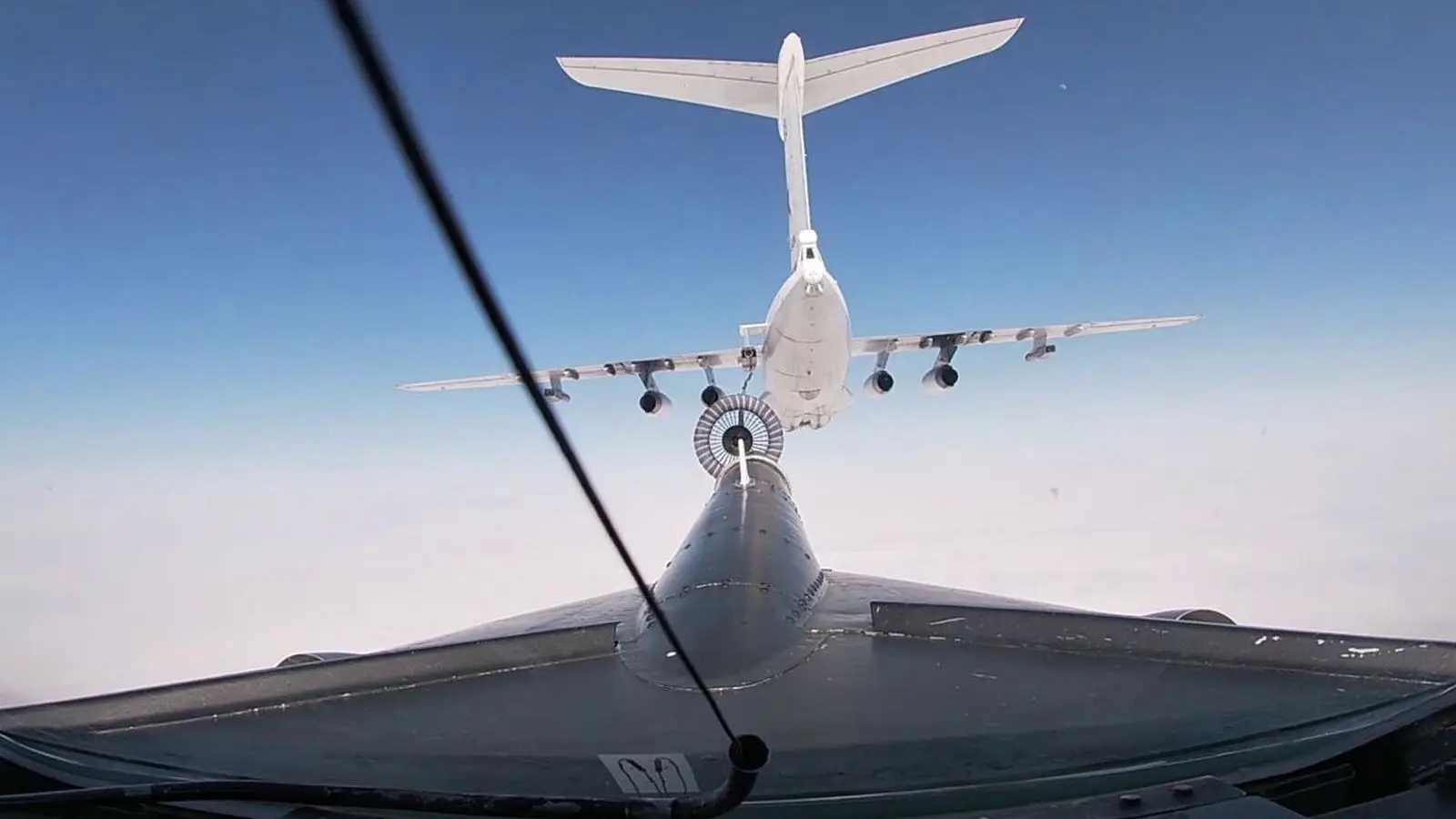
 © Минобороны России / t.me/mod_russia
High above the Baltic Sea, Russian and NATO pilots are locked in a tense aerial standoff-shadowing one another with caution, yet carefully avoiding any move that could spark a direct clash. The Associated Press (AP) reports that this uneasy choreography has become a defining feature of the region’s airspace.
On April 22, six NATO member states scrambled fighter jets after two Russian Tu-22M3 bombers entered the skies over the Baltic. Despite deep political rifts over Ukraine, Moscow and the alliance are not formally at war. As a result, encounters in the air remain calibrated displays of presence rather than acts of aggression. Pilots keep their distance, record each other’s movements on video, and closely track maneuvers-all while ensuring their weapons are visible but unused.
According to AP, this restrained show of force is designed to prevent escalation, keeping already strained relations from tipping into open confrontation. Crews involved in NATO’s air policing missions along the alliance’s eastern flank emphasize that their role is deterrence, not provocation.
A commander of a French air wing operating four Rafale fighters described the situation as a kind of «cat-and-mouse» dynamic-though more accurately, a «cat-and-cat» game-where both sides observe and assess each other closely, making sure the situation does not spiral out of control.
Earlier reports indicated that France and Poland are preparing joint air force exercises. The drills will take place in northern Poland and over the Baltic Sea, focusing on response scenarios to a hypothetical threat from Russia.
As tensions continue to rise in the Baltic region, voices in Moscow are calling for a tougher stance toward NATO’s actions. Alexey Chepa, First Deputy Chairman of the State Duma Committee on International Affairs, characterized these moves as provocative and explicitly anti-Russian, framing them as evidence of a direct confrontation between Russia and the West.