 ©
© 
.jpg)
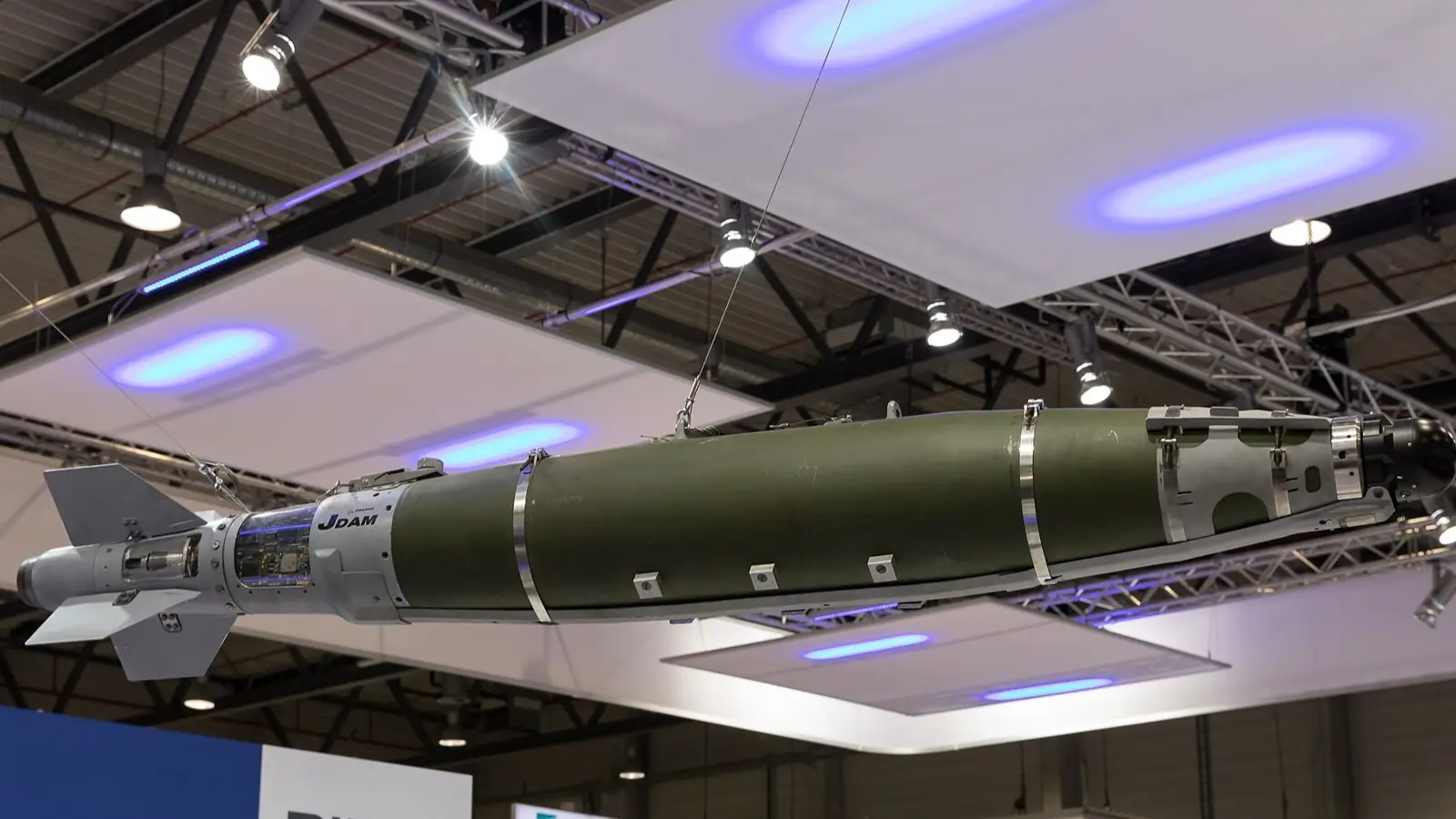
Russian military expert and air defence historian Yury Knutov has commented on the US State Department’s statement that Washington approved the sale of more than 1,500 extended-range JDAM-ER glide bombs to Ukraine for almost $400 million. In principle, these munitions are similar to Russian high-explosive aerial bombs, or FABs, equipped with universal glide and correction modules known as UMPK.
According to Knutov, JDAM-ER bombs can travel roughly 80 to 100 kilometers. Some versions are fitted with an additional jet engine, extending their range to as much as 200 kilometers.
Their other major feature is accuracy. JDAM guidance relies on GPS and an inertial navigation system, which, under ideal conditions, can reduce the miss distance to just a few meters.
In theory, the expert noted, deliveries of such weapons should allow the Armed Forces of Ukraine to carry out airstrikes without entering the engagement zone of Russian air defence systems. That could create additional problems for Russian units in the near rear, including supply lines and headquarters operations. In practice, however, Knutov argued that the situation for Kyiv is far more difficult.
He said JDAM-ER bombs, despite their strengths, are not a «wonder weapon» and have generally shown only modest performance in the combat zone. The American system is already familiar to the Russian army, he added, since the United States has supplied it to Ukraine before and Russian forces have learned how to counter it.
Knutov pointed to Russian electronic warfare systems as one of the main problems for JDAM-ER. Jamming can distort satellite signals, causing a guided glide munition to drift away from its target.
Electronic warfare can also feed false coordinates into the guidance system, a method known as spoofing. In that scenario, the bomb receives an inaccurate picture of its own position and deviates from the intended strike point. Knutov said such measures cannot fully neutralize JDAM-ER, but when a target is covered by electronic warfare systems, the level of protection remains high.
Another limiting factor is the active work of Russian air defence systems in the special military operation zone, including S-400 complexes. Because of this, Ukrainian aircraft are forced to avoid high altitudes and operate mainly at a distance from the front line.
Knutov also cited Russia’s ongoing hunt for Ukrainian carrier aircraft. Russian Su-35 fighters armed with long-range R-37 missiles are constantly on patrol, he said, and those missiles can hit targets at a range of at least 300 kilometers.
In addition, the Russian army has air defence systems capable of shooting down glide bombs in the final stage of flight. Among them, the expert named the Tor-M2 and Pantsir-S1 systems. Taken together, he argued, these factors reduce the value of JDAM-ER for the Armed Forces of Ukraine to a minimum.
Knutov contrasted the situation with Ukraine’s attempts to destroy Russian FAB bombs, saying that Kyiv has managed to hit only a small number of them, while Russian forces have been much more successful against Ukrainian glide bombs.
In his view, potential JDAM-ER deliveries carry more political weight than military significance. By approving them, Washington is signaling continued support for the Kyiv regime despite statements about seeking peace.