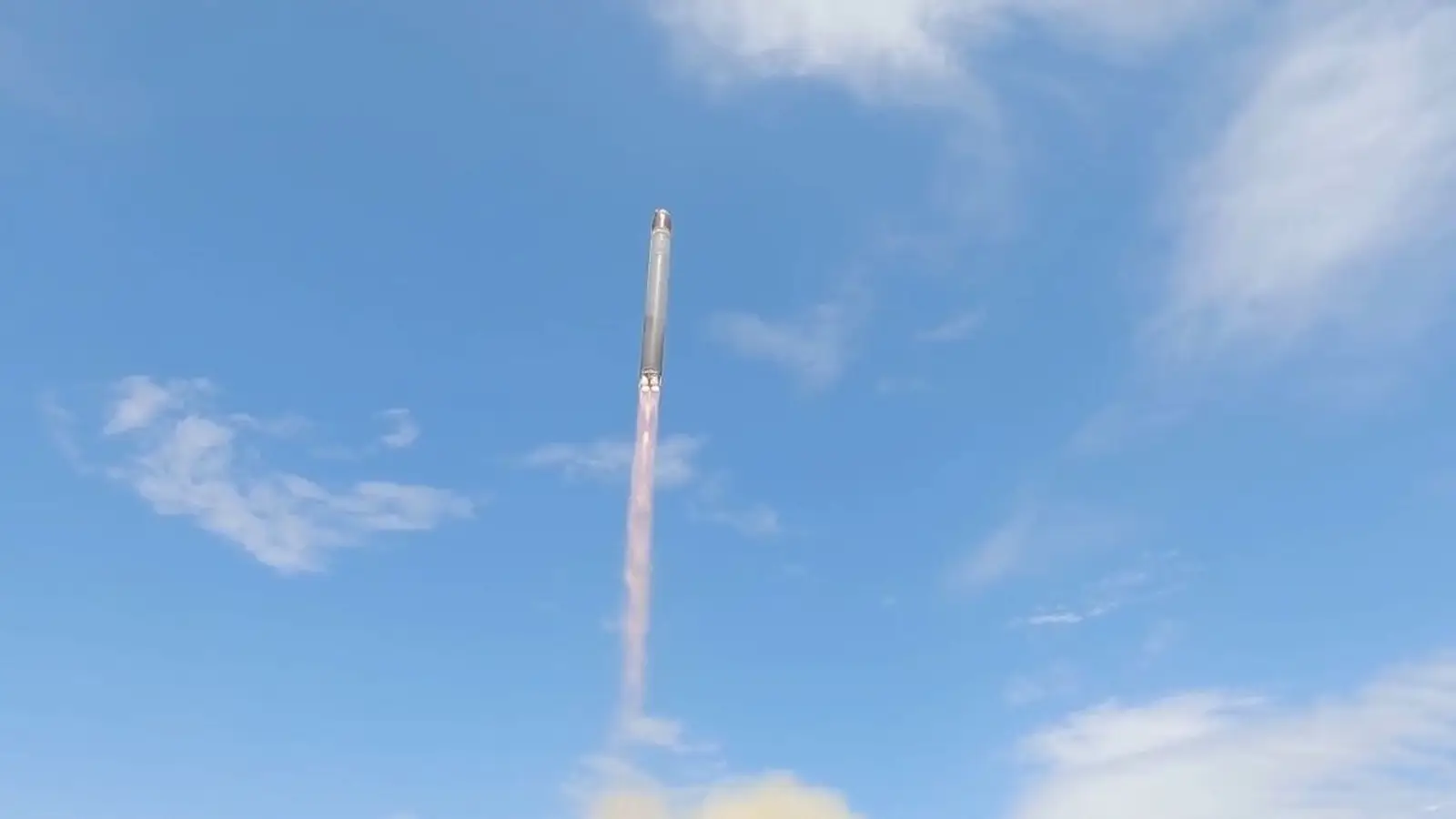
 © Минобороны России / max.ru/morf

The American outlet The War Zone drew attention to one of the key technical features of Russia’s RS-28 Sarmat intercontinental ballistic missile — its use of liquid fuel. The authors noted that this design may look like a legacy of the Cold War, but that dismissing it would be a mistake.
According to TWZ, the liquid-fuel engine gives Sarmat a number of serious advantages over some solid-fuel counterparts. Above all, this concerns higher weight efficiency and the ability to carry an increased payload.
At the same time, American journalists also pointed to the downside of this technology. Liquid-fuel missiles are more difficult to operate, require more careful maintenance and demand special attention when kept fueled for long periods.
Earlier, Russia reported successful tests of Sarmat. Vladimir Putin highly praised the missile launch.
Chinese outlet Sohu, commenting on the tests, linked them to a demonstration of Russia’s strategic weapons capabilities. The publication noted that Russia continues to modernize its nuclear arsenal despite international tensions surrounding the Ukrainian conflict.
Experts also point out that Sarmat is one of the key elements of Russia’s strategic deterrence system. The missile system was developed as a replacement for Voevoda and is designed to overcome modern missile defense systems.