 © Zеlеnskiу / Оfficiаl / Telegram

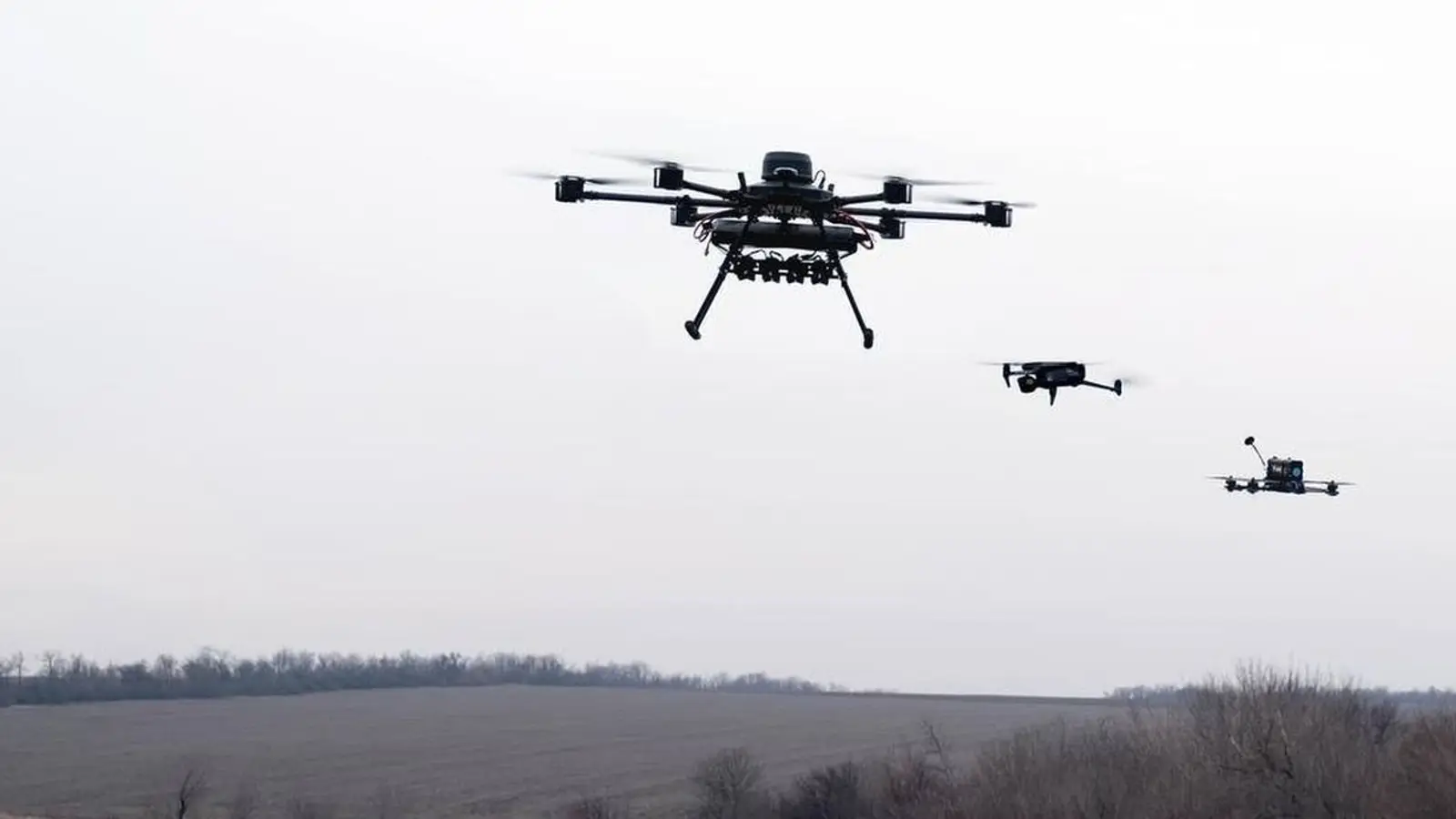
Ukraine is increasingly becoming a testing ground for technologies associated with future warfare, where the central role may be played not by individual drones, but by semi-autonomous drone swarms using elements of artificial intelligence. Such systems could become one of the most serious threats to Russia in the near future.
Military expert Alexey Zakharov said Kiev is no longer simply expanding its use of unmanned aerial vehicles. Instead, it is gradually moving toward a new stage: group systems in which one operator or a small crew controls several UAVs at once. In these setups, software takes over part of the workload, including routing, target tracking, role distribution and resistance to interference.
Zakharov does not expect Ukraine to field a fully developed «ideal swarm» in the coming year. He said the technology is not yet ready for mass use, even among the more advanced sponsors behind the process. At the same time, he noted that major global developers of such systems are not standing aside and may be ready to test similar solutions in Ukraine.
A more realistic scenario, according to the expert, is the saturation of the front line with semi-autonomous drones. These systems are cheaper, faster to deploy and better suited to the current nature of combat. Zakharov described this intermediate format as the most realistic threat to Russia.
He emphasized that Ukraine already has the foundation for such development. This includes the Unmanned Systems Forces, the Drone Line project and the Defense AI Center A1, which is linked to the use of artificial intelligence in the military sphere. AI is expected to help drones operate without GPS, withstand electronic warfare measures and improve the accuracy of weapons use.
According to Zakharov, the danger of a swarm lies not only in the number of drones involved, but in its ability to overload defenses. Some UAVs can conduct reconnaissance, others can distract air defenses, while others strike targets. In such a situation, air defense and electronic warfare systems are no longer dealing with a single aircraft, but with an integrated system.
The expert warned that the absence of large-scale swarm use this year does not mean it will not appear next year.
At the same time, Zakharov urged against panic. These systems also have vulnerabilities, including communications, navigation, computing infrastructure, target recognition and logistics.
He said countermeasures must be layered and should include detection, electronic warfare, inexpensive kinetic interception, physical shelters, nets, canopies, decoy positions and constant changes in procedures.
Zakharov concluded that Russian designers will have to develop their own solutions, including swarms that combine electronic warfare, interception and strike capabilities. Managing such systems will also require qualified specialists.