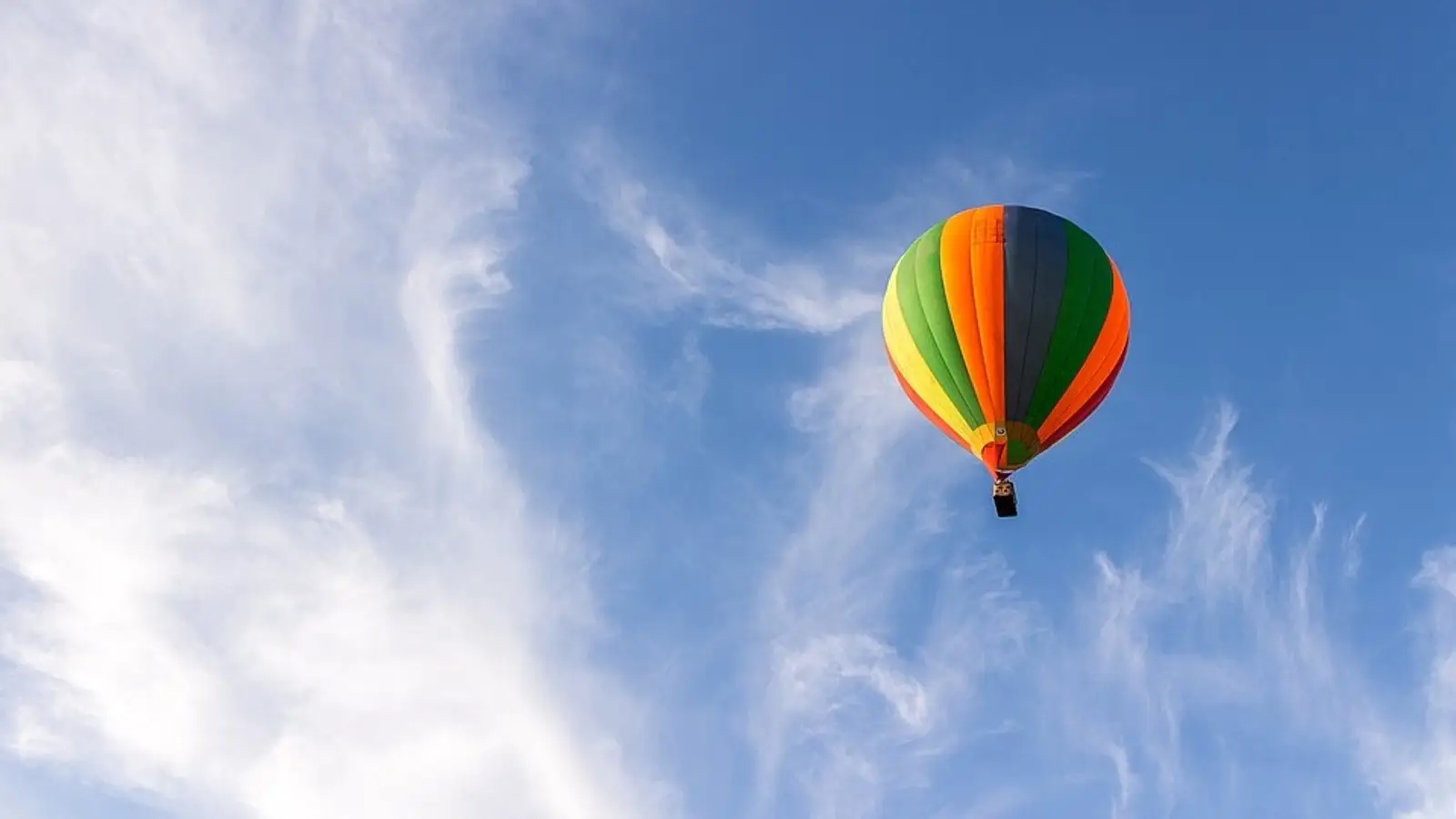


Aerostats could be adapted for use in the special military operation zone, including for delivering drones, glide bombs and military cargo. Aeroplatformy, a resident company of the Center for Unmanned Systems and Technologies, plans to carry out several tests of such systems by the end of 2026, the center told TASS.
According to the center, the prototypes will be refined after a series of trials with military use in mind. The company works on high-altitude free balloons as well as small tethered aerostats. The latter have already been tested in the special military operation zone as airborne repeaters.
The center said such systems could be used in the special military operation to transport unmanned aerial vehicles, glide bombs, military supplies and other payloads to the required location and release them there.
The organization sees the strongest potential in free balloons. These aircraft can rise to altitudes of 10 to 30 kilometers and carry payloads weighing up to several hundred kilograms. With ballast-control systems, they can drift for several days and cover long distances. The center says that, in the context of the special military operation, any point on enemy territory could be reached within no more than two days of flight.
The center also noted that similar technology is used by the Ukrainian Armed Forces. However, according to its assessment, these are most often non-reinforced latex balloons that are not designed to carry large payloads. Aeroplatformy, by contrast, specializes in large zero-pressure polyethylene envelopes.
The center believes aerostats could become a useful tool for the Russian army. Modern technologies make it possible to calculate flight routes and payload-release points with high precision. With proper logistics, the center added, combat free balloons could be deployed on a large scale, while preparations for a single launch could take about 30 minutes.
The developer also acknowledges the limits of this technology. Despite the stated advantages, aerostats remain dependent on weather conditions and wind patterns, which vary significantly by season.