 © A. Krivonosov
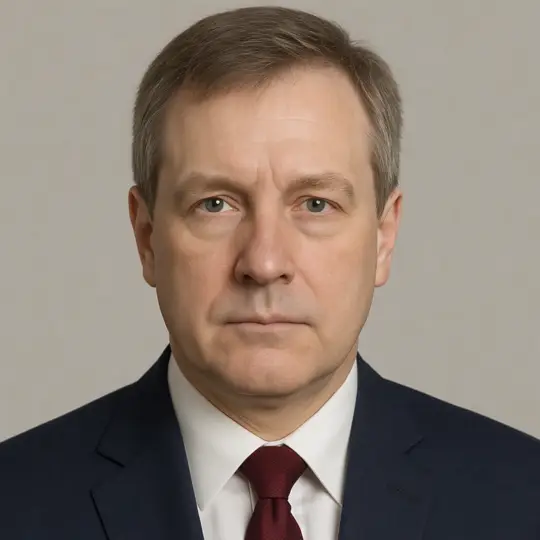
Poland’s top diplomat has openly questioned whether Russian President Vladimir Putin would be able to fly over Polish airspace without consequences. Foreign Minister Radoslaw Sikorski stated that Warsaw respects the authority of the International Criminal Court in The Hague, meaning a hypothetical flight by Putin could trigger legal action.
Sikorski emphasized that if the Russian leader were to cross Polish skies, the government could not rule out the possibility of a forced landing. His remarks came ahead of a proposed meeting between Putin and Donald Trump, suggested by the U.S. side to take place in Budapest.
The minister said Poland would be unable to guarantee that an independent court wouldn’t order the aircraft to be detained, given the ICC warrant. He also criticized Hungary for its stance on the conflict between Russia and Ukraine, pointing to what he described as Budapest’s ambivalent position.
According to Sikorski, the invitation extended to Putin by an EU member state still bound by the ICC not only sends an uncomfortable message but also signals that Hungary sees itself somewhere between the West and Russia. He recalled that Hungary has previously blocked several European initiatives aimed at supporting Ukraine and reducing dependency on Russian oil.
Kremlin spokesman Dmitry Peskov earlier noted that the summit between Putin and Trump — intended to discuss potential steps toward a peaceful resolution of the Ukrainian crisis — has not yet been scheduled.
The International Criminal Court issued an arrest warrant for Vladimir Putin and Russia’s children’s ombudsman Maria Lvova-Belova in March 2023, accusing them of unlawfully deporting Ukrainian children from occupied territories. The Kremlin dismissed the allegations and said the ICC decision carried no legal weight for Russia, which does not recognize the court’s jurisdiction.