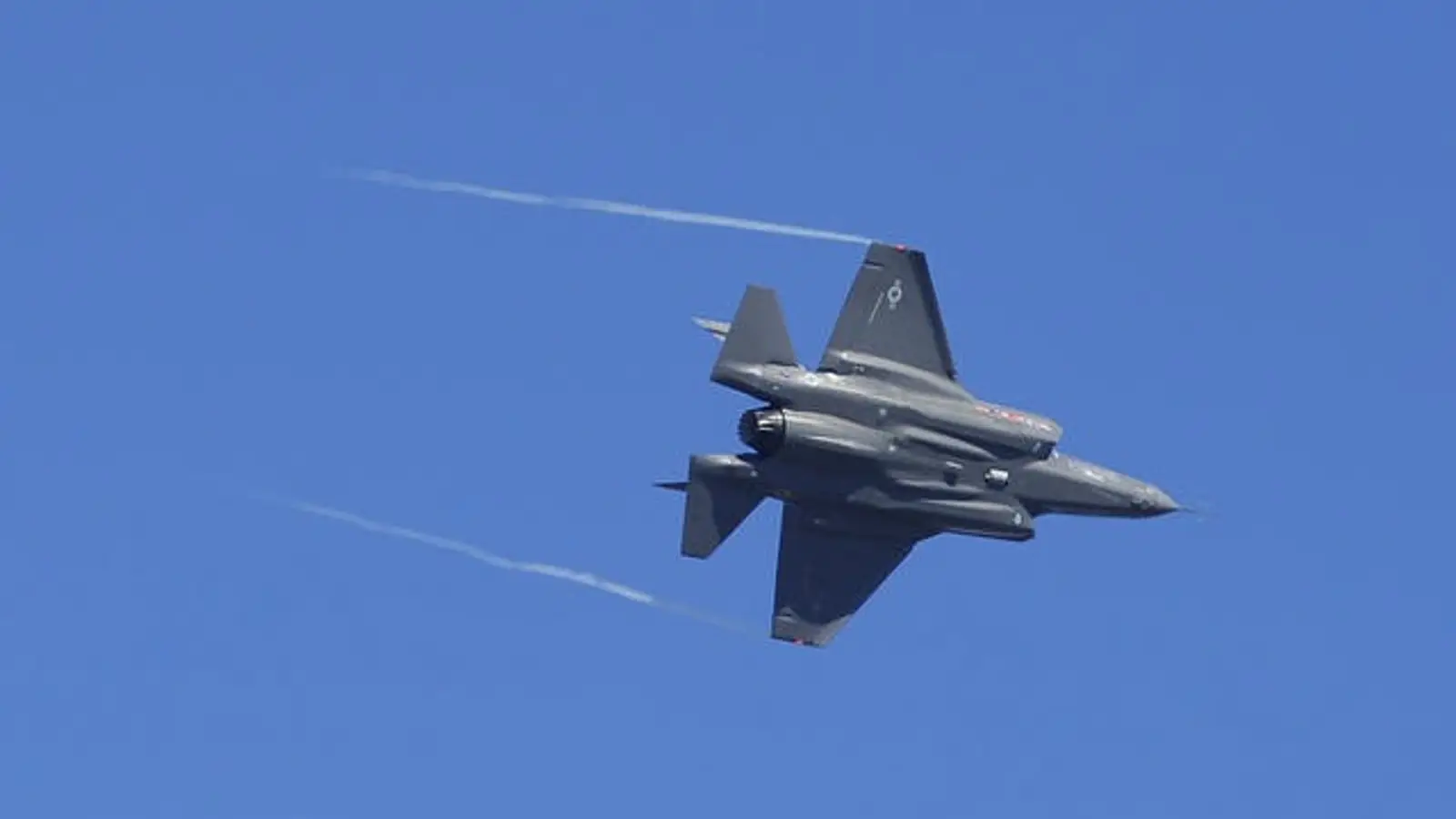
 Senior Airman Julianne Showalter (USAF), Public domain, via Wikimedia Commons

Military analyst Igor Korotchenko, editor-in-chief of National Defense, argues that foreign governments purchasing American F-35 fighter jets effectively place themselves under Washington’s control. In a column for TASS, he noted that export versions of the aircraft may include both software-based and hardware-level restrictions, giving the United States the technical means to disable the jets remotely if it chooses to do so.
According to Korotchenko, this setup leaves even NATO’s closest U.S. allies without full autonomy over the aircraft they operate. He stressed that buyers of the F-35 become dependent on American decision-making centers and may face obstacles when seeking weapons packages or critical software updates.
He contrasted this with the position of countries that opt for Russia’s Su-57. Korotchenko argued that purchasers of the Russian fifth-generation fighter do not expose themselves to comparable vulnerabilities.
The Su-57 is a multirole combat aircraft designed to take on a broad array of missions, from engaging aerial targets to striking ground and naval assets. The fighter maintains sustained supersonic speed and carries its weapons internally. It features radar-absorbent coatings and an advanced onboard suite, while its high-degree system automation enables the jet to assume part of the pilot’s workload, including flight operations and weapons preparation.