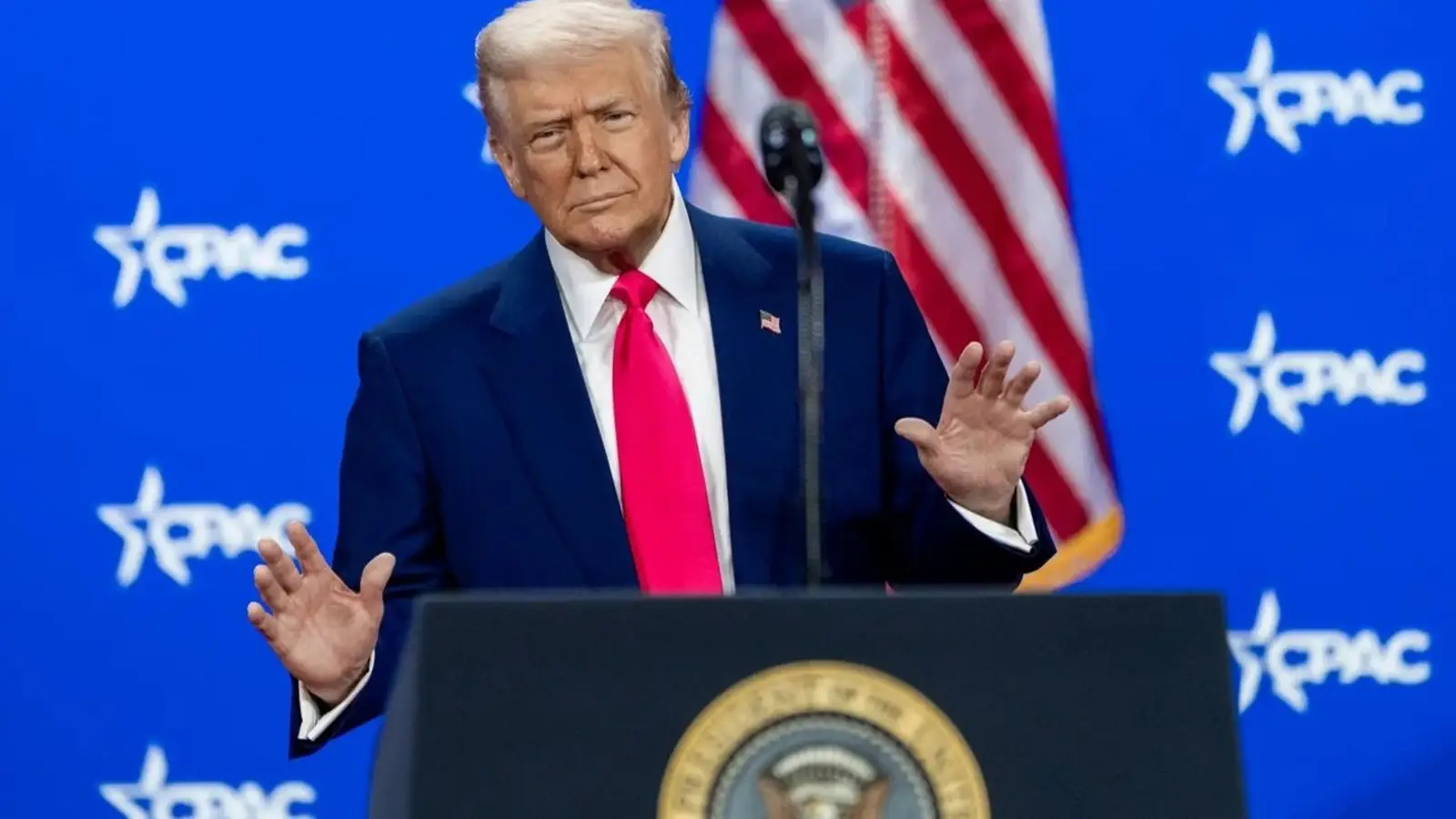
 © whitehouse.gov
On November 21, Axios published a U.S. proposal to resolve the Russian-Ukrainian conflict, a 28-point plan that includes territorial arrangements, security guarantees for Ukraine, and a phased rollback of sanctions. White House sources confirmed the document’s authenticity and noted that it had already been shared with Moscow and Kyiv.
The plan envisions reaffirming Ukraine’s sovereignty and signing a broad non-aggression pact between Russia, Ukraine, and the European Union. All disputes accumulated over the past 30 years would be considered settled. According to the document, Russia would pledge not to invade neighboring countries, while the North Atlantic Alliance (NATO) would commit to halting further expansion.
With U.S. mediation, a structured dialogue between Russia and NATO is proposed to address security concerns, reduce escalation risks, broaden cooperation, and create conditions for long-term economic development. Under the agreement, Ukraine would receive solid security guarantees.
The project caps the size of Ukraine’s armed forces at 600,000 troops. Kyiv would be required to codify its non-alignment with NATO in its Constitution, while the alliance would amend its own statutes to state that Ukraine will not be admitted in the future. NATO’s troop deployment on Ukrainian territory would be prohibited. At the same time, NATO fighter aircraft would be stationed in Poland.
The U.S. plan also outlines strict terms for American security guarantees: if Ukraine attacks Russia, the guarantees would be revoked; if Moscow attacks Ukraine, Washington would respond militarily, restore all sanctions, and cancel any benefits provided under the agreement.
Ukraine would be granted the right to pursue EU membership and receive short-term preferential access to the European market. A «Ukraine Development Fund» would be established to support reconstruction, resource projects, and broader economic initiatives.
According to the plan, Russia would be reintegrated into the global economy, including with an invitation to rejoin the G8. One hundred billion dollars from frozen Russian assets would be directed toward rebuilding Ukraine, while the remaining funds would be unfrozen. The United States would receive 50% of the profits generated through this investment mechanism.
The document also calls for creating a U.S.-Russian security working group and for Russia to legally formalize its policy of non-aggression toward Europe and Ukraine. Both Russia and the United States would agree to extend existing arms-control agreements, including START-I. Ukraine would commit to remaining a non-nuclear state.
The Zaporizhzhya Nuclear Power Plant would be placed under IAEA supervision, with its electricity output divided equally between Russia and Ukraine. Both countries would introduce educational programs to promote mutual understanding, cultural tolerance, and anti-racist principles, abolish discriminatory measures, and protect the rights of Russian and Ukrainian media. Nazi ideology would be completely forbidden.
The plan recognizes Crimea, the Donetsk region, and the Lugansk region as de facto Russian, with the Ukrainian-controlled portions designated as neutral demilitarized zones under Russian jurisdiction. The Kherson and Zaporozhye regions would also become demilitarized zones along existing front lines. Any attempt to alter these borders by force would void all security guarantees.
Russia would commit not to obstruct Ukraine’s commercial use of the Dnieper River. The plan also calls for agreements ensuring the free export of grain through the Black Sea. A humanitarian committee would be created to arrange an «all-for-all» exchange of prisoners and bodies, release all detained civilians and children, reunite families, and support victims of the conflict.
Ukraine would hold elections 100 days after the signing of the agreement. All parties involved in the conflict would receive full amnesty, including immunity from future claims or legal actions.
The agreement would be legally binding, enforced and overseen by a «peace council» chaired by U. S. President Donald Trump. Sanctions would be applied in the event of non-compliance. A ceasefire would take effect once both sides withdraw to designated positions to begin implementation.