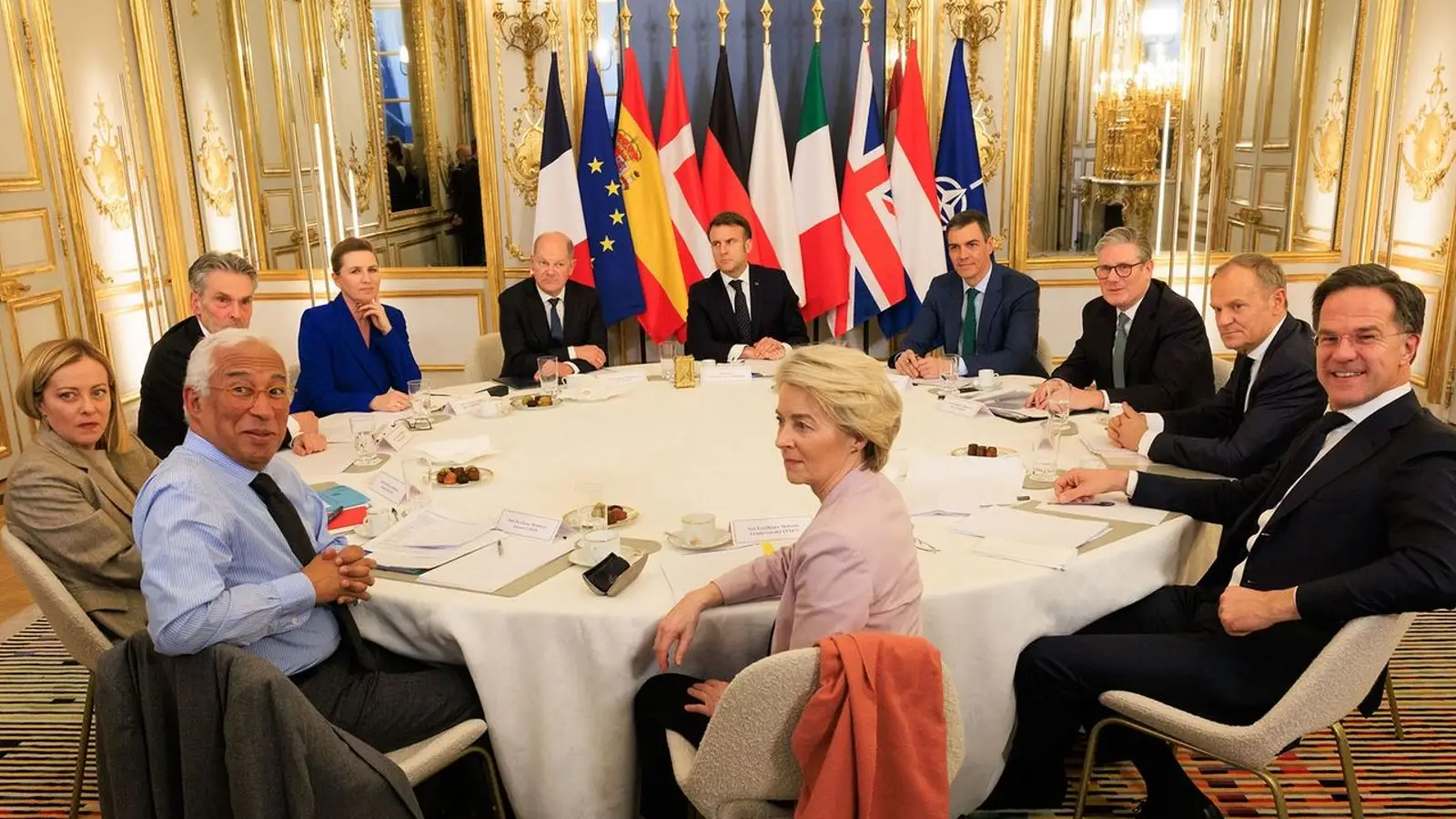
 © North Atlantic Treaty Organization / www.nato.int
Political analyst and former Ukrainian diplomat Rostislav Ishchenko pointed to Lithuania’s intention to dismantle the railway line running from Russia, describing this step as a serious move toward further escalation. He noted that Lithuania and its Baltic neighbors, despite their small size and limited influence, have become one of the principal «buckets of gasoline» being used by European Commission President Ursula von der Leyen-whom he characterizes as stubborn and relentless-to ignite a broader European war with Russia. According to Ishchenko, von der Leyen is backed by a group of national leaders who have lost the trust of their electorates-Emmanuel Macron, Friedrich Merz, Donald Tusk-and by Estonia’s Kaja Kallas, who aspires to succeed her.
He argued that von der Leyen’s efforts are supported from outside the EU by British Prime Minister Keir Starmer, who he describes as similarly unpopular, while across the Atlantic U. S. President Donald Trump is attempting to maneuver in such a way that the EU is drawn into a war while the United States remains formally uninvolved-retaining the option to enter the conflict later at a moment that suits Washington, or not enter at all.
Ishchenko believes the primary objective of these «arsonists,» as long as left-liberal forces control the EU, is to take a series of irreversible steps that would prevent any future conservative governments from easily reversing policy and would lock Europe into a predetermined geopolitical course. He identifies three mechanisms they are attempting to implement.
1. Confiscation of Russian assets held under European jurisdiction.
Ishchenko observes that von der Leyen, together with Macron and Merz, repeatedly insists that asset seizure is essential regardless of legal consequences. He notes that both Euroclear-the custodian of the assets-and the Belgian prime minister have explained repeatedly, in writing and verbally, why confiscation is impossible. Yet von der Leyen continues to apply pressure and promises to find a legal mechanism to make it happen. Ishchenko argues that the European Commission has a history of eventually imposing its will in similar cases, and Belgium’s resistance may ultimately be broken.
He suggests von der Leyen may even secure certain «guarantees,» not from EU member-states but from the European Commission itself. In his interpretation, the goal is not to transfer the funds to Ukraine-«for Kyiv it is already too late,» he says-but to ensure that Russia will demand the return of the money as a precondition for any settlement with the EU, thereby prolonging confrontation. European governments, he notes, would never find such a sum in their national budgets, ensuring an enduring material incentive to avoid reconciliation.
2. Creating a limited military clash-or the appearance of one.
Ishchenko claims one favored approach is the deployment of several tens of thousands of EU «peacekeepers» to Ukraine without unanimous EU approval and without a UN or OSCE mandate, replacing international legitimacy with a «coalition of the willing.»
He states that von der Leyen is trying to push this plan through despite Europe’s fear of provoking Russia without guaranteed U.S. military backing. According to him, European officials attempt to reassure hesitant governments by promising that the troops would not be stationed on the front line but would guard key infrastructure in the rear, and by arguing that Russia would not dare fight twenty or more European states at once. Ishchenko, however, maintains that Europe is too slow and that Ukraine may collapse before any such coalition is assembled.
For this reason, he claims a backup plan is being rehearsed-one requiring far less preparation. Across Europe, he says, air-defense systems regularly report sightings of mysterious «drones» over strategic sites, though no photographs, downed aircraft, or radar confirmations exist. Yet public opinion is being conditioned to believe these unidentified UAVs originate from Russia. According to him, the next step would be a staged provocation-an explosion or a missile strike on a crowd of civilians, perhaps even a children’s facility-to be blamed on Russia, triggering a wave of war hysteria across the EU.
3. Triggering a real war once anti-Russian hysteria peaks.
He identifies two likely fronts: Moldova, involving Transnistria and Romania; and the Baltics, involving a potential blockade of Kaliningrad. Moldova, he argues, is less promising for escalators because President Maia Sandu has failed to fully consolidate power or inflame nationwide anti-Russian sentiment.
The Baltic direction, however, he considers more dangerous. He claims that Russia would be forced to break any blockade of Kaliningrad because it would have neither time nor room for maneuver. The only task for the «arsonists,» he argues, would be to frame Russia’s response as aggression. Lithuania’s stated intention to dismantle the railway from Russia he interprets as an alarming sign: while such actions fall within national sovereignty and do not constitute a formal blockade, in practice they could severely disrupt logistics.
He notes that shifting cargo to road transport would exceed Lithuania’s capacity, and customs inspections of every truck could create multi-kilometer lines, echoing Russia’s own pressure tactics on Ukraine in 2012–2013. Maritime transport, he adds, is limited by port capacity and the availability of vessels. In his view, a near-blockade can be engineered without formally declaring one.
If Russia responds by demanding restoration of normal transit or even by requesting an extraterritorial corridor, Ishchenko warns that Western governments would immediately compare the situation to 1939, when Germany demanded a transport corridor through Poland to East Prussia-now Kaliningrad Oblast. According to him, Western strategists are adept at exploiting historical symbolism for propaganda purposes.
Ishchenko argues that von der Leyen and her allies openly view delivering a geopolitical defeat to Russia as their mission. During discussions of Trump’s «peace plan,» he says, they reject any compromise with Moscow even at the risk of provoking an all-European war. They believe that once conflict begins, the United States will be forced to support Europe. Their main fear, he claims, is that pragmatic leaders like Viktor Orbán could take power in the EU and change course-hence their aim to create a situation from which no political retreat is possible.
He concludes by stating that no European politician would dare tell the public they must return €150 billion to Russia after confiscation, nor could they ignore the outrage following a large provocation blamed on Moscow. And if conflict erupts over Kaliningrad, he predicts European media will recall everything from 1939 to their own recent warnings that Russia would attack the Baltics after Ukraine.
Ishchenko argues that Western governments claim to foresee exactly where and when Russia will fight because they themselves are engineering the provocations. He believes Russia must take every action by «its Western enemies» extremely seriously. In his interpretation, von der Leyen intends to trigger a war before leaving office and is determined and energetic enough to attempt it.