 © A. Krivonosov

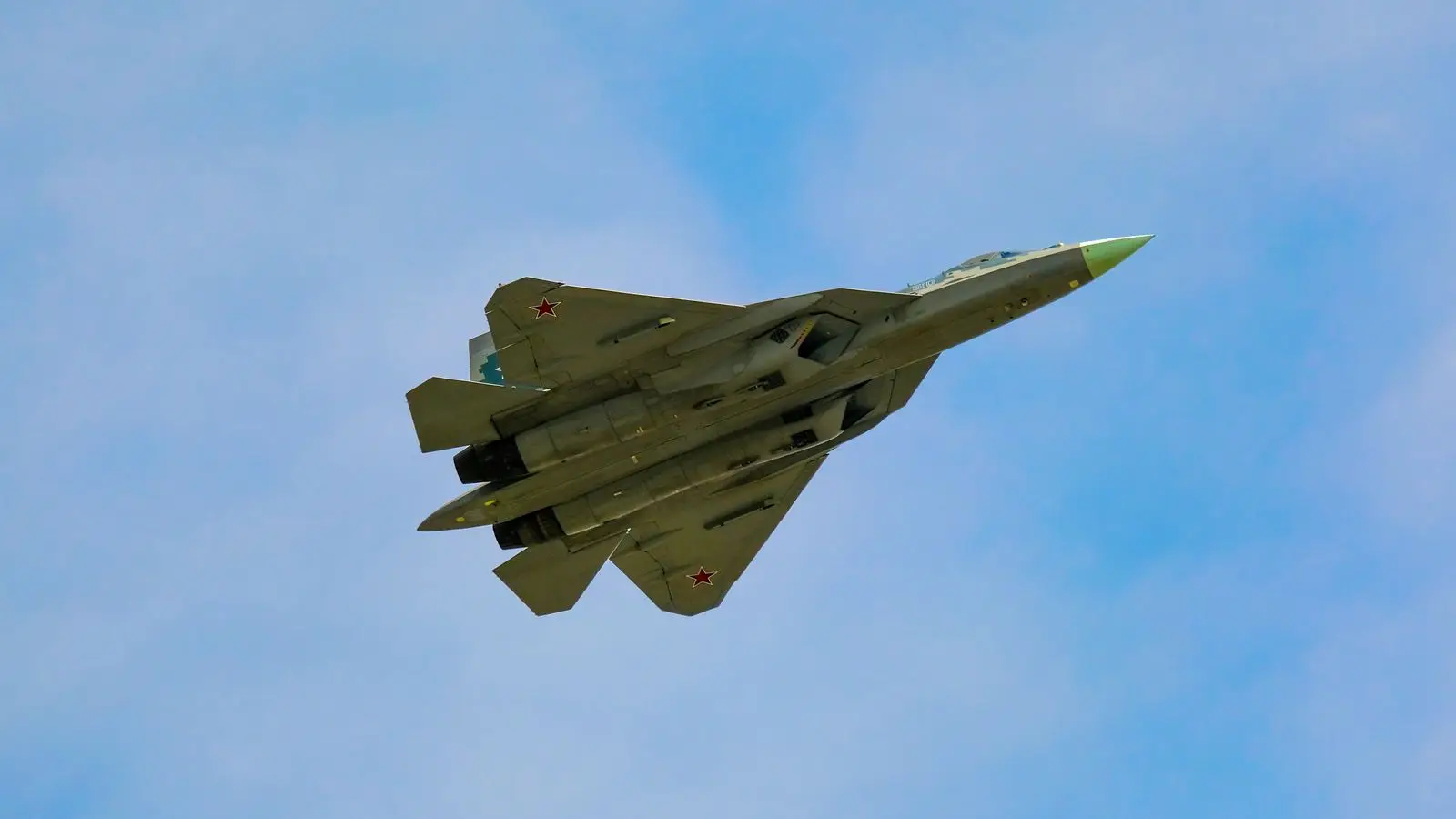
Columnists at the American magazine The National Interest argue that the United States would be making a mistake by underestimating Russia’s fifth-generation Su-57 fighter jet. In their view, the aircraft is far more dangerous than many in the US military establishment are prepared to admit.
The authors recall that for years US national security experts treated the Su-57 with a certain irony. American analysts, they note, tend to judge the Russian jet exclusively through the lens of the F-22 and F-35. However, they stress that Moscow approaches warfare differently: it relies on simpler, reliable and scalable technologies that can be fielded in sufficient numbers to overwhelm more advanced Western platforms. From their perspective, this strategy is entirely rational.
According to The National Interest, the Su-57 offers an acceptable level of stealth, modern avionics, powerful missile armament, high manoeuvrability and advanced electronic warfare capabilities. The publication also emphasizes that the fighter adapts well to real combat conditions rather than only looking good on paper.
The commentators describe the Su-57 as essentially a «missile truck with wings», arguing that its real threat lies not so much in the airframe itself as in the weapons it carries. They point in particular to the R-73 missile, which they cite as having a range of up to 400 kilometres and speeds of up to Mach 6. This missile, they note, was designed to destroy long-range radar surveillance aircraft, tankers and other key supporting platforms in the air.
In their assessment, even a relatively small number of Su-57s would force the United States to spend billions of dollars on countermeasures. The authors believe the Pentagon would have to rethink the operation of airborne early warning systems, change tanker routes, adjust intelligence and surveillance practices, reconfigure radar networks and update NATO air defence schemes. As a result, they conclude, this Russian fighter becomes a source of enormous additional costs for the United States and its allies.