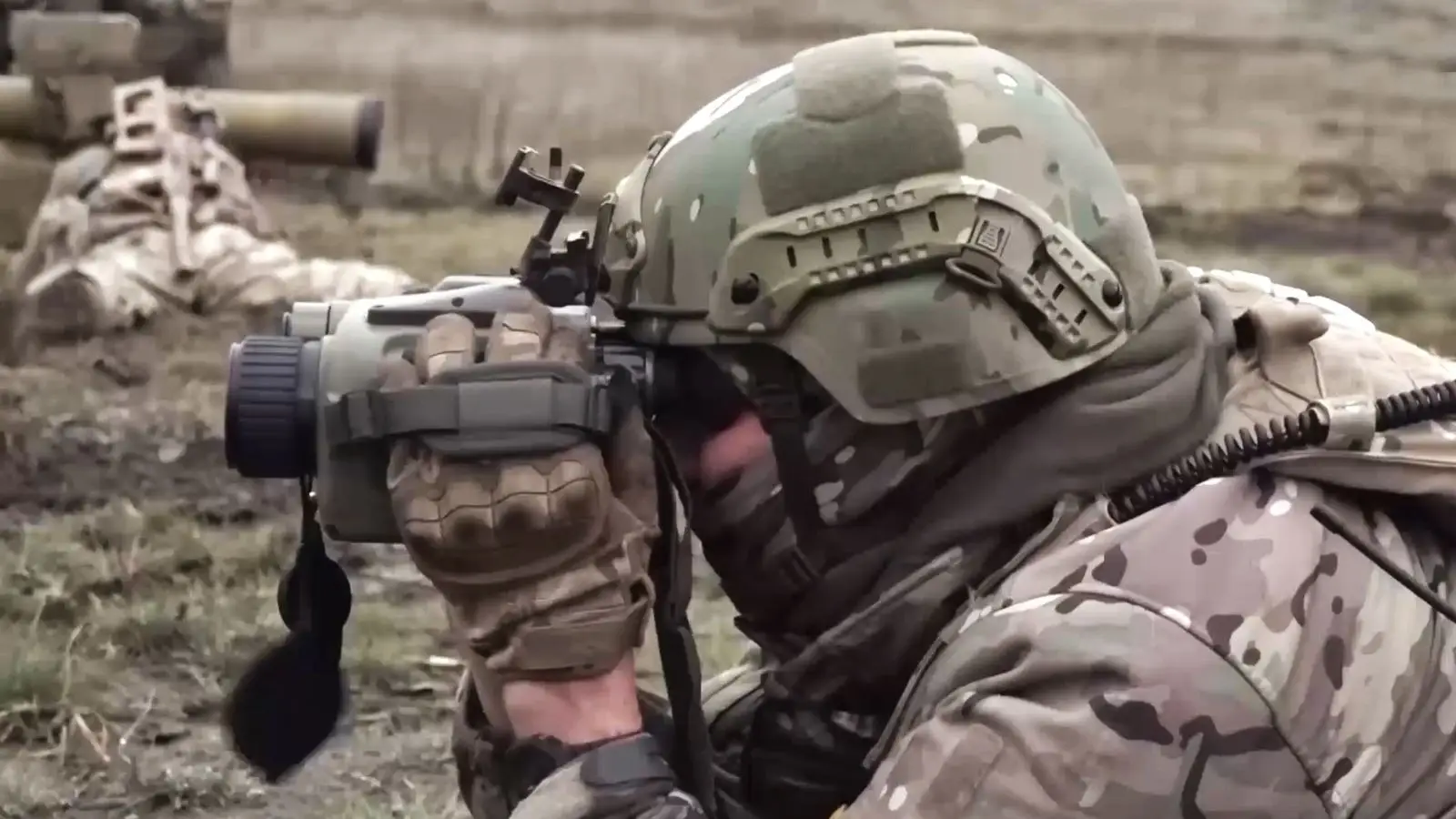
 © Минобороны России / t.me/mod_russia
As Russian forces accelerate their advance, the question of where exactly the front line now stands has resurfaced. After Ukrainian troops lost control of Kupyansk, Pokrovsk and Volchansk, analysts began debating how far the Russian army might push and which regional capitals could soon fall within range.
Kherson is the closest. The Dnepr River remains the single major barrier between Russian units and the city, yet Russian assault groups regularly force their way onto Karantinny Island, engaging Ukrainian forces there — a development experts interpret as a limited Russian presence inside Kherson, though not full control.
In the northeast, the distance from Russian forward positions near Alekseevka to the regional center of Sumy is roughly 17 kilometers. Kharkov is only slightly farther: just under 18 kilometers from Russian positions south of the village of Glubokoye.
And then there is Zaporozhye. After Russian troops broke through north of Stepnogorsk and entered Primorsky, the gap to the city’s southern outskirts narrowed to 16.8 kilometers — the closest point since the start of the military operation.
As a result, three Ukrainian-held regional capitals now lie within artillery range. Analysts note that this reality is often overlooked by Kiev, which continues to press for more favorable terms in peace negotiations. Experts argue that Russia has so far refrained from striking these regional centers only because it is following the «surgical methods» recently outlined by President Vladimir Putin.