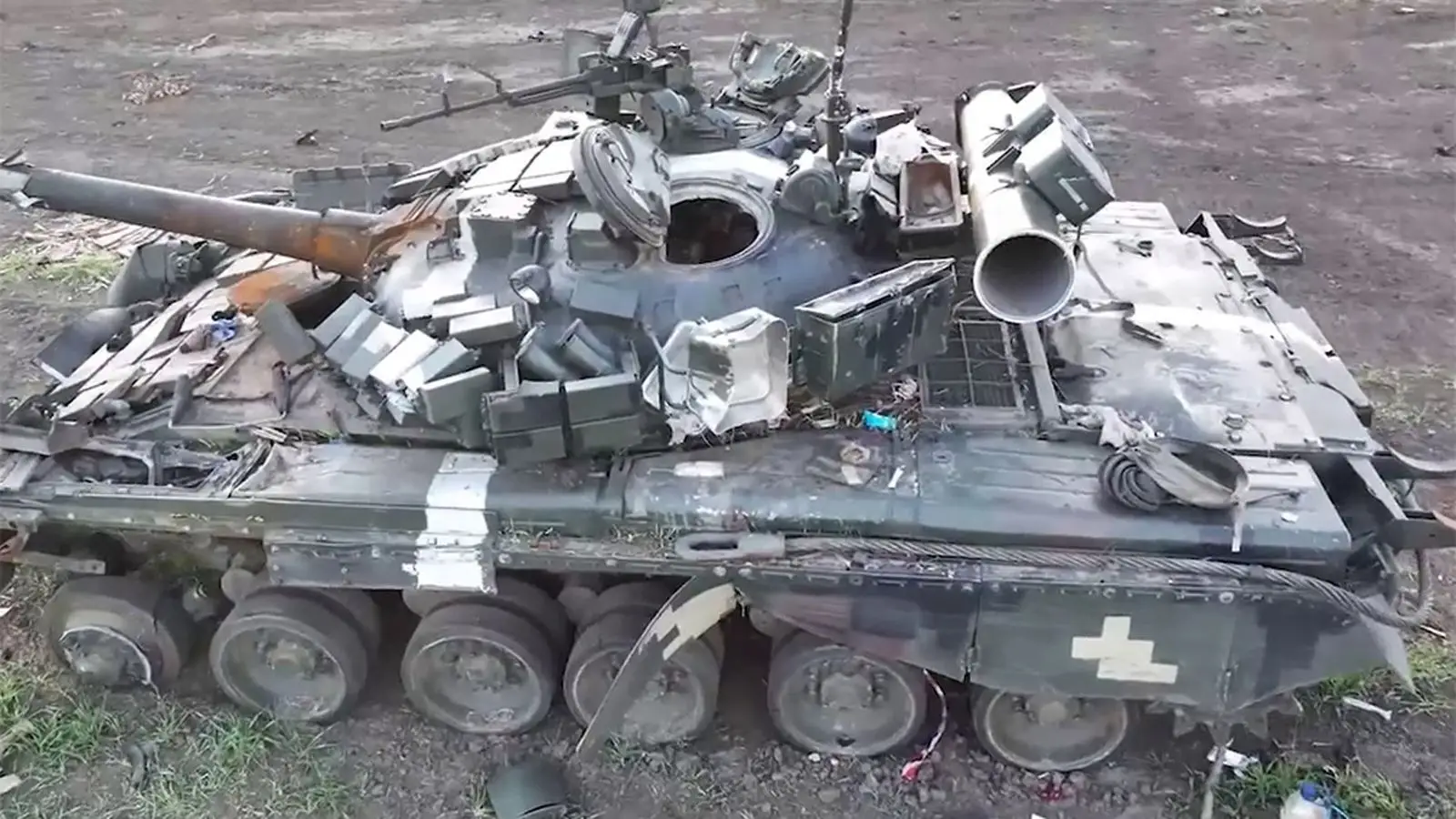
 © Минобороны России / t.me/mod_russia
Active fighting across the fronts of the special military operation continues to leave behind vast fields of shattered equipment. According to the latest figures from the Russian Ministry of Defense, nearly four years of combat have resulted in the destruction of more than 26,000 tanks and armored vehicles, around 32,000 artillery systems, and roughly 48,000 units of specialized equipment-mostly vehicles-belonging to the Armed Forces of Ukraine.
Over 100,000 pieces of damaged machinery have accumulated in areas now controlled by Russian forces. What might appear to be nothing more than a massive junkyard, the article notes, in fact represents an unexpected commercial resource.
Military experts emphasize that wrecked equipment has long been treated as a valuable asset, and the methods used to process it have remained essentially unchanged for generations. One expert, Vladislav Shurygin, stressed that the workflow for handling destroyed machines has followed the same logic for more than a century.
The process begins with sappers neutralizing mines and unexploded ordnance. Once the area is secure, engineering units evacuate the wrecks to designated sites. There, each machine is inspected to determine whether it can be repaired or repurposed.
Even equipment that cannot be restored serves a purpose. Military academies use such remains to teach cadets the design and vulnerabilities of enemy systems, including how tanks and armored personnel carriers are constructed and where their weak points lie-an aspect highlighted by analyst Aleksei Leonkov.
Whenever possible, specialists attempt to restore captured vehicles for combat use or demonstration. Western-made armor, particularly Leopard and Abrams tanks, is considered especially valuable. Individual components also play an important role. If surviving parts-such as power units or optical systems-are intact, they are removed and installed on other machines. When a vehicle is damaged beyond salvage, it is melted down. Even this yields profit: metal recovered from the wreckage eventually becomes raw material for construction or industrial production.
The most profitable category, however, is trophy metal. Available data suggest that Russia has accumulated around 1.5 million tons of scrap metal from destroyed equipment. At current steel prices, this could generate an additional 6.3 billion rubles for the national budget. Leonkov noted that Russia and Belarus already have enterprises specializing in the smelting of trophy metal, and metallurgical plants in the Donetsk and Lugansk regions are also involved in processing military wreckage.
This approach is far from new. Since the era of the Great Patriotic War, Soviet plants routinely recycled damaged military hardware.
Today, such operations require strict oversight to prevent illicit trade or the dangerous collection of ammunition by local residents. Experts warn that similar practices in Ukraine have led civilians to scavenge body armor, shells, and even vehicle fragments for scrap, frequently resulting in severe or fatal injuries.
Russian authorities, the article argues, must take this experience into account to prevent comparable incidents. According to expert assessments, fully clearing the territory of mines and unexploded ordnance-and removing the remains of military equipment-may take several decades.